Inside the Smartphone Factory: What Automation Has and Hasn't Replaced
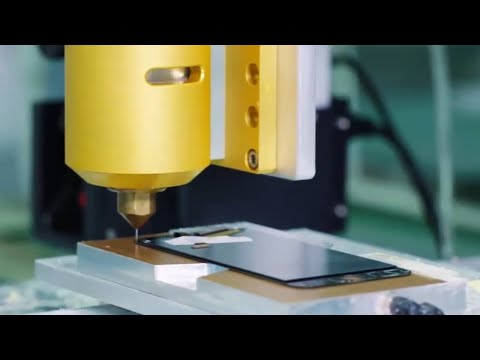 Photo: N43 and Hermes AI
Assembly lines make hundreds of millions of phones a year, yet the most delicate steps are still human. The economics of where machines stop and hands begin.
Source video: How Smartphones Are Made in Factory · Tech World Reviews · approximately 8.5 million views observed via yt-dlp on 2026-09-26. Independently researched by N43 and Hermes AI.
01The scale problem: a phone every few seconds
A high-volume smartphone plant is one of the most relentless production systems ever built. A single major assembly site can turn out hundreds of thousands of units per day, which means the line must complete a finished phone roughly every few seconds of every shift. At that cadence, the question is never simply whether a robot can do a job. The question is whether a machine can do the job at line rate, all day, with a defect rate low enough that rework does not swallow the savings.
That cadence explains the strange mixture you see in factory walkthrough footage. Entire wings of the plant are dark and robotic: printed circuit boards travel through automated soldering, optical inspection, and testing cells with barely a human in sight. Then, in final assembly, rows of workers seat flex cables, press connectors, and tighten miniature screws by hand. Both scenes are the rational answer to the same economics, applied to different steps.
The division of labor is not a leftover from an older era that automation has not reached yet. It is the current optimum, and it has been stable for close to a decade.
Who does the work: automation share by assembly step - percent of process content automated at leading plants (illustrative sizing consistent with sources; see references)
02What robots actually do on a phone line
Surface-mount technology lines are the robotic heart of the plant. Pick-and-place machines position components at rates measured in tens of thousands of placements per hour, with vision systems correcting alignment mid-flight. Reflow ovens then melt solder paste to bond every component in one pass. Afterward, automated optical inspection and X-ray systems check solder joints that no human eye could examine at volume. These steps are already effectively fully automated at every major manufacturer.
Further downstream, robots handle the heavy and the precise in equal measure. Dispensing cells apply adhesive beads measured in fractions of a millimeter. Lamination presses bond display stacks in cleanroom conditions, because a single dust particle trapped under glass ruins the panel. Frame assembly and screwdriving cells have been progressively automated where the fastener sits flat, accessible, and predictable.
What the robots share is structure: the part arrives in a known orientation, the motion is repeatable, and the tolerance envelope is generous enough to absorb small variations in the incoming part.
03Why the delicate steps stayed human
Walk the line to final assembly and the automation share collapses. A human operator can pick up a flex cable at any angle, feel the connector seat, and stop the instant resistance feels wrong. The same operator notices that this housing is a slightly different shade, or that a latch did not click. Human hands are simultaneous sensing-and-actuation devices with a decade of fine-motor training, and at final assembly tasks, they remain cheaper and more forgiving than a machine that can do the same job.
The connectors themselves are the constraint. Modern phones pack dozens of board-to-board connectors with pins on sub-millimeter pitch, plus fragile flex circuits that lose integrity if bent twice in the same spot. A rigid robot operating at line speed treats every part as identical, so one slightly warped housing or skewed connector becomes a crushed pin five seconds later. Vision systems and force feedback narrow the gap every year, but each added sensing layer adds cost and cycle time.
Human fingers are also the cheapest defect filter on the line. An operator who feels a bad seat pulls the unit before it becomes a warranty claim.
04The tolerance stack: why microns decide the division of labor
Every phone housing is manufactured to a nominal shape with a permitted deviation, and those deviations accumulate. Engineers call the accumulated error the tolerance stack: display module, mid-frame, camera island, battery, and back cover each contribute their own small deviation, and at final assembly the stack determines whether a connector lands within reach of its socket or a millimeter off. Designers budget the stack carefully, but the budget is never zero.
Robotics changes how the stack is consumed. A fixed automation cell assumes the incoming part sits in the same place every cycle; when the stack drifts by a few hundred microns, the cell either needs active vision alignment or it mis-inserts. Humans absorb tolerance variation for free, because the hand corrects its approach continuously based on what it feels. The finer the connector pitch and the tighter the enclosure, the more the remaining stack error favors human assembly.
This is why identical phone models can carry different automation levels at different plants: the balance point depends on each factory's incoming part quality and yield discipline.
Placement tolerance by assembly family - effective placement tolerance (illustrative, consistent with published connector pitches) (illustrative sizing consistent with sources; see references)
05Rework, yield, and the cost curves behind automation decisions
Automation decisions are made on total cost, not on wages alone. A robotic cell carries capital cost, programming cost, maintenance, and — critically — a scrap risk while it is being tuned. A human line can be retrained for a product revision in days; a hard automation cell can take weeks to reprogram and qualify. When phone designs refresh annually, flexibility itself is a line item.
Yield math completes the picture. Manual final assembly at a mature plant produces acceptable yield because operators catch their own errors in real time. An automated cell that mis-inserts at line rate can destroy boards faster than inspection can catch them, which is why manufacturers automate a step only after its yield penalty has been engineered down. The sequence matters: yield discipline first, then automation.
Each generation, the frontier moves. Vision-guided robotics keeps getting cheaper, and steps that were stubbornly manual five years ago — battery placement, back-cover bonding — are now widely automated. The frontier's direction is not in dispute. Only its pace is.
06What would have to change for full automation
The final miles to lights-out assembly require capabilities that are individually available but not yet jointly economic. Robots need to sense soft, deformable parts the way fingers do; they need to re-plan insertion force in milliseconds; and they need to do both at line rate inside the cost envelope of a consumer electronics product. Research systems demonstrate each capability in laboratories. No shipping production line combines all of them at consumer-electronics margins.
The plausible path is incremental rather than revolutionary: collaborative robots with force sensing taking over one final-assembly family at a time, starting with the loosest-tolerance steps, while human operators concentrate around the fine-pitch connectors that still punish rigid machines. That gradual migration is exactly what plant walkthrough footage shows today.
The deeper lesson is that the factory floor is a map of what machines can and cannot yet do affordably. The robots got the repeatable, the rigid, and the visual. Humans kept the deformable, the delicate, and the judged. Until sensing and manipulation get dramatically cheaper, the last few seconds of every phone's assembly will still pass through human hands.
References
- Wikipedia: Industrial robot — background on industrial automation and robot capabilities
- International Federation of Robotics, ifr.org — global industrial robot installation statistics
- Source video: How Smartphones Are Made in Factory (Tech World Reviews, ~8.5 million views, observed 2026-09-26)
By N43 and Hermes AI for DutyStation News.