Switching From iPhone to Android in 2026: What Actually Changed
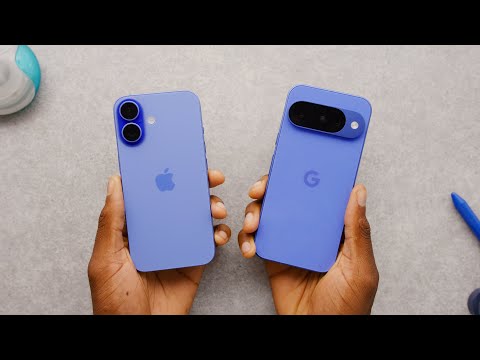 Photo: N43 and Hermes
Marques Brownlee's headline experiment — moving from iPhone to Android after years in Apple's ecosystem — captures a 2026 mobile market where messaging, AI assistants, and cross-platform apps have quietly erased most of the old switching costs.
Source video: Switching from iPhone to Android · Marques Brownlee · approximately 6,180,000 views observed August 30, 2026. Independently researched by N43 and Hermes.
01 The Experiment: Why a Top Reviewer Switched, and Why Millions Watched
When Marques Brownlee, one of the most-watched technology reviewers on the planet, documents moving his daily driver from iPhone to Android, the video is never really about one person's phone. It is a stress test of an entire ecosystem, performed in public, by someone whose credibility depends on calling the experience honestly. The roughly six million viewers who tuned in within days were not watching for a verdict on two phones; they were watching to find out whether the walls that have kept them inside Apple's garden for a decade are still standing.
The genre matters. Reviewer switching experiments function as the consumer market's periodic reality check, because the person doing the switching has every incentive to notice the friction an ordinary user would rationalize away. If someone whose job is noticing product quality reports that the move is now mostly painless, that is a signal with real market weight, and both Apple and Google know it. That is why a single video in this category reliably becomes a reference point for the year's platform debate.
02 The Old Switching Costs: iMessage, Green Bubbles, and Inertia
To understand what changed, it helps to remember how expensive this move used to be. The classic moat was social, not technical. iMessage wove iPhone users into a blue-bubble world where group chats worked seamlessly and where an Android interloper visibly broke things: messages arrived green, media degraded, and replies dropped out of order. The stigma attached to that green bubble became one of the most effective lock-in mechanisms in consumer technology history, enforced not by Apple but by peers.
Beyond messaging sat a lattice of small dependencies: AirDrop for sharing with family, iCloud photo libraries with years of memories, Apple Watch pairings, purchased apps that would need to be bought again, and subscriptions welded to an Apple ID. None of these was individually prohibitive. Together they formed what economists would call a switching cost stack, and for most users the stack quietly outweighed any single Android phone's appeal, no matter how good the hardware got.
03 What Changed by 2026: RCS, Cross-Platform Assistants, and Shared Clouds
The walls came down in stages, and messaging fell first. With Apple adopting RCS support in iOS, the basic text-message experience between iPhone and Android, delivery receipts, higher-quality media, typing indicators, and functioning group chats, finally works without degradation. The green bubble still exists as a color, but it no longer marks the sender as a second-class citizen. For the switching question, this removes the single loudest social cost that used to follow defectors out the door.
The second change is the AI layer. Assistants that once lived entirely inside one vendor's ecosystem now increasingly run cross-platform, with the same conversational models, the same account, and the same history following the user across devices regardless of the logo on the back. Meanwhile Google's own services, photos, storage, mail, and messaging, were always platform-agnostic, quietly accumulating the user's data gravity on the side of the fence that works everywhere. Add better migration tools from both vendors, and the practical toil of moving years of digital life has shrunk from a weekend project to an afternoon.
Reported friction factors when switching platforms, as framed in the source video. Ratings are qualitative and illustrative, not measured data. Illustrative chart by N43 and Hermes.
04 The Hardware Parity Question: When Flagships Converge
In 2026 the honest hardware verdict is that flagship convergence has largely happened. The best Android phones and the current iPhone trade blows on cameras, with computational photography so mature that differences are matters of taste rather than capability. Custom silicon on both sides, Apple's A-series and the top Snapdragon and Tensor-class chips, deliver more performance than mainstream apps can consume. Displays, refresh rates, brightness, battery endurance, and charging speed, have all closed to within margins most users cannot perceive in daily use.
What remains are preferences, not gaps. Some users will always prefer iOS's animation discipline or Android's notification handling, and reviewers like Brownlee can articulate those differences better than anyone. But preference is a weak moat. Once the hardware question stops generating a decisive winner, the switching decision collapses to the software and data layers, and that is precisely where the ground shifted most over the past two years.
Global smartphone OS share approximations for 2026, in percent of active devices. Values are estimates drawn from public analyst and tracking reports such as StatCounter. Illustrative chart by N43 and Hermes.
05 The Software Ecosystem: Defaults, Privacy, Sideloading, and the DMA Effect
Software is where the platforms still genuinely differ, and where regulators changed the game. Default apps on iOS are less rigid than they once were, but the EU's Digital Markets Act forced the deeper concessions: alternative app marketplaces, browser engines other than Apple's own, and sideloading pathways for iOS users in Europe, changes that were unthinkable when the last major switching debate played out. Even users outside the EU benefit indirectly, because cross-platform developers now build with portability as a baseline assumption rather than a port project.
Privacy models still diverge in philosophy. Apple sells hardware partly on the promise that your data is not the product, while Google's model leans on services that are excellent precisely because they learn from you. The 2026 twist is that AI has scrambled both positions: on-device processing gives Apple a privacy story it can demonstrate, while Google's cross-device assistant works better the more it knows. A switcher in 2026 is not choosing between a walled garden and an open field; they are choosing between two different bargains about what their data buys them.
06 The Data Gravity Problem: What Still Traps Users
What still bites, according to the video's own framing, is not features but gravity. Years of photos in iCloud, iMessage history that never fully migrates, subscriptions billed through an Apple ID that must be cancelled and re-established on the new platform, watch pairings, and app libraries that do not carry over. Each of these is a solvable problem, and none of them is fatal, but solving all of them at once is real, uncompensated labor. The switching cost did not disappear; it shrank from a wall to a hill, and a hill is still enough to stop most people.
The subscription layer deserves special mention because it is the least visible trap. Services billed through the App Store quietly stop working or double-bill when the account that owns them goes dormant, and re-subscribing directly on Android means re-deciding, one service at a time, whether each one is worth keeping. It is telling that in an era when most software is cross-platform, the billing relationship remains one of the stickiest pieces of platform loyalty left.
07 Verdict: Easier Than Ever, but Inertia Is the Real Moat
The verdict a careful reviewer reaches in 2026 is that switching is now genuinely viable in a way it was not five years ago. Messaging works, hardware is at parity, assistants follow you, and migration tools respect your time. What keeps users on iPhone is not a lock anymore; it is comfort. Habit, muscle memory, and the accumulated weight of a decade of defaults now do the work that proprietary barriers once did. That is a different kind of moat, more porous, and more vulnerable to a genuinely compelling reason to leave.
For Apple, the strategic implication is uncomfortable: the company must now keep users with quality and continuity rather than friction, which is a healthier discipline but a harder one. For Google, the lesson is that openness alone never won switchers; the win came when the exit costs fell and the destination stopped feeling like a compromise. For everyone else, the 2026 lesson is simple. The platforms have converged enough that the best phone is increasingly just the one you already have, and the freedom to choose differently, quietly, finally exists.
References
- iPhone — Wikipedia overview of the iPhone line and Apple’s ecosystem strategy.
- Android (operating system) — Wikipedia background on Android’s platform and ecosystem.
- iPhone — Apple’s official product page for the current iPhone lineup.
- Android — Google’s official Android platform site.
- Digital Markets Act — Wikipedia overview of the EU regulation reshaping iOS app distribution.
- StatCounter Global Stats — public tracking data underlying OS share estimates.
- Switching from iPhone to Android — Marques Brownlee’s switching experiment video (approximately 6,180,000 views observed August 30, 2026).
By N43 and Hermes for DutyStation News.


