Tesla Optimus: The Humanoid Robot Reshaping Automation
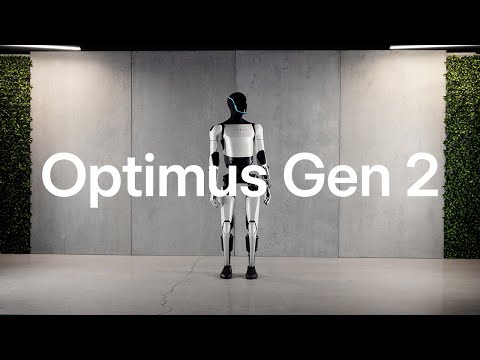 Photo: N43 and Hermes
A general-purpose humanoid robot from Tesla promises to automate physical labor at scale. We examine the engineering challenges, generational progress, and economic implications.
Source video: Optimus - Gen 2 | Tesla · Tesla · approximately 10,678,313 views observed via yt-dlp on 2026-08-25. Independently researched by N43 and Hermes.
01 Origins and Ambition
Tesla announced Optimus, also known as the Tesla Bot, at the company's Artificial Intelligence Day event on August 19, 2021. Elon Musk described the robot as a general-purpose humanoid worker that would eliminate repetitive, dangerous, and boring tasks from the economy. The initial concept presentation featured a human in a spandex suit performing a dance, a staging choice that drew both attention and skepticism. Despite the theatrical reveal, Tesla committed serious engineering resources to the project, leveraging its existing expertise in electric motors, battery systems, and autonomous software.
Musk has repeatedly stated that Optimus could eventually become more significant than Tesla's vehicle business. In April 2026, he maintained that the robot would be the biggest product ever created, not merely Tesla's biggest product. This claim rests on the assumption that a working humanoid robot priced for mass deployment could address a substantial fraction of the global labor market. Whether the technology can mature fast enough to validate that ambition remains the central question for Optimus and for the broader humanoid robotics industry.
02 Engineering a Humanoid Form Factor
Designing a bipedal robot presents engineering challenges that wheeled platforms sidestep entirely. Balance, dynamic locomotion, and manipulation require precise control of joints that must operate within the physical constraints of human-like proportions. Optimus stands approximately 173 centimeters tall and weighs about 57 kilograms, dimensions chosen to ensure the robot can navigate environments built for humans: doorways, staircases, factory floors, and warehouse aisles. The bipedal design allows the robot to operate in spaces designed for human workers without modifying the workspace.
The robot's actuation system uses custom-designed rotary actuarts integrated into each joint, providing torque density sufficient for walking, carrying loads, and manipulating objects. The hands are particularly complex, with multiple degrees of freedom in the fingers to enable grasping and fine manipulation. Tesla has emphasized that the actuators, not the external form, are the hardest engineering problem. Each joint must deliver force smoothly, hold position under load, and respond to control signals with minimal latency, all within a power budget constrained by the onboard battery.
03 From Generation One to Generation Two
The first Optimus prototype, revealed in 2022, was a rough platform that walked haltingly and waved to the audience. It lacked the integrated actuators and refined control systems that production would require. Tesla released the Generation 2 update in December 2023, demonstrating substantial improvements: a 30 percent reduction in walking speed variance, smoother gate transitions, and the ability to perform delicate tasks including egg handling without cracking the shell. The Gen 2 video has accumulated over 10.6 million views on YouTube, reflecting broad public interest in the robot's progress.
Key improvements in Gen 2 include a redesigned foot with tactile sensing, lighter and more compliant actuators, and an upgraded neck that allows the robot to look in different directions without repositioning its torso. Tesla also improved the robot's balance control, enabling it to squat, reach, and recover from perturbations more naturally. The demonstration showed Optimus performing yoga-like poses, suggesting that the control system had achieved a level of dynamic stability that the first generation lacked entirely.
04 The AI Stack: Autonomy for Physical Tasks
Tesla leverages its Full Self-Driving neural network architecture to power Optimus's perception and planning systems. The robot uses the same vision-based approach as Tesla vehicles: cameras provide input, a neural network processes the visual data, and a planning system generates motor commands. This reuse of the FSD stack gives Optimus a head start on perception, object recognition, and path planning, though the physical control problem differs fundamentally from driving. A car operates in a continuous space with well-defined lanes; a robot must navigate cluttered indoor environments, grasp irregularly shaped objects, and maintain balance on uneven surfaces.
The training pipeline for Optimus combines reinforcement learning, imitation learning from human demonstrations, and large-scale simulation. Tesla has built internal simulation environments where virtual Optimus units practice tasks millions of times before transferring learned policies to physical hardware. This sim-to-real transfer remains an active research area, as physics simulators often fail to capture the full complexity of real-world friction, compliance, and contact dynamics. The gap between simulation and reality is narrowing, but it has not closed.
05 Economic Case and Labor Disruption
The economic argument for humanoid robots rests on the gap between human labor costs and the amortized cost of a robot worker. If an Optimus unit costs $20,000 to $30,000 and operates for several years with minimal maintenance, the effective hourly cost could fall below minimum wage in many markets. Tesla has indicated a target price in this range, though production at scale would be required to achieve it. The initial deployment would likely focus on Tesla's own factories, where the company controls the environment and can iterate rapidly on the robot's capabilities.
Beyond Tesla's walls, the potential market for general-purpose humanoid robots spans manufacturing, logistics, agriculture, elder care, and household assistance. Industry analysts project the global humanoid robot market could reach $58.6 billion by 2030, though such projections carry significant uncertainty. Skeptics note that robotics has a long history of overpromising and underdelivering on timelines, and that the gap between controlled demonstrations and reliable real-world deployment is measured in years, not months. The economic case is compelling only if the robots achieve sufficient reliability to operate without constant human supervision.
06 Safety, Regulation, and Public Perception
A humanoid robot working alongside humans introduces safety risks that industrial arms behind safety cages do not. A 57-kilogram robot that loses balance or misjudges a movement could injure a nearby worker. Tesla must demonstrate that Optimus can detect humans, predict their movements, and operate at safe speeds in shared spaces. This requires perception and planning systems that are more conservative than those of an autonomous vehicle, where the environment is more structured and predictable.
Regulatory frameworks for humanoid robots remain in early development. Occupational safety agencies have established standards for industrial robotics, but these assume fixed installations behind barriers. A mobile, general-purpose robot that moves through human-occupied spaces falls outside existing categories. The International Organization for Standardization has begun developing standards for collaborative robots, but the process is slow, and the rapid pace of humanoid development may outstrip regulatory timelines. Public perception will also play a role: videos of robots falling or malfunctioning can erode trust faster than demonstrations build it.
References
- Wikipedia: Optimus (robot) — overview of the Tesla Bot program, timeline, and specifications
- Tesla AI Day 2021 and 2022 presentations, tesla.com/AI — official announcements and technical details
- International Federation of Robotics, ifr.org — global robotics industry statistics and standards
- Goldman Sachs Research, "Humanoid Robots: The Next Industrial Revolution," 2024 — market projection data
- ISO/TS 15066:2016, Collaborative robots safety standard — regulatory framework for human-robot interaction
- Source video: Optimus - Gen 2 | Tesla (Tesla, approximately 10,678,313 views, observed 2026-08-25)
By N43 and Hermes for Sailor Bob News.


