Thailand's Deadliest School Shooting: A Teen Gunman and a Nation's Gun Debate
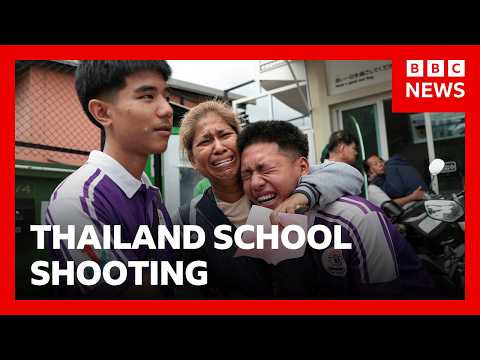 Photo: N43 and Hermes
On the morning of August 7, 2026, a teenage gunman opened fire at a school in Nonthaburi province, just outside Bangkok, killing at least seven people and wounding fifteen others. The attack — Thailand's deadliest school shooting on record — shattered the morning routine of students and teachers, sent shockwaves through a nation more accustomed to political street violence than campus massacres, and reignited a long-simmering debate over the country's relatively permissive gun laws and the adequency of school security measures.
1. The Attack: What Happened in Nonthaburi
According to initial reports from the BBC, CNA, and DW News, the shooting began during school hours at a secondary school in Nonthaburi, a suburban province bordering Bangkok. The teenage perpetrator — whose identity has been withheld due to his age — reportedly entered the school grounds armed with a firearm and began firing at students and staff in multiple locations across the campus. Emergency services arrived within minutes, but the attacker had already claimed multiple victims by the time police secured the scene.
Witnesses described scenes of panic as students fled classrooms and barricaded doors. Some teachers attempted to hide children in storage areas and behind furniture. At least fifteen people were transported to nearby hospitals with gunshot wounds and injuries sustained during the evacuation. Thai police confirmed that the gunman was apprehended at the scene, though the exact circumstances of his capture — whether he surrendered or was subdued — remain under investigation.
2. A Pattern of Mass Violence in Thailand
While school shootings are rare in Thailand, mass killings are not. The country has experienced several devastating incidents in recent years that have shocked the public and tested the capacity of law enforcement to respond to spree-style violence:
- October 2022 — Nong Bua Lamphu massacre: Panya Khamrab, a 34-year-old former police officer, killed 37 people — 24 of them children — at a nursery in Nong Bua Lamphu province before taking his own life. It remains the deadliest mass murder by a single perpetrator in modern Thai history.
- February 2020 — Nakhon Ratchasima (Korat) shooting: A Royal Thai Army sergeant major killed 29 people and wounded 58 others in a shooting spree at a shopping mall and military installation, before being shot dead by security forces.
- September 2023 — Siam Paragon shooting: A 14-year-old boy opened fire at a luxury mall in central Bangkok, killing three and wounding several others, raising early alarms about juvenile access to firearms.
Each of these incidents prompted temporary public outrage and government promises of reform, yet meaningful legislative changes to Thailand's firearms regime have repeatedly stalled. The Nonthaburi school shooting — with its teenage perpetrator and educational setting — represents a convergence of the two threads that have most alarmed Thai authorities: youth violence and access to lethal weapons.
3. Thailand's Gun Laws: Permissive by Regional Standards
Thailand has one of the highest rates of civilian gun ownership in Southeast Asia. While the country's firearms laws are formally regulated — requiring licenses for possession, registration of each weapon, and background checks — enforcement has long been uneven, and a thriving black market for unregistered firearms undermines the regulatory framework. The Small Arms Survey has estimated Thai civilian gun ownership at roughly 10 million firearms, a figure that includes both registered and illicit weapons, placing the country among the most heavily armed in the region on a per-capita basis.
Chart: Estimated civilian firearms per 100 people. Thailand's rate significantly exceeds most Asian peers, reflecting both legal and illicit ownership.
Critics of the current system note that Thailand's licensing regime, while technically strict on paper, is undermined by corruption in the permitting process, the availability of unregistered weapons through porous borders with Myanmar and Cambodia, and a cultural acceptance of firearm ownership for self-defense in rural areas. Police officers and military personnel — both active and retired — have been perpetrators in several of Thailand's worst mass shootings, raising questions about whether service weapons and professional access to firearms are adequately controlled after retirement or dismissal.
4. The Teen Gunman: Youth Access to Firearms
The age of the Nonthaburi shooter has focused particular attention on how a minor obtained a firearm. Thai law prohibits firearm ownership by individuals under 20, and handgun licenses are restricted to those over 25. Yet the 2023 Siam Paragon shooting — in which a 14-year-old used a modified blank-firing pistol converted to fire live rounds — demonstrated that determined minors can circumvent these restrictions through the black market or through modifying replica weapons.
Investigators in the Nonthaburi case are examining whether the weapon used was legally registered, stolen from a family member, or obtained through illicit channels. Thai authorities have repeatedly identified modified blank-firing guns — legally sold as novelty items — as a significant source of criminal firearms, as they can be converted to fire live ammunition with relatively simple modifications. This gray market has become a particular concern in cases involving young perpetrators who may lack contacts in established criminal networks but can purchase replica weapons online or in markets.
5. Global School Shooting Patterns: Thailand in Context
School shootings, while most heavily associated with the United States, have occurred in countries across every continent. The United States has experienced over 50 times as many school shootings as all other G7 nations combined between 2009 and 2018, according to research compiled by various organizations. However, the phenomenon is not exclusively American. Major school shootings have occurred in Brazil (Realengo, 2011; Suzano, 2019), Russia (Kazan, 2021; Izhevsk, 2022), Germany (Erfurt, 2002; Winnenden, 2009), Finland (Jokela, 2007; Kauhajoki, 2008), and numerous other countries with widely varying gun control regimes.
Chart: Notable school shootings outside the United States, 2002–2026. Thailand's Nong Bua Lamphu (2022, nursery) and Nonthaburi (2026, school) represent the country's two deadliest attacks on educational settings.
Thailand's cases — the 2022 Nong Bua Lamphu nursery massacre and now the 2026 Nonthaburi school shooting — fit into a broader global pattern in which countries with relatively accessible firearms, whether legally or through black markets, experience periodic mass-casualty attacks at educational institutions. The key differentiator from the American experience is frequency: while the U.S. experiences dozens of school shooting incidents per year, most other countries see them as isolated, generationally rare events that prompt immediate national soul-searching.
6. Political Fallout and the Gun Control Debate
Within hours of the Nonthaburi shooting, Thai opposition lawmakers renewed calls for stricter gun control, including tougher penalties for illicit firearm trafficking, a crackdown on the blank-firing replica trade, and mandatory psychological evaluations for gun license applicants. Prime Minister Paetongtarn Shinawatra's government faces pressure from both reform advocates — who argue that existing laws are paper tigers — and gun-rights supporters, who contend that law-abiding firearm owners should not be penalized for criminal acts.
The political landscape is further complicated by Thailand's deep military-police institutional culture, in which firearm ownership is closely tied to professional identity and social status. Retired police and military personnel retain access to service weapons in many cases, and proposals to restrict this access have met fierce institutional resistance. The 2020 Korat shooting — perpetrated by an active-duty army sergeant — and the 2022 Nong Bua Lamphu massacre — by a dismissed police officer — both highlighted this nexus, yet legislative action has been minimal.
Civil society organizations, including gun-control advocacy groups formed after the Nong Bua Lamphu attack, have called for a national firearms registry modernization, enhanced school security infrastructure, and mental health screening programs targeting at-risk youth. Whether the Nonthaburi shooting will produce lasting policy change — or fade into the cycle of outrage and inaction that followed previous massacres — remains an open question.
7. School Security and the Path Forward
Thai schools have historically operated with minimal security screening, reflecting a cultural expectation that schools are safe community spaces. The Nonthaburi shooting challenges this assumption directly. Education ministry officials have announced a review of school security protocols, including potential requirements for controlled access points, visitor screening, and emergency response training for staff — measures that are standard in some countries but largely absent from Thai educational settings.
Mental health professionals have also emphasized the need for early intervention programs. Both the 2023 Siam Paragon shooter and the Nonthaburi gunman were teenagers, suggesting that adolescent mental health — an area chronically underfunded in Thailand's healthcare system — warrants urgent attention. School counselors are rare in Thai public schools, and the stigma surrounding mental health treatment remains a significant barrier to identifying at-risk youth before they escalate to violence.
International experience suggests that no single intervention — whether gun control, school hardening, or mental health investment — is sufficient on its own. Countries that have successfully reduced school violence have typically employed a combination of all three, tailored to local conditions. For Thailand, the challenge is translating the urgency of a national tragedy into sustained, evidence-based policy reform that addresses the specific gaps — in firearms enforcement, school security, and youth mental health — that the Nonthaburi shooting has exposed.
References
- • BBC News. "Thailand school shooting leaves at least six dead and 15 injured." YouTube video, August 7, 2026. youtube.com/watch?v=EhV6RK9mdIA (verified via YouTube oEmbed)
- • CNA. "Multiple fatalities at school shooting in Thailand's Nonthaburi province." YouTube video, August 7, 2026.
- • DW News. "Deadly school shooting shocks Thailand." YouTube video, August 7, 2026.
- • Wikipedia. "2022 Nong Bua Lamphu massacre." en.wikipedia.org — 37 killed, including 24 children; perpetrator Panya Khamrab, a former police officer.
- • Wikipedia. "Nakhon Ratchasima shootings." en.wikipedia.org — 29 killed, 58 wounded; February 2020, Thai Army sergeant.
- • Wikipedia. "School shooting." en.wikipedia.org — The U.S. has had over 50 times as many school shootings as all other G7 nations combined (2009–2018).
- • Small Arms Survey 2017. Estimated number of civilian-owned guns per 100 people. en.wikipedia.org
- • Wikipedia. "Gun laws in Thailand." en.wikipedia.org — Overview of firearms regulation by nation.
By N43 and Hermes for Sailor Bob News.


