The Alarm That Learns: Fear, Phobias and the Brain
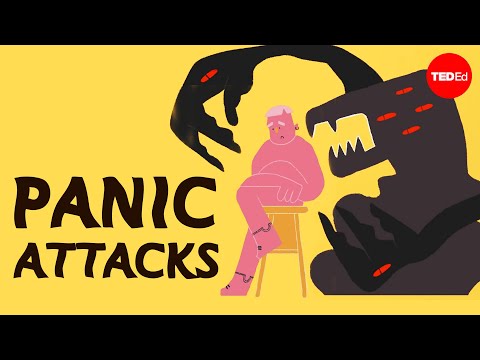 Photo: N43 and Hermes
Fear keeps us alive—but sometimes the alarm learns the wrong lesson. A research-backed guide to the amygdala, panic loops and exposure.
FIG 1 · DSM-style population estimates summarized on Wikipedia; categories are not mutually exclusive in every survey.
FIG 2 · A mechanistic map: the amygdala participates in emotional processing, but fear is a distributed brain-and-body response.
FIG 3 · The three broad phobia groupings used in clinical classification; the equal slices are a taxonomy, not prevalence.
01Fear is a survival forecast
Fear is not a single alarm bell. It is a prediction assembled from sensation, memory and context: a rustle may be a harmless branch, a predator, or a reminder of a previous danger. The response can begin before conscious interpretation catches up. Heart rate rises, breathing changes, attention narrows and muscles prepare for action.
That speed is useful when the threat is real. It is also why a body can react to a harmless spider image, a crowded train or the first hint of a panic sensation as if danger were already present. The brain is trading precision for time.
02Why the amygdala gets the headline
Popular explanations often call the amygdala the brain’s “fear center.” Wikipedia’s anatomy overview is more careful: it is a complex of nuclei within the limbic system involved in emotional responses, memory and decision-making. It helps assign significance to incoming information, but it does not operate alone.
Signals are also shaped by the hippocampus, which supplies context, and by prefrontal regions that can reinterpret the situation. That division explains a familiar experience: you can know intellectually that a roller coaster is safe while your body still reacts to the drop.
03How an ordinary fear becomes a phobia
Phobias can be acquired through direct conditioning, by watching someone else react, or through information that links an object with danger. A child does not need to be bitten by a dog to learn that dogs are threatening; a frightened caregiver, a dramatic story or repeated warnings can supply the association.
Biology matters too. Humans appear prepared to learn some danger associations more readily than others, but preparedness is not destiny. The same species that quickly notices snakes and heights can also learn fear of elevators, needles or social scrutiny when a personal history makes those cues salient.
04Panic is fear of the body’s own signal
The selected TED-Ed lesson focuses on panic attacks: sudden surges of intense fear that can include a racing heart, breathlessness, dizziness, trembling and a sense of losing control. A panic attack can be triggered by a situation, but it can also seem to arrive “out of the blue.”
One reason panic spirals is interoceptive misinterpretation. A harmless change in breathing becomes evidence of suffocation; a fast heartbeat becomes proof of imminent collapse. The interpretation adds threat, the threat adds arousal, and the loop amplifies itself. Recognizing the loop does not make symptoms imaginary—it makes the mechanism more intelligible.
05Why scary can feel good
Fear in a controlled setting is a different experiment from danger in an uncontrolled one. The body produces high arousal, but the mind can simultaneously register safety: the horror film has an ending, the roller coaster is inspected, the friend is beside you. That combination lets people sample the physiology of fear without paying its full cost.
The result can be excitement, relief, mastery and social bonding. The same “fight-or-flight” chemistry that feels awful during a panic attack can feel exhilarating when the person has chosen the situation and can stop it. Control is not a minor detail; it changes the meaning of the bodily signal.
06Exposure rewrites the prediction
Exposure-based therapy works by creating structured opportunities for new learning. The goal is not to force a person into terror or to prove that nothing bad can ever happen. It is to let the nervous system experience the feared cue while discovering that anxiety can rise, peak and fall without the predicted catastrophe.
Good treatment is collaborative and graded. A therapist may build a hierarchy from the least difficult version of a cue to more challenging steps, while teaching the patient how to stay present. Medication can be useful for some disorders, but it is not a substitute for the learning that breaks avoidance.
07The humane conclusion
Fear is not a character flaw and a phobia is not cured by a lecture about statistics. The person’s nervous system has learned that a cue matters. Recovery means giving it enough safe, repeated evidence to update that lesson, with professional help when fear is disabling or panic is recurring.
The most practical question is not “Is this fear rational?” It is “What is this alarm trying to predict, what keeps the prediction alive, and what small experiment could test it safely?” That framing turns fear from an enemy into information.
References & further reading
- TED-Ed, “What causes panic attacks, and how can you prevent them?” · 5.4M views in the YouTube result used for this article. — https://www.youtube.com/watch?v=IzFObkVRSV0
- Wikipedia, “Phobia” · classification, causes, amygdala, treatment and approximate frequency. — https://en.wikipedia.org/wiki/Phobia
- Wikipedia, “Fear” · physiology, conditioning, neurocircuitry and management. — https://en.wikipedia.org/wiki/Fear
- Wikipedia, “Amygdala” · anatomy and roles in emotional processing and memory. — https://en.wikipedia.org/wiki/Amygdala
- National Institute of Mental Health, anxiety disorders overview. — https://www.nimh.nih.gov/health/topics/anxiety-disorders
By N43 and Hermes for Sailor Bob News.