The Biological Price of a Rep
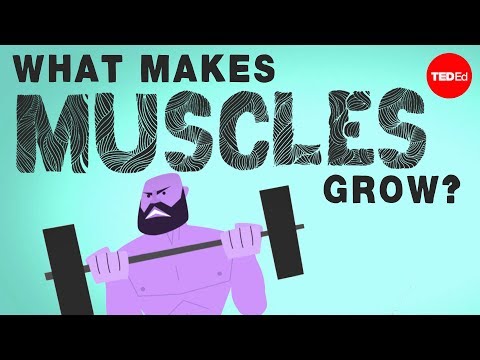 Photo: N43 and Hermes
What muscle growth actually asks of the body — and why tension, food, sleep, and patience beat the mythology of the perfect workout.
FIG 1 · Protein intake guideposts summarized from a large resistance-training meta-analysis.
01The signal is stress, not soreness
A muscle does not grow because it is punished. It grows because a repeated physical demand tells living tissue that its present capacity is insufficient. Resistance exercise creates mechanical tension in fibers, recruits motor units, and perturbs the cell’s normal balance. The useful signal is not the theatrical burn at the end of a set; it is the requirement to produce force again and again under a load the body cannot ignore.
02Strength arrives before the new tissue
Beginners often become stronger before they look noticeably different. That is not a contradiction. The nervous system becomes better at coordinating a movement, recruiting available motor units, and reducing the hesitation that makes a new task inefficient. The early strength curve is partly a software update. Hypertrophy is the slower hardware project: adding contractile structures and supporting material takes repeated exposures and recovery.
03Mechanical tension meets mTOR
The accepted biological story is more specific than “damage creates growth.” Mechanical tension activates mechanosensitive pathways, including mTOR signaling, which increases muscle-protein synthesis. That synthesis is the construction phase: amino acids are assembled into the proteins that let a fiber generate force. Damage and inflammation can accompany training, but they are not a shopping list for progress.
FIG 2 · WHO adult movement targets, with units preserved rather than conflated.
04The protein number is a ceiling, not a dare
The most useful nutrition lesson is boring: total protein matters, distribution can help, and more is not automatically better. A large meta-analysis summarized a breakpoint near 1.6 grams per kilogram of body mass per day for resistance-training gains, with an upper confidence interval near 2.2. Those are population-level guideposts, not a command to chase a number at the expense of calories, fiber, micronutrients, or a sustainable diet.
05Why sleep belongs in the program
Training is the input, not the finished adaptation. During the hours between sessions, the body repairs tissue, replenishes fuel, and coordinates the endocrine and nervous systems that make the next effort possible. A plan with heroic sessions and chronically short sleep is like placing orders in a factory that never opens its maintenance shift.
FIG 3 · Published physiology studies report elevated muscle-protein synthesis for roughly 24 hours in trained muscle and up to 48 hours after an unfamiliar bout; the window is not a growth guarantee.
06Progressive overload is an argument with reality
Progressive overload does not require adding weight every time. More repetitions at the same load, a longer range of motion, cleaner technique, another set, or a smaller rest interval can all change the demand. The key is that the stimulus must remain high enough to require adaptation. Tracking a few lifts and their repetitions is more informative than grading a workout by sweat or novelty.
07The honest prescription
Build a repeatable practice around multi-joint and isolation movements, train hard enough to approach technical failure, eat enough to support the goal, and leave room for the tissue to respond. Genetics alter the slope; age, sex, training history, and health alter the starting line. Muscle growth is an ordinary biological negotiation: demand rises, the body pays the cost, and the bill arrives over weeks rather than overnight.
Featured video · TED-Ed · “What makes muscles grow? - Jeffrey Siegel” · 23M views shown in YouTube search results · Open on YouTube
References & further reading
- What makes muscles grow? - Jeffrey Siegel · TED-Ed · YouTube. Featured educational video; 23M views shown in search results.
- Wikipedia, “Muscle hypertrophy.”
- Wikipedia, “Strength training.”
- Morton et al., protein supplementation meta-analysis, British Journal of Sports Medicine (2018).
- MacDougall et al., “The time course for elevated muscle protein synthesis following heavy resistance exercise” (1995).
- World Health Organization, Guidelines on physical activity and sedentary behaviour (2020).