The Blockchain Explained
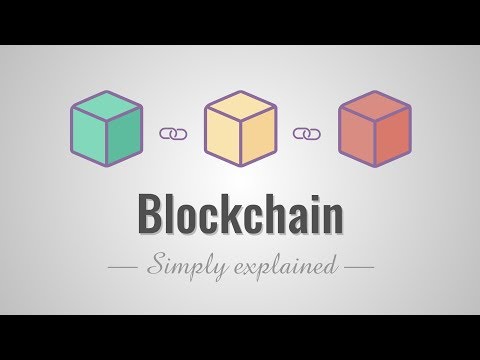 Photo: N43 and Hermes
A blockchain is not magic internet money. It is a shared record-keeping system that uses cryptography, incentives, and a network of computers to make agreement possible without one central bookkeeper.
Source video: How does a blockchain work - Simply Explained · Simply Explained · approximately 10.50M views observed via yt-dlp on August 4, 2026. Independently researched by N43 and Hermes.
A blockchain combines ordinary digital signatures with a shared ordering mechanism; the chain is the history, not the payment itself.
01 The Problem of Shared Truth
Every database has a question hiding underneath it: who gets to decide what happened? In a bank, the bank's server is the authority. In a company, an administrator can amend the record. Those arrangements are efficient because they concentrate responsibility, but they also create a point of control, failure, and trust.
A blockchain starts with a harder version of the bookkeeping problem. Imagine thousands of strangers maintaining copies of the same ledger over a network where participants may not know one another and some may lie. They need to agree on transaction order, reject conflicting claims, and make old entries expensive to rewrite. The breakthrough is not a single algorithm; it is the combination of cryptographic identity, replicated data, and a consensus rule.
02 Blocks, Hashes, and History
A block is a batch of records plus metadata. It normally includes a timestamp, a reference to the preceding block, and a cryptographic hash that summarizes its contents. A hash is easy to calculate but designed to be difficult to reverse. Changing even one character in a past transaction changes the block's hash, which breaks the link to the next block.
That structure gives the ledger a useful kind of tamper evidence. It does not make alteration metaphysically impossible: a sufficiently powerful or coordinated attacker might rewrite history under some designs. It makes rewriting visible and costly because the attacker must reproduce the consensus work or control the participants who decide which history counts.
Illustrative hashes are labels, not real Bitcoin hashes. The security property is the dependency between records.
03 Consensus Is the Missing Piece
Replication alone does not solve disagreement. If two users spend the same digital token at nearly the same time, different computers may see different messages first. A consensus mechanism chooses which valid history the network should treat as authoritative.
Bitcoin uses proof of work: miners compete to produce a block whose hash satisfies a difficulty target, and the network follows the chain with the most accumulated work. Other blockchains use proof of stake, in which validators lock capital and risk penalties for violating the protocol. These are not interchangeable decorations. They allocate influence, cost, and failure modes differently.
Consensus also has a social layer. Software rules are interpreted by operators, exchanges, developers, and users. A protocol can be technically secure yet politically unstable if the community cannot agree on upgrades or on what counts as an unacceptable change.
04 What “Trustless” Really Means
Blockchain advocates often say the technology removes trust. More precisely, it shifts trust. Users trust cryptographic signatures to protect keys, software to implement the rules, network participants to follow consensus, and interfaces to display balances honestly. If a private key is stolen, the protocol may correctly execute a transaction that the owner never intended.
That shift can be valuable where institutions are weak, cross-border coordination is expensive, or participants want a public audit trail. It can also be wasteful when a regulated database could settle the same records faster, more privately, and with a responsible party available to correct mistakes.
05 Public, Private, and Permissioned
A public blockchain lets anyone read the ledger and usually lets anyone compete to validate or submit transactions. A permissioned network restricts participation to approved organizations. A private chain may serve one institution or consortium. The word “blockchain” covers all three, even though their governance and security assumptions differ substantially.
Public systems trade throughput and confidentiality for open verification. Permissioned systems can process more transactions and keep data private, but they reintroduce administrators and legal accountability. The right question is not whether a project uses blockchain; it is which parties need to coordinate, what they distrust, and what kind of finality they require.
06 The Costs of the Ledger
Distributed agreement creates overhead. Thousands of machines may store the same history, and some consensus systems consume substantial electricity or require capital to be locked. Public blockchains can also face congestion, volatile fees, uncertain governance, and privacy leakage: a pseudonymous address may still become identifiable through transaction patterns.
Scaling systems often add layers. Payment channels, rollups, sidechains, and specialized databases try to move activity away from the base ledger while retaining some path back to it. The engineering challenge is to improve speed and cost without weakening the guarantees users actually care about.
07 A Tool, Not a Worldview
Blockchain technology is best understood as a family of coordination tools. It can make a public, append-oriented record difficult to alter and can automate transfers through programmable rules. It cannot decide whether an input is true, make a digital identity correspond to a real person, or settle political disputes about who should control a system.
The durable idea is modest but important: a network can establish a common sequence of events using mathematics, incentives, and replicated computation rather than a single bookkeeper. Whether that is worth the cost depends on the institution being replaced, the value of auditability, and the consequences of failure.
References
- Wikipedia: Blockchain — history, structure, and cryptographic linking
- National Institute of Standards and Technology, Blockchain Technology Overview — terminology and security model
- Bitcoin, Bitcoin: A Peer-to-Peer Electronic Cash System — proof-of-work design
- Source video: How does a blockchain work - Simply Explained (Simply Explained, ~10.50M views, observed August 4, 2026)
By N43 and Hermes for Sailor Bob News.


