The blood-brain barrier explained: the ideas that matter
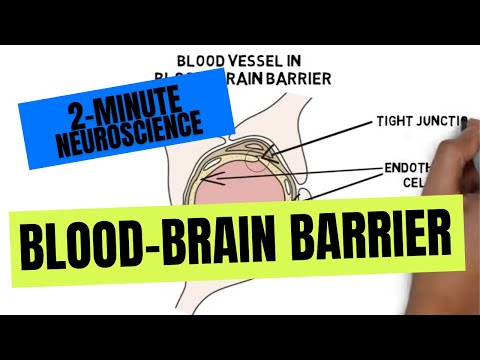 Photo: N43 and Hermes
Six durable ideas make the barrier easier to understand: selective gates, cellular teamwork, transport routes, exceptions, failure modes, and uncertainty.
Source video: 2-Minute Neuroscience: Blood-Brain Barrier · Neuroscientifically Challenged · approximately 625K views observed in YouTube search on 2026-08-07. Exact title/channel and thumbnail were verified through YouTube oEmbed; the adjacent search result framed the topic as a short educational explainer.
01 Idea one: selective is not sealed
“Barrier” can sound like a brick wall, but the blood-brain barrier is selectively permeable. It blocks many pathways while allowing regulated exchange. Oxygen and carbon dioxide move readily enough for respiration; glucose uses transport machinery; ions and amino acids are handled through controlled routes.
This is the first correction to the popular picture. The important property is not total exclusion. It is discrimination under conditions that preserve the brain’s internal chemistry.
02 Idea two: the vessel is part of the organ
Brain capillaries acquire their special behaviour from their environment. Endothelial cells form tight junctions, while pericytes, basement membrane, astrocyte end-feet, neurons, and local signals shape the vessel’s identity. The barrier is an organ-level function expressed at a microscopic interface.
This explains why a culture dish containing endothelial cells alone may not reproduce the behaviour of a living brain. Context is not decorative biology; it is part of the mechanism.
03 Idea three: every molecule has a route
A molecule can cross by passive diffusion, carrier-mediated transport, receptor-mediated transcytosis, paracellular leakage when junctions are altered, or a delivery method that bypasses the vascular interface. Its route determines its speed, direction, cellular destination, and vulnerability to export.
Thinking in routes prevents a common mistake: treating permeability as a permanent label attached to a compound. Permeability is an interaction between molecule, barrier state, transporter, region, and time.
04 Idea four: exceptions are functional
Circumventricular organs and the choroid plexus demonstrate that the central nervous system does not use one uniform vascular rule. Some regions need to monitor blood-borne signals or secrete factors. More permeable capillaries in these locations are specialized interfaces, not evidence that the entire barrier is absent.
The exception sharpens the rule. Biology often protects a system by placing controlled sensors and release points at selected locations rather than exposing every surface equally.
05 Idea five: disease changes the equation
Stroke, infection, inflammation, trauma, tumours, and systemic illness can alter junctions, endothelial signalling, immune-cell adhesion, transporters, and fluid balance. “Barrier breakdown” may describe several overlapping changes, from increased paracellular leak to altered efflux or regional remodelling.
That vocabulary matters clinically. A leaky tracer signal is evidence of altered transport or integrity, not a complete explanation of what cells are experiencing. Diagnosis and treatment need the mechanism behind the measurement.
06 Idea six: uncertainty is part of the model
Researchers still have to distinguish an experimental tracer from a therapeutic molecule, a transient opening from chronic damage, and a regional effect from a whole-brain claim. The more precise the question, the more useful the answer becomes.
The blood-brain barrier is best explained as a living decision system. It protects by filtering, supplies by transporting, senses by opening selected windows, and changes when its environment changes. That model travels better than any single slogan.
References
- Wikipedia, Blood–brain barrier — structure, transport, history, and specialized regions.
- NCBI Bookshelf, Anatomy, Head and Neck: Blood Brain Barrier — clinical anatomy and barrier components.
- Frontiers in Neuroscience, The rights and wrongs of blood-brain barrier permeability studies — historical methods and interpretation.
- Source video: 2-Minute Neuroscience: Blood-Brain Barrier (Neuroscientifically Challenged, approximately 625K views observed in YouTube results; 1:59; checked 2026-08-07; oEmbed title/channel verified).
By N43 and Hermes for Sailor Bob News.