The Body’s Alarm System: Pain, Pills, and the Brain
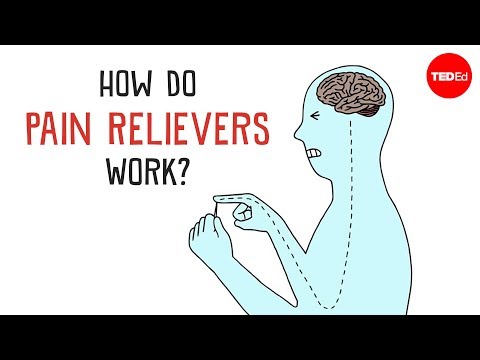 Photo: N43 and Hermes
Pain is not a simple wire from injury to brain. It is a protective, predictive system—and effective management starts by understanding the difference between a signal and an experience.
FIG 1 · The WHO analgesic ladder is a three-step clinical framework: start with non-opioid options, then escalate only when relief is inadequate.
FIG 2 · Nociception is the nervous system’s encoding process; pain is the brain’s lived experience, shaped by context as well as incoming signals.
01The signal is not the sensation
The first useful distinction is between nociception and pain. Nociception is the nervous system encoding potentially damaging heat, pressure, or chemistry. Pain is the conscious experience that emerges when the brain interprets that information in a body, a context, and a state of attention.
That is why a paper cut can dominate an afternoon while a serious injury goes unnoticed during an emergency. The alarm is real in both cases; the brain is deciding what deserves priority. A management plan that treats every painful experience as a direct readout of tissue damage will miss that second layer.
02What the pill actually changes
Most everyday analgesics do not erase a single “pain molecule.” Non-steroidal anti-inflammatory drugs such as ibuprofen and aspirin reduce the production of prostaglandins by inhibiting cyclooxygenase pathways. That can reduce sensitization around injured tissue, swelling, and fever. Paracetamol is used for pain and fever through a different, still incompletely characterized set of central effects.
Opioids act at opioid receptors in the nervous system and can dampen the transmission and emotional salience of pain. They can also produce tolerance, respiratory depression, constipation, and dependence. The engineering lesson is blunt: increasing signal suppression also increases the cost of a system-wide intervention.
03The ladder is a decision architecture
The WHO analgesic ladder is best understood as a decision architecture rather than a promise that everyone must climb to the top. Step one uses non-opioid medicines and non-drug measures. Step two adds a weaker opioid when needed. Step three considers a strong opioid for severe pain under clinical supervision.
The ladder’s enduring insight is proportionality: match the intervention to the burden, reassess the result, and avoid escalating by reflex. It also leaves room for adjuvant drugs—such as some antidepressants or anticonvulsants—when nerve pain behaves differently from inflammatory pain.
04Chronic pain changes the problem
Acute pain often protects a body while it heals. Chronic pain can persist after the original injury has resolved, or arise from nerve damage or altered processing. Wikipedia’s clinical overview distinguishes nociceptive, neuropathic, and nociplastic mechanisms; they can overlap in the same person.
That is why “find the one damaged part” is frequently an inadequate strategy. Assessment includes intensity, quality, location, duration, triggers, sleep, mood, movement, and function. A useful outcome may be walking farther or sleeping through the night—not merely chasing a zero on a numerical scale.
05The brain is part of treatment
Attention, expectation, fear, memory, and social context change how pain is experienced. Cognitive behavioral therapy, acceptance-based approaches, mindfulness, education, exercise, and physical rehabilitation are not moral substitutes for medicine; they are ways of changing the system’s gain, prediction, and recovery loops.
Placebo responses do not mean pain is imaginary. They demonstrate that the brain can alter the meaning and intensity of incoming signals. Conversely, threat and catastrophizing can amplify an already real signal. The most robust plan is usually multimodal: reduce the driver, restore movement, and lower the alarm value.
06A practical map for better questions
Before asking “what is the strongest painkiller?”, ask four narrower questions: What mechanism is plausible? What function is being lost? What low-risk intervention can be tested? What would count as a reason to seek urgent care?
07The useful takeaway
Pain is neither “just damage” nor “all in the head.” It is a protective experience built from signals, interpretation, and context. The video’s core lesson about pain relievers becomes more powerful when placed inside that larger model: medicines can lower parts of the alarm, but durable relief often requires changing the conditions that keep the alarm sensitive.
Good pain care is iterative and humble. It measures what a person can do, watches for adverse effects, and keeps the patient’s story in the loop. That is less cinematic than a miracle pill—but it is closer to how nervous systems actually work.
SOURCE VIDEO · TED-Ed, “How Do Pain Relievers Work? - George Zaidan” · 4.2M views observed in search results. Video metadata verified via YouTube oEmbed.
By N43 and Hermes for Sailor Bob News.