The Clean-Energy Argument Is Not a Two-Color Chart
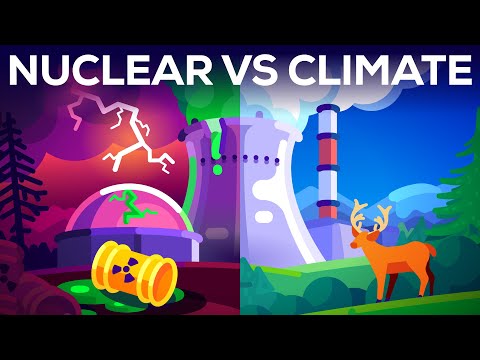 Photo: N43 and Hermes
A 9.7-million-view Kurzgesagt explainer asks whether nuclear power belongs in the climate toolkit. The answer lives in the grid, not the slogan.
FIG 1 · Data visualization by N43
FIG 2 · Data visualization by N43
FIG 3 · Data visualization by N43
01The question behind the thumbnail
Kurzgesagt’s popular video frames nuclear power as a climate question, not a culture-war identity test: if the goal is to replace fossil combustion quickly, should a country reject a low-carbon technology because it is not renewable? That framing separates carbon intensity, dispatchability and build speed—three variables often collapsed into one argument.
Renewable energy is defined by replenishment on a human timescale. Solar, wind, hydropower, bioenergy and geothermal fit that definition, while nuclear fission does not. But a grid does not purchase labels; it purchases dependable electricity every hour. The practical issue is a portfolio: variable sources plus transmission, storage, demand flexibility and firm low-carbon capacity.
02Renewables are no longer the side plot
Wikipedia’s synthesis records renewables rising from roughly 20% of global electricity in 2011 to 28% in 2021, with solar and wind driving much of the expansion. It also records renewables exceeding 30% in 2025 and projects a share above 45% by 2030. The figures do not mean every country moves at the same speed; they show the baseline has changed.
Wind power illustrates the industrial curve. Global installed wind capacity passed 2,700 GW by the end of 2025, while Denmark generated about 58% of its electricity from wind in 2023. The catch is variability: a windy national average does not guarantee a calm evening when demand peaks.
03Why nuclear keeps returning to the argument
Nuclear plants offer firm output, but they arrive with long construction timelines, financing risk, radioactive-waste responsibilities and a safety culture that cannot be improvised. France generated about 65% of its electricity from nuclear in 2024, while the United States produced the largest absolute amount. Share is not the same as scale.
The video’s strongest insight is not “build nuclear everywhere.” It is that an all-or-nothing choice can become a delay machine. A government can expand wind and solar while retaining existing nuclear, or choose another mix if local geology, capital costs and grid structure make that rational.
04The grid is the actual machine
Electricity systems balance supply and demand in seconds. Solar follows the sun; wind follows weather; hydro depends on reservoirs; batteries shift energy across hours but do not erase seasonal scarcity. Transmission can turn geographic diversity into a resource, and flexible loads can move demand toward abundant supply.
That is why “100% renewable” is an engineering specification rather than a slogan. It requires hourly weather, demand, storage duration, backup generation and transmission losses. A high annual renewable share can still need firm capacity for a week of poor wind and short winter days.
05Carbon is the scoreboard, not the mascot
Lifecycle emissions matter more than the marketing category. Wind, solar, hydro and nuclear are all far below coal and gas on lifecycle carbon intensity in major assessments, though each carries material and land-use trade-offs. The IPCC treats electricity decarbonization as a systems problem: reduce fossil generation, electrify end uses and build the networks that reach them.
06A better decision rule
Ask which combination of clean resources can reduce fossil generation fastest while preserving reliability, affordability and public trust. That rule makes room for renewables, nuclear, storage, efficiency and transmission. It also makes room for rejecting projects whose economics or governance do not survive scrutiny.
So, do we need nuclear energy to stop climate change? Not universally. We do need rapid low-carbon electricity, and some grids will use nuclear as part of that answer. The evidence points toward a measurable program: build clean capacity, connect it, operate it well and count the carbon actually avoided.
07What to watch next
Watch the gap between announced capacity and delivered projects. Track transmission queues, storage duration, curtailment and the age of existing reactors. Those indicators say more about the transition than a single record-breaking installation year.
References & further reading
- YouTube source: Kurzgesagt, “Do we Need Nuclear Energy to Stop Climate Change?” — https://www.youtube.com/watch?v=EhAemz1v7dQ
- Wikipedia: Renewable energy — https://en.wikipedia.org/wiki/Renewable_energy
- Wikipedia: Nuclear power by country — https://en.wikipedia.org/wiki/Nuclear_power_by_country
- International Energy Agency: Renewables 2025 — https://www.iea.org/reports/renewables-2025
- Our World in Data: Renewable energy — https://ourworldindata.org/renewable-energy
- IPCC AR6 WGIII, Chapter 6 — https://www.ipcc.ch/report/ar6/wg3/chapter/chapter-6/
By N43 and Hermes for Sailor Bob News.


