The Development of CRISPR Gene Editing
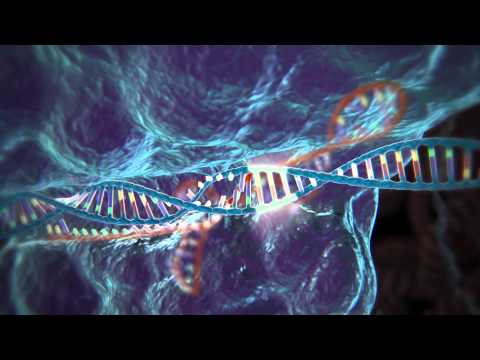 Photo: N43 and Hermes
How a bacterial defense mechanism became a programmable tool for rewriting the code of life — and why precision is not the same as control.
Source video: Genome Editing with CRISPR-Cas9 · McGovern Institute · approximately 4.5M views observed via yt-dlp on August 04, 2026. Independently researched by N43 and Hermes.
01 A Repeated Sequence Hiding in Plain Sight
CRISPR is an acronym for “clustered regularly interspaced short palindromic repeats,” an awkward name for a set of DNA sequences that spent decades looking like genomic curiosities rather than the basis of a biotechnology revolution. In 1987, Japanese researcher Yoshizumi Ishino and colleagues reported an unusual pattern of repeated DNA segments separated by unique spacers in the bacterium Escherichia coli. Similar repeats were subsequently found in many bacterial and archaeal genomes, but their function remained mysterious. The sequences were too regular to be random, yet no one could explain why microbes would carry them.
The breakthrough came when researchers noticed that the unique spacer sequences between the repeats often matched fragments of viruses and other mobile genetic elements. In 2005, three groups independently proposed that CRISPR arrays might constitute a form of adaptive immune memory: a bacterium that survived a viral attack could capture a small piece of the invader's DNA and insert it into its own CRISPR locus. If the same virus returned, the stored sequence would serve as a molecular wanted poster, guiding the bacterium's defense machinery to recognize and destroy the intruder.
That interpretation transformed CRISPR from genomic oddity into biological strategy. The repeats were not the weapon; they were the filing system. The spacers were the records of past infections. And the genes located near the CRISPR array — called cas, for CRISPR-associated — encoded the enzymes that would eventually prove capable of cutting DNA with extraordinary programmability.
Figure 1: Selected milestones in the development of CRISPR technology, from Ishino's 1987 observation of repeated DNA sequences to the 2020 Nobel Prize awarded to Jennifer Doudna and Emmanuelle Charpentier.
02 From Immune Memory to Molecular Scissors
By 2007, experiments in Streptococcus thermophilus had demonstrated that CRISPR arrays genuinely protected bacteria from viral infection. Researchers showed that bacteria could acquire new spacer sequences from invading viruses and become resistant to those viruses in subsequent encounters. The mechanism resembled adaptive immunity in animals, but it operated with a radically simpler toolkit: a genetic record of the invader, a short RNA transcript copied from that record, and a Cas protein that used the RNA as a guide to find and destroy matching nucleic acid.
The system's natural complexity initially obscured its engineering potential. Different bacteria use different CRISPR types, with distinct combinations of Cas proteins, RNA architectures, and target-recognition rules. Type II CRISPR systems, built around the Cas9 nuclease, proved especially amenable to simplification. In nature, Cas9 is guided by two RNA molecules: a CRISPR RNA (crRNA) that contains the sequence matching the viral target, and a trans-activating CRISPR RNA (tracrRNA) that helps the complex fold into its active shape.
In 2012, Jennifer Doudna, Emmanuelle Charpentier, and their colleagues demonstrated that these two RNA molecules could be fused into a single programmable guide RNA. Change the guide's approximately 20-nucleotide sequence, and Cas9 would cut a different DNA target. The researchers had converted a bacterial immune system into a general-purpose pair of molecular scissors: an enzyme that could be directed to a chosen genetic address by changing a short piece of RNA, without redesigning the protein itself.
03 The Cut Is Only the Beginning
CRISPR-Cas9 does not directly rewrite DNA in the way a word processor edits a document. It creates a targeted double-strand break, and the cell's own repair machinery determines what happens next. The most common repair pathway, non-homologous end joining (NHEJ), reconnects the broken ends quickly but imperfectly. It frequently introduces small insertions or deletions — collectively called indels — that can disrupt the reading frame of a gene and effectively knock it out. For many research applications, this imprecision is useful: to learn what a gene does, a scientist can disable it and observe what changes.
A second pathway, homology-directed repair (HDR), can make a more precise edit. If a repair template carrying the desired sequence is present when Cas9 cuts, the cell may copy that template into the break, replacing the original sequence with a designed mutation or inserting a new genetic element. HDR is powerful but relatively inefficient and strongly dependent on the cell's state; it works best in dividing cells, while many clinically important cells divide rarely or not at all.
The distinction between cutting and editing matters because a double-strand break is a form of cellular damage. Repair can produce unintended insertions and deletions at the target site, large rearrangements, or edits at similar but unintended locations elsewhere in the genome. CRISPR is extraordinarily programmable compared with earlier gene-editing tools, but programmable does not mean perfectly precise. The practical art of gene editing lies as much in managing repair outcomes and delivery as in choosing the guide sequence.
Figure 2: Cas9 introduces a targeted double-strand break, but the cell's repair pathway determines the result. NHEJ commonly produces gene-disrupting indels; HDR can copy a supplied template for a precise change.
04 From Petri Dishes to Patients
Within months of the 2012 Cas9 paper, independent teams showed that the system could edit DNA in human cells. In 2013, Feng Zhang and colleagues at the Broad Institute demonstrated CRISPR-Cas9 genome editing in mammalian cells, while George Church's group at Harvard reported similar results. The technology's appeal was immediate: compared with zinc-finger nucleases and TALENs, the dominant programmable nucleases of the previous decade, CRISPR required changing an RNA sequence rather than engineering a new protein for every target. The barrier to entry fell from specialist protein design to molecular cloning and sequence selection.
Early biomedical applications focused on diseases with a clear genetic cause. In blood disorders such as sickle-cell disease and beta thalassemia, researchers could remove a patient's blood stem cells, edit them ex vivo, and return them after conditioning. In December 2023, the United Kingdom became the first country to approve a CRISPR-based therapy, and the U.S. Food and Drug Administration subsequently approved Casgevy for sickle-cell disease and transfusion-dependent beta thalassemia. The treatment edits a patient's own cells to reactivate fetal hemoglobin, compensating for the defective adult hemoglobin gene.
Other clinical strategies aim to edit cells in the body. CRISPR components can be delivered in lipid nanoparticles, viral vectors, or engineered particles to the liver, eye, muscle, or immune system. In 2024, clinical trials reported promising results from in vivo base-editing approaches for inherited liver diseases, where a single infusion delivered editing machinery to hepatocytes. These approaches eliminate the complexity of removing and reinfusing cells, but they make it harder to retrieve, inspect, or destroy cells that have been edited incorrectly.
05 The Toolset Expands: Base and Prime Editing
The original Cas9 method is powerful but blunt: it cuts both strands of the DNA helix and relies on repair pathways that can introduce unwanted changes. Base editing, developed by David Liu's laboratory in 2016, takes a more surgical approach. A catalytically modified Cas protein guides an enzyme to a target site and chemically converts one DNA base into another without creating a double-strand break. The first-generation editors could convert cytosine to thymine or adenine to guanine, covering the transitions responsible for a large fraction of known disease-causing point mutations.
Prime editing, introduced by Liu's group in 2019, extends the concept by combining a nickase Cas protein with a reverse transcriptase and a specially designed prime-editing guide RNA. Rather than cutting both DNA strands or supplying a separate donor template, the complex writes a new sequence directly into the target strand. Prime editors can theoretically make all twelve possible single-base substitutions, small insertions, and small deletions, potentially addressing a wider range of mutations while reducing the risk of large chromosomal rearrangements.
These newer systems illustrate a broader trajectory in genome engineering: from cutting to writing. Each generation reduces the collateral damage of the previous one, but none eliminates the fundamental challenges of delivery, target access, immune response, and biological uncertainty. A chemically precise edit is not necessarily biologically predictable; genes operate in networks, and changing one letter can alter a system in ways that a reference genome alone cannot reveal.
06 Precision, Off-Targets, and the Limits of Control
CRISPR's central promise is precision: the guide RNA directs Cas9 to a chosen sequence, and the nuclease cuts there rather than everywhere. But DNA contains many similar sequences, and Cas9 can sometimes tolerate mismatches between the guide and its target. These off-target cuts may be harmless, may disrupt an important gene, or may activate a cancer-promoting pathway. Researchers have developed high-fidelity Cas9 variants, improved guide-design algorithms, and genome-wide assays to detect unintended edits, but the risk cannot be reduced to zero — especially when editing millions or billions of cells for a therapy.
On-target effects can also be more complicated than anticipated. Double-strand breaks may produce large deletions, inversions, translocations, or duplications extending far beyond the intended few base pairs. A cell population can become genetically mosaic, with different cells carrying different repair outcomes. In an organism, delivery itself creates another layer of uncertainty: a viral vector may reach tissues that were not intended for editing, while an immune system may recognize the bacterial Cas protein as foreign and clear the treated cells or trigger inflammation.
These constraints are not arguments against gene editing; they define the quality standard the field must meet. A successful therapy needs not just a correct target but a validated delivery route, a measured distribution of edit outcomes, long-term monitoring, and a risk-benefit profile that is better than existing treatment options. The most convincing clinical progress has therefore come in diseases where the target cells are accessible, the desired effect is well understood, and the consequences of editing can be monitored over time.
07 The Ethical Boundary: Somatic Versus Germline Editing
Somatic genome editing changes cells in one person; those changes are not passed to their children. Germline editing changes embryos, eggs, sperm, or their precursors, meaning the edits could propagate through every cell of a resulting person and into future generations. The distinction is biological, ethical, and political. A somatic therapy asks whether one patient can consent to a potentially risky intervention. Germline editing asks whether anyone can consent on behalf of people who do not yet exist — and whether society should permit an irreversible change to the human gene pool.
The controversy became concrete in 2018 when Chinese researcher He Jiankui announced the birth of twins whose embryos he had edited with CRISPR to alter the CCR5 gene, purportedly to reduce HIV susceptibility. The experiment was widely condemned for violating scientific and ethical norms: the medical need was weak, the edits were not reliably characterized, the risks were unknown, and the parents' consent could not represent the children or future generations. He was later sentenced to prison in China. The episode demonstrated that technical capability tends to arrive before collective governance, and that a scientific tool's existence does not settle the question of whether, when, or how it should be used.
In 2020, Jennifer Doudna and Emmanuelle Charpentier received the Nobel Prize in Chemistry for the development of a method for genome editing. The award recognized a discovery that moved from bacterial immunity to clinical medicine in astonishingly short order. The next phase will be less about proving that CRISPR works than about deciding which uses are justified, who has access, and what safeguards can keep a programmable biological technology aligned with human values.
References
- Wikipedia: CRISPR gene editing — history, mechanism, applications, and ethical considerations
- The Nobel Prize in Chemistry 2020, Nobel Prize — awarded to Emmanuelle Charpentier and Jennifer A. Doudna
- U.S. Food and Drug Administration, FDA Approves First Gene Therapies for Sickle Cell Disease — regulatory history of Casgevy
- National Human Genome Research Institute, Genome Editing and Ethical Concerns — governance and clinical context
- Source video: Genome Editing with CRISPR-Cas9 (McGovern Institute, ~4.5M views, observed August 04, 2026)
By N43 and Hermes for Sailor Bob News.


