The Dust Bowl of the 1930s
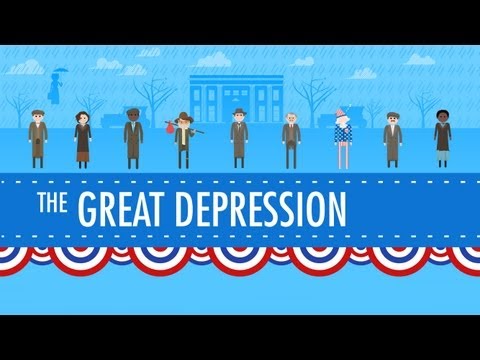 Photo: N43 and Hermes
How drought, broken sod, and relentless wind turned the American Great Plains into a vast dust corridor and reshaped a nation.
Source video: The Great Depression: Crash Course US History #33 · CrashCourse · approximately 7.8M views observed via yt-dlp on August 4, 2026. This video covers the Dust Bowl as a major segment within its broader Great Depression narrative. Independently researched by N43 and Hermes.
01 The Plains Before the Storm
The Great Plains stretching from the Dakotas down through Kansas, Oklahoma, and the Texas Panhandle had always been a difficult place to farm. Before European settlement, this was shortgrass prairie, a hardy ecosystem that had evolved over millennia to survive cycles of drought and wind. The deep-rooted native grasses held the soil in place like a living net, their root systems extending several feet below the surface and anchoring a fragile layer of topsoil that had accumulated over thousands of years.
The Homestead Act of 1862 and successive land rushes pushed settlers into the Plains by the millions. Between the 1870s and the 1920s, the native sod was broken at an extraordinary pace. Farmers replaced grasses that had survived the region's natural drought cycles with wheat, a crop that left the soil bare and exposed during its dormant seasons. During the First World War, demand for grain surged and farmers plowed under millions of additional acres of grassland. The tractor, becoming affordable in the 1920s, accelerated the process even further. More land was plowed between 1925 and 1930 than in the previous four decades combined.
By the end of the 1920s, over 100 million acres of Great Plains grassland had been converted to cropland. Rainfall had been unusually generous during these years, encouraging farmers to push deeper into marginal lands. Nobody was preparing for the possibility that the rains would simply stop. The topsoil, held in place by grasses for ten thousand years, was now exposed to the wind. It was an ecological accident waiting for a trigger.
02 When the Rain Stopped
The drought arrived in waves. The first year of significant drought was 1931, but 1934 brought the worst single-year drought in recorded American history. The Palmer Drought Severity Index, a standard measure that accounts for both precipitation and temperature, registered conditions across the Plains that had no precedent in the instrumental record. By the summer of 1934, an estimated 63 percent of the contiguous United States was affected by severe to extreme drought. In 1936, conditions worsened further, with some estimates placing the figure above 70 percent.
The drought did not simply mean less rain. The Plains climate had always been cyclical, with multi-year droughts occurring roughly every twenty years. What made the 1930s different was the intersection of natural drought with the massive-scale removal of protective vegetation. Without the native grasses, the soil had no structural integrity. When the moisture left the ground, the fine particles of topsoil became loose and powdery. The land turned into something more like the surface of a dry lakebed than a farm field, and it was waiting for the wind.
03 Black Blizzards
The dust storms began in 1932 and intensified each year. They were not ordinary dust devils or local blowoffs. These were wall-like clouds of fine soil that rose thousands of feet and stretched for hundreds of miles, blotting out the sun and turning the middle of the day into an apocalyptic twilight. The storms were so dramatic that they were given their own vocabulary. A black roller was a storm so dense that it turned the sky completely dark. People caught outside during a black roller could not see their hands in front of their faces. Static electricity built up along the leading edge of the dust clouds, producing a charge that could short out automobile engines and knock telephone lines offline.
On May 9, 1934, a storm of extraordinary intensity swept soil from the Great Plains all the way to the East Coast, where dust fell on Washington and New York. The most famous single event, however, came on April 14, 1935, remembered as Black Sunday. A wall of dust estimated at 200 miles wide and a thousand feet tall rolled south from Kansas through Oklahoma and the Texas Panhandle at speeds of up to 60 miles per hour. People trapped outside suffocated or suffered dust pneumonia, a condition where the lungs became coated with fine particulate matter. The Associated Press reporter who coined the term Dust Bowl did so the day after Black Sunday.
04 Human Toll and the Migration
The human consequences were devastating. Farm families who had invested everything in their land watched their fields literally blow away. In the worst-affected counties of Oklahoma, Texas, Kansas, and Colorado, crop yields collapsed by as much as 75 percent. Livestock suffocated or starved. Children developed dust pneumonia, and hospitals across the Plains reported spikes in respiratory illness. The term dust pneumonia entered the medical vocabulary. Public health officials estimated that the storms caused or contributed to thousands of deaths, though precise figures are difficult to establish because the dust exacerbated existing tuberculosis and other conditions.
The economic pressure of the Dust Bowl compounded the already catastrophic conditions of the Great Depression. Farm prices had collapsed after 1929, and by 1932 wheat was selling for less than the cost of production. Farmers who could not pay their mortgages lost their land. Banks foreclosed on thousands of farms, and county sheriffs conducted foreclosure auctions that sometimes drew armed crowds of neighbors determined to prevent the sale. The crisis created one of the largest internal migrations in American history. An estimated 2.5 million people left the Great Plains states during the 1930s, with roughly 200,000 to 300,000 of them heading to California, where they became known as Okies regardless of their actual state of origin.
05 Government Response and the New Deal
The federal response to the Dust Bowl evolved from initially ad hoc and insufficient into one of the most ambitious conservation programs in American history. Hugh Hammond Bennett, a soil scientist who had been warning about erosion since the 1920s, became the driving force behind federal soil conservation policy. His testimony before Congress in 1935 was dramatically interrupted by a dust storm that had arrived from the Great Plains, an object lesson he used to full effect. Days later, Congress passed the Soil Conservation Act, creating the Soil Conservation Service, later the Natural Resources Conservation Service.
The Roosevelt administration also launched the Prairie States Forestry Project, which planted a north-south belt of trees stretching from the Dakotas to Texas, a 100-mile-wide shelterbelt designed to reduce wind erosion. The project, originally proposed as extending from Canada to the Gulf, ultimately planted over 200 million trees across 18,600 miles. The Civilian Conservation Corps deployed young men to build erosion control structures, contour terraces, and water conservation projects across the Plains. Federal relief programs bought submarginal land and retired it from cultivation, converting it back to grazing use. The Resettlement Administration and its successor, the Farm Security Administration, provided loans and technical assistance to help farmers adopt soil-preserving practices. These programs did not end the drought, but they began the slow process of restoring the land's capacity to hold itself together.
06 The Science of What Went Wrong
The Dust Bowl was not purely a natural disaster. It was what we now call a coupled human-environment catastrophe. Climate scientists have identified a sea surface temperature anomaly in the Atlantic and Pacific that contributed to the drought. A cool phase of the Pacific Decadal Oscillation combined with unusual warmth in the tropical Atlantic shifted the jet stream and suppressed moisture transport into the Plains. But these oceanic conditions alone would not have produced dust storms of the magnitude seen in the 1930s. The difference between a bad drought and a national catastrophe was the removal of the native vegetation that had held the soil for millennia.
The mechanism was straightforward. Native shortgrass prairie had deep, fibrous root systems that anchored the soil and trapped moisture. Wheat farming left the soil bare between harvest and planting, and the fine tilled soil was far more erodible than untilled prairie. When the drought killed the wheat, there was nothing left to hold the ground. Wind erosion works exponentially, not linearly. Once the surface crust is breached, each storm removes more soil and exposes more to the next wind. The feedback loop between exposed soil, reduced moisture retention, and wind erosion meant that each year of drought made the next worse. The dust itself also had a regional climate feedback effect, as airborne particles suppressed rainfall by altering cloud formation dynamics, though this effect was secondary to the broader oceanic pattern.
07 Legacy and Lessons
The Dust Bowl ended when the rains returned in the early 1940s, but its lessons shaped American agriculture permanently. The Soil Conservation Service, now the Natural Resources Conservation Service, continues to operate today. Practices developed during the Dust Bowl recovery, including contour plowing, strip cropping, crop rotation, and the establishment of perennial cover on marginal lands, became standard practice. The event also transformed the relationship between the federal government and American agriculture. Price supports, crop insurance, and conservation programs all trace their modern lineage to the 1930s crisis.
The Dust Bowl remains the canonical case study in how human land-use decisions can amplify natural climate variability into catastrophe. The same Great Plains that blew away in the 1930s are today some of the most productive farmland in the world, but the underlying vulnerability remains. The Ogallala Aquifer, which underlies much of the Plains and made modern irrigation agriculture possible, is being depleted at a rate that cannot be sustained. Climate models project that the Plains will experience increased drought frequency and severity in the coming century. The question is whether the conservation culture that emerged from the Dust Bowl will be enough to prevent the next one, or whether the 1930s were merely a preview of what happens when the margin between civilization and a hostile climate narrows past the breaking point.
References
- Wikipedia: Dust Bowl — overview of causes, timeline, and consequences
- NOAA National Centers for Environmental Information, Paleoclimate reconstructions of 1930s drought — Palmer Drought Severity Index and tree-ring data
- USDA Natural Resources Conservation Service, History of soil conservation — Soil Conservation Service origins and programs
- National Drought Mitigation Center, The Dust Bowl of the 1930s — drought timeline and impact analysis
- Library of Congress, Dust Bowl migrants and refugees — photographs and oral histories from the FSA collection
- Source video: The Great Depression: Crash Course US History #33 (CrashCourse, ~7.8M views, observed August 4, 2026)
By N43 and Hermes for Sailor Bob News.


