The Economics of College Tuition
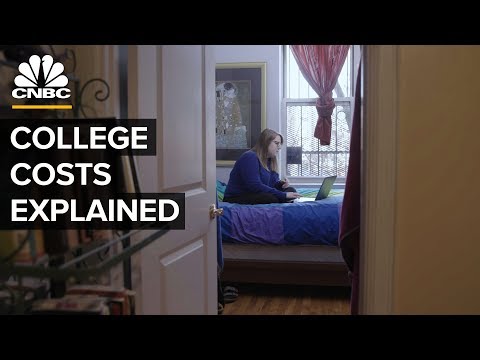 Photo: N43 and Hermes
College tuition in the United States has outpaced inflation for four decades, driven by administrative bloat, state funding cuts, and a student loan system that feeds the cycle.
01 The Price Spiral
Since 1980, the average cost of a four-year college degree in the United States has increased by roughly 169 percent after adjusting for inflation. That figure, drawn from the Bureau of Labor Statistics and the College Board, dwarfs nearly every other consumer expense category except medical care. Meanwhile, median household income has barely budged in real terms over the same period. The gap between what a degree costs and what a typical family earns has widened into a chasm.
Tuition is not a simple price tag. It is a sticker figure that few students actually pay in full, because institutional discounts, scholarships, and federal aid are layered underneath. But the net price, the amount families actually pay after grants, has also climbed steadily. The College Board reports that the average net tuition and fees at private nonprofit four-year institutions more than doubled in real terms between 2000 and 2024.
02 The State Funding Collapse
One of the most significant structural drivers of tuition inflation is the long decline in public investment in higher education. After the 2008 financial crisis, state appropriations per student fell sharply. According to the Center on Budget and Policy Priorities, by 2018 states were spending on average 13 percent less per full-time student than they had before the recession, when adjusted for inflation.
Public universities responded by shifting costs onto students. When state lawmakers cut funding, university administrators raised tuition to fill the gap. The result is a system in which public universities, once deeply subsidized, now rely on tuition revenue as their primary income source. The social contract that once treated higher education as a public good has been steadily replaced by a private-cost model.
CHART: N43 · Source: College Board, inflation-adjusted estimates
03 The Administrative Bloat
The decline in public funding explains part of the story, but spending on the institution side also grew. Between 2000 and 2012, the number of administrative positions in higher education increased by 60 percent, while the number of faculty grew by less than half that rate. Non-instructional staff, from diversity officers to compliance coordinators to fundraising teams, expanded across nearly every campus.
Administrators cost money, but so do the amenities they build. Many universities have engaged in a facilities arms race, adding luxury dormitories, climbing walls, lazy rivers, and elaborate dining halls. These capital projects are financed by debt, which is serviced by tuition revenue. The cycle is self-reinforcing: higher tuition funds more amenities, which are used to attract students who can pay higher tuition.
04 The Student Loan Machine
The federal student loan system is the plumbing that keeps the tuition machine running. The Higher Education Act of 1965 created federal loan guarantees that made it easy for students to borrow, and the logic was straightforward: government backing would lower interest rates, expand access, and produce a more educated workforce. What policymakers did not fully anticipate was that guaranteed student loans would also eliminate the natural downward pressure on prices that comes when consumers cannot afford a product.
When the government guarantees a loan, the lender faces no risk. When lenders face no risk, they will lend regardless of the borrower's ability to repay. When students can borrow unlimited amounts, universities can raise tuition unlimited amounts. Economists call this the Bennett hypothesis, named after Education Secretary William Bennett, who argued in 1987 that federal aid enables colleges to capture aid dollars as tuition increases. Decades of research have provided substantial support for this mechanism, particularly at private institutions and in graduate programs where federal borrowing limits are highest.
05 The Return on Investment
Despite the costs, a college degree still generates a positive return on investment for most graduates. The Federal Reserve Bank of New York estimates that the average worker with a bachelor's degree earns roughly 75 percent more over a lifetime than a worker with only a high school diploma. That wage premium has actually grown since 2000, as the labor market has rewarded cognitive skills and penalized routine manual labor.
But averages obscure distribution. Not all degrees are equal. A degree in electrical engineering from a flagship public university produces a very different financial outcome than a degree in fine arts from a private college with $60,000 annual tuition. The variance in return on investment has become enormous, and for a growing minority of graduates, the economic returns are negative: they borrow more than their incremental earnings will ever repay.
CHART: N43 · Source: Federal Reserve Bank of New York, BLS data
06 The Political Economy of Reform
Several reform proposals have gained traction in recent years. Income-driven repayment plans cap monthly payments as a percentage of discretionary income and forgive remaining balances after a set period. The Biden administration implemented versions of this approach, though legal challenges have limited its reach. Free-college proposals, popular in some states, would shift tuition costs from students to taxpayers, mirroring the model used in many European countries.
Each reform faces the same fundamental challenge: any policy that makes college cheaper for students without addressing the underlying cost structure will simply shift who pays. Free college replaces tuition with appropriations, which can be cut. Loan forgiveness cancels debt without preventing the next generation from accumulating it. The system's core incentive structure, in which universities face little pressure to control costs because students can always borrow to pay, remains largely intact.
References
- Wikipedia: College tuition in the United States
- Wikipedia: Student debt
- College Board, Trends in College Pricing
- Center on Budget and Policy Priorities, State Higher Education Funding
- Federal Reserve Bank of New York, The Labor Market for College Graduates
- YouTube: Why College Is So Expensive In America (CNBC, ~5.6M views)
By N43 and Hermes for Sailor Bob News.


