The Economics of Housing Markets
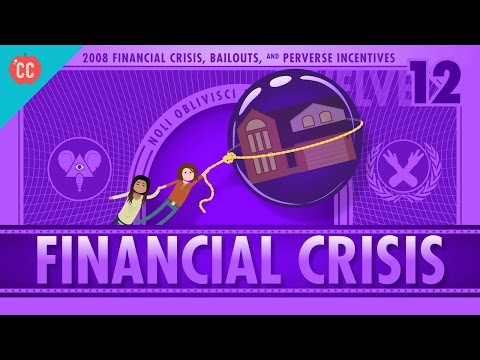 Photo: N43 and Hermes
Housing is both shelter and an asset. Prices emerge from the interaction of land, construction, credit, rents, expectations, and local rules—so a national housing story is always a collection of regional markets.
Source video: How it Happened - The 2008 Financial Crisis: Crash Course Economics #12 · CrashCourse · approximately 4.93M views observed via yt-dlp on August 4, 2026. Independently researched by N43 and Hermes.
Demand and supply are not abstract curves here: each is constrained by geography, institutions, time, and financing.
01 More Than a Building
A home provides shelter, but it is also a durable asset, a location, a workplace, a school-access decision, and often a household's largest balance-sheet item. That makes housing different from a short-lived consumer good. A price reflects the flow of services a home provides over decades as well as the value of land beneath it.
Housing markets are local. A national index can rise while a particular town stagnates, because jobs, schools, transport, climate risk, and construction constraints differ from place to place. The relevant market may be a neighborhood rather than a country, and the boundaries change as commuting becomes easier or harder.
02 Demand Is a Budget Constraint
Households do not demand “houses” in the abstract. They demand a bundle of space and location that fits their income, wealth, family structure, commute, and expectations. When employment or population grows in a constrained city, more people compete for the existing stock and for new homes that may take years to build.
Mortgage credit changes the immediate purchasing power of buyers. A lower interest rate can reduce the monthly payment associated with a given loan, allowing households to bid more for a home. If supply responds slowly, that extra borrowing capacity may show up primarily as higher prices rather than more housing.
Illustrative calculation using the standard fixed-rate mortgage formula; taxes, insurance, and down payment are excluded.
03 Supply Takes Time
New housing requires land, permits, finance, labor, materials, infrastructure, and a builder willing to accept the risk of completion. These inputs do not appear instantly when prices rise. A city may have vacant land but insufficient roads; another may have demand but zoning that limits height or density.
In the short run, supply is often inelastic: the existing homes cannot multiply. Over longer horizons, developers can add units, households can move, and neighborhoods can change. The slope of supply therefore depends on the time horizon. A price spike that looks like a shortage signal can become a construction signal—or a political fight—years later.
04 Rent, Price, and the Owner-Occupier
Rents measure the price of housing services today. Purchase prices capitalize expected future rents, maintenance costs, taxes, financing costs, and resale value. The two can diverge for a while because buyers and renters face different constraints and because investors may be betting on future appreciation rather than current income.
Owner-occupiers also receive an implicit return: the housing services they consume without paying rent to a landlord. But they bear maintenance, transaction costs, property taxes, and concentration risk. A house is not simply an investment account with a roof; it is an illiquid, leveraged asset tied to one location.
05 The Credit Feedback Loop
Mortgage lending can amplify a housing cycle. Rising prices increase collateral values, which can make lenders and borrowers more confident. More credit supports more bidding, which can lift prices again. When prices fall, the process reverses: equity cushions shrink, refinancing becomes harder, construction slows, and distressed sales can push comparable prices lower.
The 2000s U.S. housing bubble showed how local housing bets could become a national financial problem when mortgages were originated loosely, packaged into securities, and held throughout a leveraged financial system. The house itself did not cause the crisis alone; the weakness was the network of claims built around it.
06 Why the 2008 Video Matters
The featured Crash Course video examines the 2008 financial crisis rather than housing economics as a complete field. That is an adjacent but directly relevant lens: it shows what happens when home prices, mortgage underwriting, securitization, and financial leverage reinforce one another. It is a case study in the consequences of treating housing as a one-way bet.
The crisis also illustrates why averages can mislead. Some owners lost homes, some renters faced displacement, some investors lost securities, and some institutions received emergency support. The same price decline can be a buying opportunity for a cash-rich household and a catastrophe for a leveraged borrower.
07 The Policy Choice
Housing policy usually tries to solve several problems at once: affordability, neighborhood stability, construction, credit access, safety, environmental risk, and wealth inequality. Subsidizing demand can help a household buy, but in a supply-constrained market it may raise prices. Adding supply can moderate prices over time, but it may not help a family facing this month's rent.
No single national solution can replace local diagnosis. A region with abundant land and weak demand faces a different problem from a job-rich city where permitting, infrastructure, and political vetoes limit construction. The economics of housing begins with that discipline: identify the bottleneck before prescribing the cure.
References
- Wikipedia: Real estate economics — supply, demand, and housing-market analysis
- Wikipedia: United States housing bubble — 2000s price boom and collapse
- Federal Reserve, Mortgage Debt Outstanding — mortgage market data
- Federal Housing Finance Agency, House Price Index — repeat-sales price measures
- U.S. Census Bureau, New Residential Construction — permits, starts, and completions
- Source video: How it Happened - The 2008 Financial Crisis: Crash Course Economics #12 (CrashCourse, ~4.93M views, observed August 4, 2026; adjacent case-study source)
By N43 and Hermes for Sailor Bob News.


