The engineering challenge behind atmospheric rivers
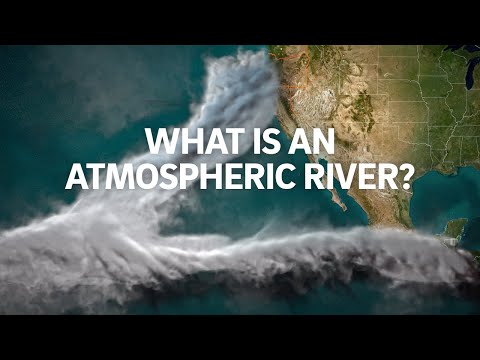 Photo: N43 and Hermes
Preparing for atmospheric rivers is an engineering problem in a moving, uncertain system: infrastructure must absorb pulses of water while forecasts, terrain, reservoirs, and communities interact.
Source video: What is an Atmospheric River? · Scripps Oceanography · 1:28.
Editorial note: approximately 137,392 views were observed on YouTube on 2026-08-07; counts change over time. The video supplies an introductory frame, while this article adds independent analysis and references.
01 The specification keeps moving
A bridge, levee, reservoir, road, or drainage system is designed around expected loads and tolerances. An atmospheric river complicates that specification because the load depends on a moving plume, changing snow levels, storm duration, and where the strongest uplift occurs.
Designers cannot build for one fixed storm shape. They must consider ranges, sequences, failure modes, maintenance, and the consequences of an event arriving after previous rainfall has already consumed the system’s spare capacity.
02 Transport is not the same as impact
A strong moisture corridor can pass with limited local precipitation if lift is weak or the plume misses a watershed. Conversely, a narrower event can create severe impacts when it stalls over steep terrain or falls on saturated ground.
Engineering decisions therefore need a translation layer. Integrated vapor transport is valuable for detecting the atmospheric supply, but local rainfall, snow level, runoff, debris, and exposure determine what a structure must withstand.
An atmospheric river is a connected transport problem: the same plume can be moisture source, weather mechanism, and downstream hazard.
03 Reservoirs have a timing problem
A reservoir can benefit from inflow, but it must preserve space for flood control and account for forecast uncertainty. Releasing water too early may waste a scarce supply; waiting too long may reduce safety margins when rain accelerates the inflow.
This is a control problem with delayed effects. Decisions are made before the full hydrograph is known, and the best action depends on storage, downstream exposure, forecast ensembles, and rules written for more than one objective.
04 Snow turns temperature into risk
Near freezing, a small change in the atmospheric temperature profile can change precipitation from snow to rain. Rain on an existing snowpack can add water directly and speed melt, increasing runoff beyond what a rainfall total alone would suggest.
Mountain infrastructure must therefore treat the snowline as a moving boundary. Roads, hydropower, flood channels, and reservoirs all care about elevation-dependent precipitation, not only the storm average across a region.
05 Networks fail in combinations
A road can be structurally sound and still become unusable when a culvert clogs, a slope fails, or a bridge approach washes out. Power, communications, water treatment, and emergency access can depend on the same exposed corridors.
Resilience is consequently a network property. Redundancy, inspection, debris management, early closure, backup power, and clear evacuation routes may matter as much as the nominal strength of a single asset.
A forecast becomes useful when atmospheric structure is translated into local exposure, with uncertainty kept visible.
06 Forecasts must become triggers
An engineering plan is not complete when it produces a map. Operators need thresholds that trigger inspection, pre-positioning, reservoir changes, public warnings, or temporary closures. Those thresholds should account for uncertainty rather than pretending the forecast is a single number.
Scenario planning helps: what if the plume shifts north, the snow level rises, the event lasts twelve hours longer, or a second storm arrives before recovery? Exercises expose dependencies that a design drawing can hide.
07 Build for adaptation
Past observations cannot supply a perfect future design value, particularly as warming changes atmospheric moisture, snow, fire history, and exposure. Infrastructure must be maintainable and upgradeable rather than treated as finished once it opens.
The engineering objective is not to eliminate uncertainty. It is to make uncertainty survivable: monitor conditions, preserve options, design graceful failure, and connect physical assets to institutions capable of acting before the peak arrives.
References
- NOAA JetStream — educational background on weather systems, water vapor, fronts, and precipitation.
- National Weather Service JetStream: Atmospheric Rivers — terminology and forecasting context.
- Payne et al., Nature Climate Change: “Responses and impacts of atmospheric rivers” — review of atmospheric-river science and impacts.
- Ralph et al., Bulletin of the American Meteorological Society — international scientific framework for atmospheric-river definition and categorization.
- Video: What is an Atmospheric River? — Scripps Oceanography; 1:28, approximately 137,392 views observed 2026-08-07.


