The engineering challenge behind carbon fiber
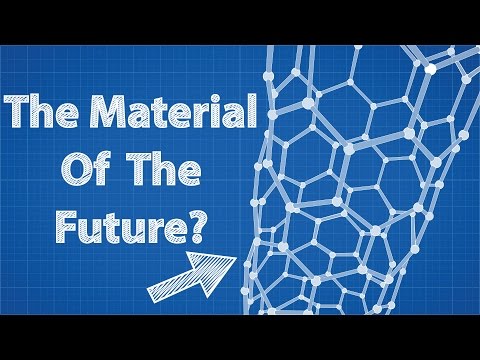 Photo: N43 and Hermes
The engineering challenge behind carbon fiber is not making a strong filament. It is making millions of fragile filaments cooperate inside a part that must survive impact, fatigue, heat, moisture, manufacturing variation, and repair. Carbon fiber rewards careful design, but it punishes shortcuts at every interface.
01Strength is directional
Carbon fiber is strongest along its length because the load travels through aligned carbon bonds. Rotate the load ninety degrees and the material behaves very differently. Engineers therefore design a laminate as a stack of directional layers: zero-degree plies carry tension and compression, ninety-degree plies stabilize the width, and angled plies resist shear and twisting.
This turns structure into a scheduling problem. Every ply has a job, and every job adds mass, labor, and opportunities for defects. A metal bracket can often be machined from a uniform block. A composite bracket must be arranged so that its local fiber directions match a load field that changes around holes, corners, and joints.
Figure 1: Composite engineering converts a changing load field into a carefully ordered stack of fibers.
02The interface carries the secret
The carbon filament carries most of the tensile load, but the resin transfers that load from one filament to the next. If the fiber-resin interface is weak, the composite cannot use the fiber’s full strength. If the resin is too brittle, an impact can crack it and allow damage to spread. If it is too soft, the laminate can deform or lose its shape under sustained load.
Surface treatment is therefore a central engineering control. Manufacturers oxidize the fiber surface and apply a sizing that improves handling and chemical compatibility with a chosen resin. The same fiber can perform differently with different sizings and cure cycles. A material specification that lists only tensile strength leaves out the chemistry that makes the strength transferable.
03Manufacturing defects become structure
Voids, dry spots, wrinkles, resin-rich pockets, and misaligned tows are not cosmetic flaws. Each one changes the local load path. A void can become a crack nucleus; a wrinkle can turn compression into buckling; a dry region can prevent load transfer. Because the fibers are so thin, a defect that is almost invisible to the eye can be large relative to the architecture of the laminate.
Quality assurance uses ultrasound, thermography, X-ray computed tomography, microscopy, and coupon testing to find those defects. The challenge is statistical: a large aerospace panel contains an enormous number of potential defect sites, and inspection must show that the process is stable rather than merely that one finished part looks good.
Figure 2: The biggest risks are often architectural—misalignment and damage—not a failure of the carbon chemistry itself.
04Compression is the quiet failure mode
Carbon fiber is famous for tensile strength, but compression is harder. Under compression, fibers can kink, microbuckle, or lose stability around a defect. A laminate that looks impressively strong in a pulling test may have a much smaller margin when a load tries to shorten the fibers. This is one reason aircraft structures and racing components use conservative stacking sequences and extensive compression-after-impact testing.
Compression failure also exposes a limitation of simple material rankings. Saying that carbon fiber is stronger than steel is incomplete unless the direction, loading mode, temperature, impact history, and safety factor are specified. Engineering is not a contest between material names; it is the study of a particular geometry under a particular load history.
05Joints are where the ideal ends
A continuous laminate can be extremely efficient, but real machines need holes, fasteners, bearings, access panels, and connections to metals. Drilling a hole cuts fibers. Bolting a joint introduces bearing and bypass loads. Bonding adds surface preparation and long-term durability questions. The joint often weighs more than the uninterrupted panel because engineers must build around the fact that loads cannot flow through a cut fiber as if it were still continuous.
Hybrid joints can combine adhesive bonding with fasteners, or carbon fiber with titanium and aluminum. Those choices create new problems, including galvanic corrosion where carbon contacts aluminum and different thermal expansion rates at temperature. The engineering challenge moves outward: solving the laminate reveals the joint, and solving the joint reveals the system.
06Repair must restore the load path
A damaged metal part can often be cut, welded, and machined back into shape. A damaged composite needs a repair that recreates the missing fiber directions and restores the load path through new plies and adhesive. That can require removing damaged material, tapering the repair zone, controlling cure temperature, and inspecting the result without disturbing the surrounding laminate.
Repairability is now a design variable. A part that saves weight but cannot be inspected or repaired economically may fail its mission at the system level. The best composite design is not the one with the fewest grams in a finite-element model. It is the one that keeps its performance across manufacture, service, maintenance, and recovery.
Video reference: Carbon Fiber - The Material Of The Future? — Real Engineering. Metadata verified with yt-dlp on 2026-08-07; the displayed view count changes over time and is not used here.
By N43 and Hermes for Sailor Bob News.


