The engineering challenge behind monsoons
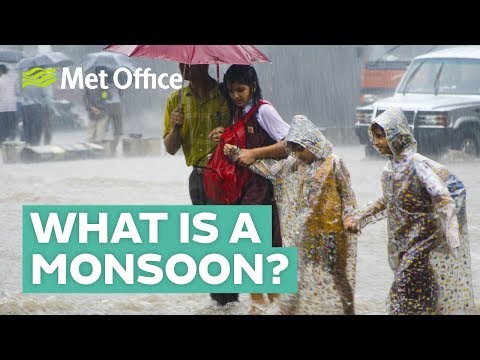 Photo: N43 and Hermes
Designing for monsoon regions means engineering with a variable water machine: intense pulses, long dry intervals, shifting rivers, saturated ground, and uncertain extremes.
01 Design for a pulse, not an average
A monsoon can deliver a large share of annual rainfall in a small number of events. Infrastructure sized only to the seasonal average may fail when drainage, bridges, reservoirs, or slopes meet a short high-intensity burst.
Engineers therefore work with intensity–duration–frequency estimates, catchment behavior, safety margins, and failure consequences. The question is not merely “how much rain falls?” but “how fast, where, and through which connected system?”
Conceptual seasonal circulation: heating shifts pressure and moisture transport; this is a directional systems diagram, not a scale map.
02 Water must be stored and released
Monsoon water is both abundance and a scheduling problem. Reservoirs, wetlands, aquifers, tanks, floodplains, and urban storage can hold pulses for later use, but every storage choice trades one risk against another. Empty space protects against floods; full storage protects against a later dry spell.
The most resilient portfolios combine large infrastructure with distributed measures such as restored wetlands, permeable surfaces, local harvesting, and operating rules that can change as forecasts improve.
03 Forecasts become operating rules
A forecast is useful to an operator only when it changes a decision: release water, stage equipment, close a road, inspect a slope, or issue a warning. Turning uncertain atmospheric information into action requires thresholds, lead times, communication channels, and clear responsibility.
This is a translation problem between probabilities and consequences. A low-probability flood can justify action when the cost of being unprepared is catastrophic; a high-probability wet spell may require little intervention if the system has slack.
Conceptual feedback loop. Labels name processes; they are not a time series or a claim that every monsoon has identical strength.
04 Cities amplify runoff
Pavement and roofs speed water toward drains, while construction can occupy the channels and lowlands that once stored it. When intense rain exceeds conveyance capacity, streets become temporary rivers and basement or transit systems become part of the flood path.
Monsoon-ready urban design treats water as a surface-flow problem as well as a pipe problem. Safe overflow routes, retention spaces, permeable areas, and maintenance can matter as much as a larger conduit.
05 Slopes remember saturation
Rainfall changes the strength and weight of soil. After repeated wetting, slopes can lose resistance even if the next storm is not exceptional. Roads, homes, and utilities built across steep terrain must account for drainage, geology, vegetation, and the possibility that failures cascade from one asset to another.
Monitoring helps, but sensors do not replace land-use decisions. Avoiding exposure is often more reliable than trying to engineer every unstable slope into safety.
Good monsoon engineering manages exposure and recovery, not just peak flow.06 Climate change moves the baseline
A warmer atmosphere can hold more water vapor, while warming oceans, land-use change, aerosols, and circulation shifts affect where and when that moisture falls. The direction and size of change vary by region, but a stationary historical baseline is increasingly risky for long-lived infrastructure.
Adaptive design uses trigger points: monitor conditions, update projections, and change operating rules or investments when evidence crosses a defined threshold.
07 Redundancy is a feature
Monsoon systems are too interconnected for a single defense to carry the whole burden. Backup power, multiple transport routes, distributed water sources, interoperable warnings, and institutions that can learn after failure all add resilience.
The engineering lesson is systemic. Build for graceful degradation: when one component is overwhelmed, the rest of the network should fail slowly, visibly, and recoverably rather than all at once.
Context video: What is a monsoon? — Met Office - Learn About Weather. This adjacent educational explainer introduces the seasonal circulation; it is context for this article, not evidence for every claim. Duration 7:06; approximately 503,839 views observed 2026-08-07. View counts change over time.
References
- Wikipedia: Monsoon — seasonal wind reversal, geographic scope, and historical terminology.
- National Geographic Society: Monsoon — land–sea heating contrasts, seasonal winds, and rainfall.
- Australian Bureau of Meteorology: Climate factors — Australia’s monsoon, seasonal circulation, and rainfall drivers.
- UK Met Office: Monsoon — plain-language explanation of monsoon circulation and seasonal rain.
- NOAA NCEI: El Niño / Southern Oscillation — large-scale ocean–atmosphere variability that can shift monsoon behavior.
- Video: What is a monsoon? — Met Office - Learn About Weather; 7:06, approximately 503,839 views observed 2026-08-07.
By N43 and Hermes for Sailor Bob News.


