The engineering challenge behind the Khmer Empire
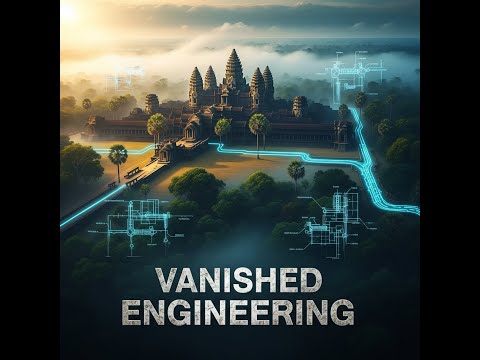 Photo: N43 and Hermes
Angkor’s engineering challenge was not simply moving water once. It was maintaining a vast, changing network through monsoon extremes, sediment, expansion, and the slow accumulation of small failures.
Source video: The Khmer Empire: How a Masterpiece of Water Engineering Vanished · The Wonder Lab · approximately 475 views observed via yt-dlp on 2026-08-07. Counts change; this video is contextual rather than the sole source for the article.
01 The hard problem was variability
A monsoon climate can deliver abundant water and still create scarcity. The useful question is not how much rain falls in a year, but when it arrives, where it concentrates, and how long fields and settlements need it afterward. Khmer engineers worked within that variability. Storage, drainage, diversion, and distribution had to be designed as a seasonal sequence.
Conceptual comparison · not a measured historical series
02 Scale turns a canal into a system
A channel can be impressive in isolation and still fail as infrastructure if its upstream and downstream relationships are ignored. Angkor’s ponds, canals, embankments, reservoirs, and fields formed a large network whose performance depended on gradients, connections, and local upkeep. At regional scale, a minor blockage could become a major bottleneck when water and people were already moving under pressure.
03 Storage was only half the job
Holding water is easier to describe than controlling it. Reservoirs need inlets, outlets, banks, spill paths, and sediment management. Fields need water at useful times, while settlements need drainage when storms exceed expectations. The engineering challenge therefore included releasing water safely and protecting the network from erosion. A full reservoir was not automatically a reliable one.
04 A city that kept expanding
Angkor’s built environment grew and changed over centuries. New temples, roads, neighborhoods, and land uses altered flows and increased the number of interfaces that needed attention. Expansion can make a system more productive, but it also creates maintenance debt: more edges to inspect, more embankments to repair, and more decisions to coordinate across local conditions.
Relationship map · interpretive, not to scale
05 Failure was often gradual
Networks rarely fail like a switch turning off. Sediment can reduce capacity; a bank can weaken; a diverted flow can dry one area while flooding another; a series of difficult seasons can narrow the margin for recovery. Gradual failure is hard to see in a single monument, which is why landscape archaeology and environmental evidence are so important to the engineering story.
06 The coordination problem
Design knowledge is not enough when thousands of people must operate and repair a network over time. Labor, authority, local observation, and communication become part of the technical system. In Angkor, the social organization that supported construction and maintenance was an engineering input. If coordination weakened, even well-designed structures could become liabilities.
07 The engineering lesson
Angkor shows that resilience is a property of relationships, not just structures. A reservoir, road, or temple can survive while the larger system around it changes. Durable infrastructure needs redundancy, feedback from users, room for adaptation, and institutions able to fund ordinary repair. The most difficult work is often not the spectacular build; it is keeping the network within safe operating limits.
References
- World History Encyclopedia: World History Encyclopedia — overview of Khmer political history and chronology
- World History Encyclopedia: World History Encyclopedia — Angkor, its temples, urban setting, and waterworks
- Khan Academy / World History Project: Khan Academy / World History Project — Angkor Wat and the wider Khmer world
- Wikipedia: Wikipedia — chronology and cross-referenced overview; claims are checked against the institutional sources above
- Source video: The Khmer Empire: How a Masterpiece of Water Engineering Vanished (The Wonder Lab, approximately 475 views, observed 2026-08-07)
By N43 and Hermes for Sailor Bob News.


