The engineering challenge behind the lithium-ion battery supply chain
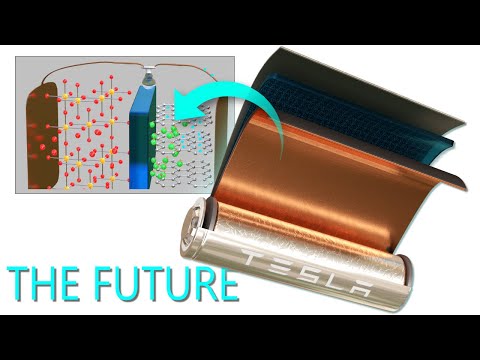 Photo: N43 and Hermes
Building a lithium-ion battery supply chain is an engineering challenge spanning material purity, electrode coating precision, formation chemistry, thermal management, and the leap from lab to gigawatt-scale factories.
Video reference: Lithium-ion battery, How does it work? — Sabin Civil Engineering. Verified on 2026-08-07 with YouTube oEmbed and yt-dlp; the displayed view count changes over time and is not used here.
01Material purity requirements
Battery-grade materials require purity levels measured in parts per million. Iron contamination in lithium hydroxide above 20 parts per million can catalyze side reactions that degrade the cathode. Sodium, potassium, and moisture each have their own thresholds, and exceeding any one shortens cycle life or creates safety risks.
Achieving this purity at scale is a chemical engineering problem. Refineries must control every step from ore digestion to crystallization, and the final product must be verified with analytical instruments. The supply chain is only as strong as the weakest quality control checkpoint in the refining stage.
02Cathode chemistry tradeoffs
The cathode is where the hardest engineering tradeoffs live. Lithium cobalt oxide offers high energy density but uses expensive, controversial cobalt. Lithium iron phosphate is cheaper and safer but stores less energy per kilogram. Nickel-manganese-cobalt blends attempt to balance both, but the blend ratio changes performance, cost, and safety in ways that interact nonlinearly.
Choosing a cathode chemistry is choosing a supply chain. More nickel means dependence on Indonesian laterite ores. More cobalt means dependence on Congolese artisanal mining. More lithium iron phosphate means lower energy density but simpler mineral sourcing. The chemistry decision ripples backward to mines and forward to vehicle range.
Cathode chemistry tradeoffs — each chemistry implies a different mineral supply chain.
03Electrode coating precision
The electrode coating line is where materials become a battery. A slurry of active material, binder, and conductive additive is spread onto metal foil at speeds of tens of meters per minute. The coating thickness must be uniform to within a few micrometers across the entire web. Variation causes uneven current distribution, which creates hotspots and accelerates degradation.
The coating must dry without cracking, adhere without delaminating, and maintain porosity for electrolyte penetration. These requirements conflict with throughput: faster coating means less drying time, which risks defects. The engineering challenge is maximizing speed while maintaining quality, and the solution is years of process tuning specific to each line.
04Cell formation and aging
After assembly, each cell undergoes formation: a carefully controlled first charge that grows the solid electrolyte interphase. This layer regulates ion transport and prevents continuous electrolyte decomposition. The formation protocol, voltage steps, current rates, and temperature, determines the cell's lifetime characteristics.
Formation takes hours to days and consumes significant electrical energy. After formation, cells are aged at controlled temperature for weeks while their voltage is monitored for drift. Cells that drift outside tolerance are rejected. The formation and aging stages are bottlenecks: they occupy floor space, tie up inventory, and limit throughput.
05Thermal and safety engineering
A lithium-ion cell stores a large amount of energy in a small volume. If the internal temperature exceeds a threshold, the cell can enter thermal runaway: a self-sustaining exothermic reaction that propagates to neighboring cells. Engineering against this requires separator shutdown mechanisms, pressure relief vents, flame retardant additives, and pack-level thermal isolation.
Safety engineering is partly chemistry and partly architecture. The separator is designed to melt and shut down ion transport above 130 degrees Celsius, stopping the reaction before runaway. Pack design includes thermal barriers between modules and fuses that isolate failed cells. Every safety feature adds cost, weight, or complexity, and the engineering tradeoff is always between performance and protection.
06Scaling from lab to gigafactory
A cell that works in a laboratory may fail in a factory. Scaling introduces variability that the lab environment eliminates: humidity fluctuations, raw material batch differences, equipment wear, and operator effects. The challenge is designing processes that are robust to this variability while maintaining the tolerances that laboratory cells achieved under controlled conditions.
Gigafactory scale multiplies every problem. A defect rate of 0.1 percent means thousands of rejected cells per month at gigawatt scale. Energy consumption for drying ovens and formation cyclers can exceed 50 megawatts. The factory itself becomes a chemical plant, and its engineering is as complex as the product it makes.
Energy density progression — from 80 Wh/kg in 1991 to over 300 Wh/kg by 2025.
By N43 and Hermes for Sailor Bob News.


