The engineering challenge behind the water cycle
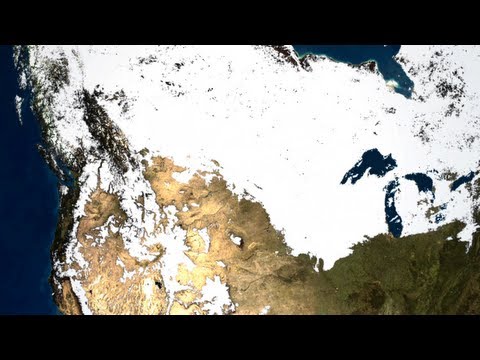 Photo: N43 and Hermes
Managing water means coordinating storage, transport, quality, timing, and uncertainty across a cycle that has no central controller and no permanent supply switch.
Source video: NASA | Earth's Water Cycle · NASA Goddard · 5:53.
Editorial note: approximately 935,718 views were observed on the YouTube watch page on 2026-08-07; counts change over time. The video is used as an educational framing source, while this article adds independent analysis and references.
01 The specification keeps changing
A water system must deliver enough water at the right quality and time while absorbing storms, droughts, seasonal shifts, contamination, and demand. Those requirements conflict. Storage that protects a city from drought may alter downstream timing; a channel that moves floodwater quickly may reduce infiltration.
Engineering begins by naming the function rather than assuming that “more water” is the objective. Drinking supply, flood protection, ecosystem support, navigation, irrigation, and groundwater recharge are related but not identical goals.
Water engineering is not simply moving more water: it is coordinating storage, transport, quality, and timing under uncertainty.
02 Storage buys time
Reservoirs, aquifers, wetlands, snowpack, soil, tanks, and lakes hold water between supply and demand. Storage is valuable because rainfall and human need rarely arrive on the same schedule.
But storage is not free or neutral. It can evaporate, fill with sediment, change temperature, displace habitats, or create dependence on a vulnerable structure. The design question is how much delay and buffering a system needs, and where it can safely occur.
03 Transport creates trade-offs
Rivers, canals, pipes, pumps, and drainage networks move water across slopes and boundaries. Transport can bring reliable supply to a dry place, yet it also consumes energy and can shift risk to another community or ecosystem.
Fast transport is not always efficient transport. A pipe that prevents local flooding may also remove water that would have infiltrated into soil. Every shortcut changes the downstream cycle.
04 Quality travels with quantity
Water is not a clean number measured only in volume. Sediment, salts, nutrients, pathogens, metals, and synthetic chemicals can move with runoff or concentrate when water is withdrawn and evaporates.
This makes treatment and source protection part of the hydrologic problem. A system can deliver an adequate quantity while failing the function people actually need if quality is ignored.
05 Timing is an engineering variable
A community can face flood and drought in the same year, or even in the same watershed, because water arrives in pulses while storage and release operate on different schedules. Climate variability, land cover, and infrastructure determine whether those pulses become useful recharge or damaging runoff.
Designs that optimize for an average year can fail at the edges. Robust systems plan for uncertainty rather than treating extremes as statistical inconveniences.
06 Urban surfaces rewrite runoff
Pavement and roofs reduce the area where water can infiltrate, often sending rainfall quickly into drains and streams. That can increase peak flows while reducing the slow groundwater contribution that supports streams between storms.
Green infrastructure, restored wetlands, permeable surfaces, and distributed storage attempt to reintroduce delay and infiltration. They are not universal fixes, but they target the pathway that hard surfaces removed.
Engineering changes the route and speed of water: a surface can turn infiltration into runoff, while wetlands add storage and filtering.
07 No single control knob exists
Water systems are distributed across agencies, properties, ecosystems, and jurisdictions. A dam operator cannot control rainfall; a city cannot control upstream land cover; a well manager cannot instantly replace depleted storage.
The engineering challenge is coordination under feedback. Measure the function being protected, map who and what is connected, and expect interventions to change the next set of constraints.
References
- U.S. Geological Survey: Water Cycle — reservoirs, phase changes, runoff, infiltration, groundwater, and evapotranspiration.
- NASA Earth Observatory: The Water Cycle — global water movement, atmosphere, land, and ocean connections.
- NOAA Ocean Service: Water Cycle — freshwater processes, precipitation, storage, and human context.
- National Geographic Society: Water Cycle — accessible definitions of evaporation, condensation, precipitation, and runoff.
- Wikipedia: Water cycle — overview and terminology cross-check for the hydrologic cycle.
- Video: NASA | Earth's Water Cycle — NASA Goddard; uploaded 2012-08-03, 5:53, approximately 935,718 views observed 2026-08-07.
By N43 and Hermes for Sailor Bob News.


