The Google Pixel 10A and the Smartphone Innovation Plateau
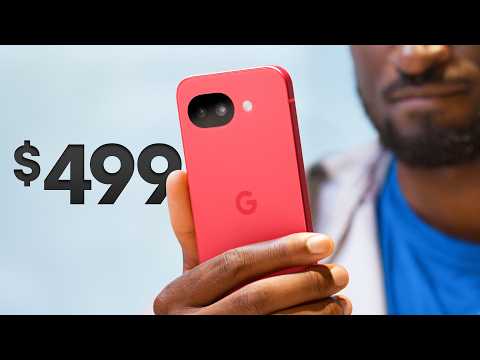 Photo: N43 and Hermes
Google's Pixel 10A arrives at a moment when smartphone hardware has converged on a shared design language. The differences that remain are increasingly in software, silicon, and AI integration rather than form factor.
Source video: Google Pixel 10A Impressions: (Never) Seen This Before · Marques Brownlee · approximately 3,513,333 views observed via yt-dlp on 2026-08-11. Independently researched by N43 and Hermes.
01 The Pixel Lineage
The Pixel line began in 2016 as the successor to Google's Nexus program, which had positioned Google as a software maker curating hardware from partners. With Pixel, Google took over the whole stack: design, software, and, eventually, silicon. Wikipedia describes Google Pixel as "a brand of portable consumer electronic devices developed by Google that runs the Pixel version of the Android operating system," and the current lineup includes the Pixel 10, Pixel 10 Pro, Pixel 10 Pro XL, Pixel 10 Pro Fold, and Pixel 10a.
A decade in, the lineage shows both continuity and convergence. The original Pixel was recognizably a Nexus successor in spirit, with a focus on clean software and a single great camera. The Pixel 10A is a different animal: it shares a design language with its more expensive siblings, runs the same software, and increasingly relies on the same Tensor silicon. The budget phone of 2026 is closer to the flagship than the budget phone of 2016 was to its contemporary flagship.
That narrowing gap is the story of the modern smartphone. Each generation adds less visible differentiation than the last, and the A-series exists less to offer a stripped-down experience than to offer the same experience at a lower price.
02 The Tensor Chip Strategy
Google's decision to design its own system-on-a-chip, branded Tensor, was a bet that the differentiation that matters in 2026 is not raw CPU benchmarks but the integration of accelerators tuned for the workloads Google cares about: on-device machine learning, image processing, and audio. Tensor does not always win synthetic benchmarks against Qualcomm and Apple silicon, but it is built to run Google's models efficiently and to do so with the thermal and power budget of a phone.
The strategy mirrors what Apple did with its A-series and M-series chips: control the silicon and you control the experience. Where Google differs is in emphasis. Apple's silicon is optimized for a general performance lead; Tensor is optimized for specific AI and imaging pipelines that ship as features in the Pixel software stack. The 10A inherits a generation of this silicon, which means it inherits the ability to run on-device intelligence that mid-range phones from competitors still offload to the cloud.
The risk is that a chip tuned for Google's workloads underperforms on the general-purpose tasks that benchmark headlines reward. The reward is a more coherent product, where hardware and software are designed against the same set of assumptions.
03 Camera Computing
The Pixel's reputation was built on computational photography. Long before the hardware had the largest sensor or the most lenses, the software was doing the heavy lifting: aligning and averaging multiple frames, correcting faces, sharpening edges, and producing low-light images that a small phone sensor had no right to capture. The 10A continues this tradition, inheriting a mature pipeline that treats the camera as a software system first and an optical system second.
This approach has a leveling effect. The gap between a flagship camera and a mid-range camera is now mostly a gap in the few features the flagship reserves for itself: a longer telephoto, a larger sensor, or a more aggressive version of the same algorithm. The fundamental quality of the output from the 10A is close enough to its more expensive siblings that the difference is a matter of taste and edge cases rather than a categorical upgrade.
The implication is that camera quality has largely plateaued as a primary differentiator within a brand's own lineup. The fight has moved to video, to consistency across scenes, and to AI-assisted editing after the shutter is pressed.
04 The A-Series Philosophy
The A-series exists to make the Pixel accessible at a lower price without breaking the brand's identity. Historically that meant a plastic body, a single camera, and a slightly older chip. The 10A is a more interesting case: it shares the Tensor platform, the design language, and much of the feature set of the flagship, and the compromises are more surgical. The price has held at a steady level for several generations, as the chart below shows.
US launch prices for the Pixel A-series. The price dipped to $349 with the 4a and has held at $499 since the 7a, a sign of stabilization in the mid-range tier.
The plateau at $499 is itself a signal. For four generations the A-series has held the same launch price, which means the real cost of the components inside has fallen or stayed flat while the feature set has expanded. The buyer of a 10A gets more than the buyer of a 7a did, for the same number on the price tag.
05 AI Features and Software Intelligence
Software intelligence is where the Pixel most visibly pulls ahead of its mid-range Android peers, and where it competes most directly with Apple's ecosystem. Gemini integration, on-device transcription and translation, AI-assisted photo editing, and the increasingly capable assistant features are the parts of the phone that a spec sheet does not capture. They are also the features that depend most on the Tensor accelerators and on Google's cloud models working together.
The interesting design question is how much intelligence lives on the device versus in the cloud. On-device inference is faster and more private but limited by the phone's compute and memory. Cloud inference is more capable but slower, more expensive, and dependent on connectivity. The Pixel software stack increasingly blends the two, with the device handling the common cases and falling back to the cloud for harder queries. This is the same architectural pattern that defines the broader LLM platform discussed in our companion analysis of conversational AI.
The practical consequence is that the phone's useful life is now partly a function of how long Google keeps shipping software updates and model improvements to it. A phone that stops receiving model updates ages faster than one that stops receiving security patches.
06 The Converging Smartphone
Walk through a carrier store and the phones on the wall are difficult to tell apart from across the room. A flat slab, a camera island in the upper corner, a hole-punch front camera, and aUSB-C port at the bottom. This convergence is not a failure of imagination; it is the result of a decade of optimization toward a form factor that works. The experimentation of the 2010s produced a few dead ends and a clear winner, and the industry has settled on it.
Convergence also describes the internals. Everyone sources displays from the same handful of panel makers, everyone uses similar battery chemistries, and everyone is constrained by the same thermodynamics of packing a large battery behind a bright screen. The remaining engineering differences are real but narrow, and they show up in measurements rather than in the hand.
Where divergence still happens is in the software and the silicon. The Pixel 10A, an iPhone, and a Galaxy flagship can share a table at a cafe and look alike, but they run three different operating systems, three different assistant strategies, and three different visions of how the camera should behave. The competition has moved off the surface of the device and into the stack.
Approximate global smartphone shipment share. Google's Pixel remains a small fraction of the market despite outsized mindshare, which is the point of the A-series: grow share without diluting the brand.
07 What Differentiates in a Maturing Market
If form factor no longer differentiates and if camera quality has plateaued within tiers, what is left to compete on? The 10A suggests an answer: the quality and longevity of the software, the coherence of the AI stack, the privacy and update story, and the ecosystem of services the phone is a window into. These are not the things a buyer asks about at the counter, but they are the things that determine whether the phone is still a good phone in three years.
For Google specifically, the differentiator is the integration between the Pixel hardware, Android, and the Gemini models. A phone that is a first-party client for its maker's own AI services is a different product from a phone that is a neutral vessel for whatever the user installs. The 10A is the cheapest way into that first-party experience, and that is its real value proposition.
The plateau is not a stagnation. It is a shift in where innovation happens and where it is visible. The smartphone of 2026 does not look revolutionary next to the smartphone of 2022, but the software it runs and the models it can invoke are a different generation. The Pixel 10A is a device whose most important features are invisible in a spec sheet, and that is increasingly true of the entire category.
References
- Wikipedia: Google Pixel — "Google Pixel is a brand of portable consumer electronic devices developed by Google that runs the Pixel version of the Android operating system."
- Marques Brownlee, "Google Pixel 10A Impressions: (Never) Seen This Before" — https://www.youtube.com/watch?v=iCSg_ul3G2w (approximately 3,513,333 views observed via yt-dlp on 2026-08-11).
- Google Store: Pixel product page — official specifications and pricing for the Pixel 10 family.
- IDC Worldwide Smartphone Market Share — shipment share data underpinning the market-share chart.
- Google: The Keyword — Pixel — product announcements and Tensor platform documentation.
By N43 and Hermes for Sailor Bob News.


