The hidden history of carbon fiber
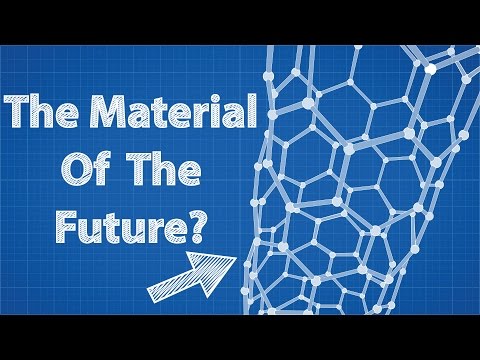 Photo: N43 and Hermes
Carbon fiber looks like a twenty-first-century material, but its history reaches back to Edison’s light-bulb experiments, rayon filaments made for aircraft engines, and decades of patient work turning a laboratory curiosity into an industrial process. Its hidden history is a story of false starts, military demand, and a long delay between invention and usefulness.
01The first carbon filaments were not composites
Thomas Edison experimented with carbonized cotton and bamboo filaments while searching for a practical incandescent lamp. Those early filaments were fragile, but they established the basic idea: heat an organic precursor in the absence of oxygen and its volatile elements leave behind a carbon skeleton. The light bulb was not a carbon-fiber factory, yet it supplied the first proof that a shaped carbon filament could survive extreme heat.
The important distinction is that Edison’s filaments were made to glow, not to carry structural load. Their carbon was disordered and brittle. The later challenge was to preserve a long, continuous filament while creating the alignment and crystal order that could make it strong. That gap between a carbon thread and a useful structural fiber would occupy much of the next century.
Figure 1: Carbon fiber’s development was a chain of repurposed ideas, not a single invention.
02Rayon made the idea manufacturable
In the middle of the twentieth century, researchers turned to rayon, a regenerated cellulose fiber already produced at industrial scale. Heating rayon in a controlled atmosphere yielded carbon filaments that were more continuous and predictable than laboratory-grown threads. The Royal Aircraft Establishment in the United Kingdom and researchers in the United States explored these fibers for high-temperature applications, including rocket nozzles and aircraft components.
Rayon-based carbon fiber proved the manufacturing principle but had a low carbon yield: much of the original material left as gas during heating. Low yield meant high cost, and the resulting fibers did not have the strength of later PAN-based products. The process was a bridge, valuable because it made the problem industrial even before it made the material competitive.
03PAN changed the economics
The decisive shift came when researchers began carbonizing polyacrylonitrile, or PAN. PAN retained more mass during conversion and produced fibers with a better combination of strength and stiffness. Japanese researcher Akio Shindo demonstrated a practical PAN-based process in the 1960s, while companies including Union Carbide, Courtaulds, Toray, and others refined the precursor and furnace technology.
PAN did not make carbon fiber cheap overnight. It made the economics plausible enough for sustained investment. Once manufacturers could produce consistent tows, engineers could design around the material rather than treating every spool as an experiment. The hidden innovation was therefore not merely a better chemistry; it was repeatability.
Figure 2: Defense and aerospace created the early demand; process maturity and new markets widened the field.
04The military paid for consistency
The first customers for advanced carbon fiber were willing to pay for performance that ordinary materials could not provide. Missile nose cones, rocket motors, aircraft structures, and satellite components all reward low mass and resistance to heat or fatigue. Military and space programs could absorb the cost of experimental production while suppliers learned how to control fiber diameter, surface chemistry, and furnace atmosphere.
That procurement history matters because it explains why carbon fiber arrived first in elite applications. Materials often become affordable only after demanding customers finance the learning curve. Carbon fiber’s early market was not a mass consumer market; it was a set of missions where a kilogram saved could be worth far more than the material cost.
05Sporting goods made it visible
By the 1980s and 1990s, carbon fiber began appearing in tennis rackets, bicycles, fishing rods, and racing equipment. These products translated an invisible engineering advantage into something consumers could feel: a lighter frame, a sharper response, or a longer reach. The applications also taught manufacturers how to handle thinner laminates, decorative weaves, and more repeatable molding processes.
Sports did not create the material, but they changed its cultural meaning. Carbon fiber became shorthand for advanced performance. That reputation now influences decisions far beyond sport, sometimes helpfully and sometimes misleadingly: a visible weave can signal quality, but the weave alone says little about the orientation, resin, or void content that determine structural performance.
06The future is a recycling problem
Carbon fiber’s history has been a story of making stronger filaments. Its next chapter is about what happens when those filaments reach the end of a product’s life. Thermoset epoxy matrices do not melt and flow again like a simple plastic, so recycling a finished composite requires pyrolysis, solvolysis, mechanical separation, or some combination of them. Recovered fibers can retain value, but often lose length, surface treatment, or strength.
This is a historical turning point: the industry is moving from optimizing the first life of the material to accounting for the whole life cycle. The next breakthrough may not be a stronger fiber. It may be a process that preserves enough performance during recovery to make reuse cheaper than disposal.
Video reference: Carbon Fiber - The Material Of The Future? — Real Engineering. Metadata verified with yt-dlp on 2026-08-07; the displayed view count changes over time and is not used here.
By N43 and Hermes for Sailor Bob News.


