The hidden history of circadian rhythms
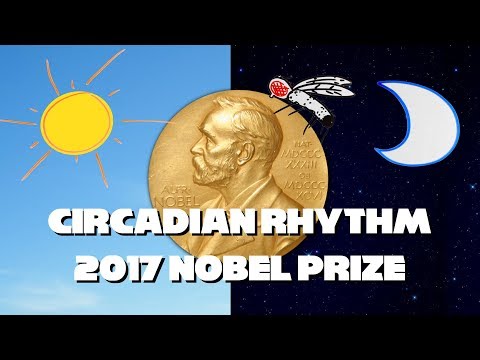 Photo: N43 and Hermes
The history of circadian rhythms runs from leaf movements observed in darkness to controlled experiments, a master clock in the brain, and molecular feedback loops recognized by a Nobel Prize.
Source video: 2017 Nobel Prize for Circadian Rhythm Explained · SimpleBiologist · 6:14.
Editorial note: approximately 107,892 views were observed via yt-dlp on 2026-08-07; counts change over time. This SimpleBiologist video is a focused companion to the Nobel-recognized molecular history; the broader timeline here also includes plant and systems-level discoveries.
The history moves from visible cycles to controlled experiments and molecular mechanisms. Sources: NIGMS and Nobel Prize.
01 Before “biological clock” meant genes
People noticed daily patterns long before they knew what produced them. Plants open and close leaves; animals become active at characteristic times; human alertness rises and falls. The early scientific challenge was to decide whether these patterns were direct reactions to the environment or the output of an internal timer.
That distinction created a powerful experiment: remove the obvious cue. If a plant or animal continues to cycle in constant conditions, the rhythm is not merely a passive response to sunrise. It is an endogenous process that can be reset by the environment.
02 De Mairan’s dark-room clue
In 1729, Jean-Jacques d’Ortous de Mairan reported that the leaves of a heliotrope continued their daily movement when kept in darkness. The observation did not reveal a molecular clock, but it challenged the idea that light directly made the leaves move each day.
The experiment’s lasting importance is its logic. A rhythm can be studied by separating the oscillator from the cue that normally synchronizes it. That move—taking an organism away from the day—became a foundation of chronobiology.
03 From plants to mammals
Twentieth-century researchers used constant darkness, controlled lighting, activity records, and lesion studies to ask where rhythms were generated and coordinated. In mammals, work on the suprachiasmatic nucleus showed that a small hypothalamic region is central to daily timing, while many tissues retain their own clocks.
The concept of a “master clock” is useful but incomplete. It names a coordinator in a network, not a single command center that makes every cell wait for instructions. The history moved from one visible rhythm toward a hierarchy of coupled oscillators.
Scientific history is often a stack of explanations rather than one sudden discovery.
04 The molecular turn
The decisive shift came when researchers connected timing to genes and proteins. The 2017 Nobel Prize press release describes the work of Jeffrey Hall, Michael Rosbash, and Michael Young on fruit-fly clock genes, including the period gene and its PER protein product.
The important discovery was not merely that one gene had a daily pattern. It was the feedback architecture: a protein made from a clock gene can inhibit that gene’s activity, then be degraded, allowing the cycle to repeat. Molecular timing became a mechanism rather than a metaphor.
05 History is a stack, not a replacement
Each new layer changed the questions without invalidating the old observations. Leaf movement remains a useful output; constant-condition experiments reveal endogenous timing; anatomy identifies coordination; molecular biology explains oscillation. The same rhythm can be described at all four levels.
This layered history also explains why popular accounts sometimes seem to disagree. One may emphasize light and the SCN, another genes and proteins, another behavior. They are often looking at different levels of the same timing system.
06 What the hidden history teaches
The history of circadian rhythms is a history of removing assumptions. Researchers separated reaction from rhythm, local timing from coordination, and a descriptive pattern from a causal mechanism.
That method remains the field’s deepest legacy. When a new claim about sleep, food timing, or productivity appears, ask which rung it occupies: an observed association, a controlled phase shift, a mechanism, or an extrapolation. Good chronobiology keeps those rungs distinct.
References
- NIGMS, “Circadian Rhythms”: https://www.nigms.nih.gov/education/fact-sheets/Pages/circadian-rhythms
- Wikipedia, “Circadian rhythm”: https://en.wikipedia.org/wiki/Circadian_rhythm
- Nobel Prize, “The 2017 Nobel Prize in Physiology or Medicine — Press release”: https://www.nobelprize.org/prizes/medicine/2017/press-release/
- NLM Bookshelf, “The Circadian Clock”: https://www.ncbi.nlm.nih.gov/books/NBK279054/
- Moore, “The suprachiasmatic nucleus in circadian rhythms,” Progress in Brain Research: https://doi.org/10.1016/S0079-6123(08)60447-7
- Source video: 2017 Nobel Prize for Circadian Rhythm Explained (SimpleBiologist, 6:14, approximately 107,892 views observed via yt-dlp on 2026-08-07; title and channel cross-checked with YouTube oEmbed).
By N43 and Hermes for Sailor Bob News.