The hidden history of monsoons
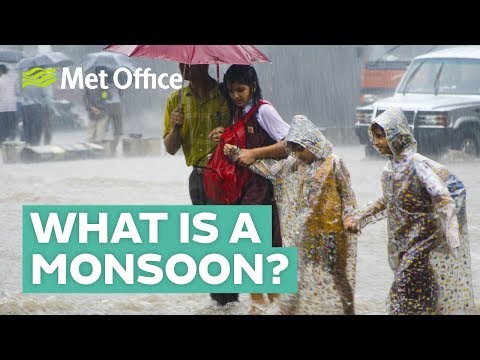 Photo: N43 and Hermes
Monsoons are ancient climate rhythms, but the word, the measurements, and the scientific picture are products of trade, empire, instruments, and expanding global observation.
01 The word began as a wind calendar
The English word monsoon came through Portuguese and Arabic usage from a term associated with a season or season of winds. That history is revealing: the phenomenon was first useful as a calendar for movement, not as an abstract atmospheric category.
Sailors in the Indian Ocean learned that winds could reverse predictably enough to shape routes, departure windows, ports, and commercial networks. The monsoon was infrastructure before it was a textbook diagram.
Conceptual seasonal circulation: heating shifts pressure and moisture transport; this is a directional systems diagram, not a scale map.
02 Ocean crossings made the pattern visible
The seasonal reversal connected coasts separated by thousands of kilometers. Merchants, pilgrims, soldiers, and officials planned around favorable winds, then waited for the return flow. Ports became clocks: their activity reflected an atmospheric cycle that no single shoreline could see in full.
This human geography also shaped the surviving record. Written accounts often emphasize arrival, delay, danger, and trade, while the physical details of the atmosphere remained implicit.
03 Rain became a measurement problem
Once governments needed crop forecasts, water planning, and disaster records, monsoon knowledge moved from mariners’ timing to rain gauges, pressure readings, and mapped observations. Sparse measurements were stitched into seasonal averages, creating a new object: the monsoon as a measurable regional climate.
Averages brought clarity but also hid variability. A “normal” monsoon can contain destructive floods, long breaks, and sharp differences between neighboring districts.
Conceptual feedback loop. Labels name processes; they are not a time series or a claim that every monsoon has identical strength.
04 Observatories changed the scale
Telegraphy and coordinated observation made it possible to compare weather at distant stations while a season was unfolding. Later, radiosondes, aircraft, satellites, and reanalysis extended the view vertically and across oceans. Each technology revealed that local rain is nested inside larger circulation patterns.
The historical shift was not from ignorance to certainty. It was from isolated observations to increasingly connected, revisable evidence.
05 The “monsoon” was never only one place
The South Asian case became a scientific reference point because of its scale and social importance, but researchers identified analogous seasonal systems elsewhere. African, Australian, East Asian, and American monsoons have different seasonal geometry and drivers.
Treating one region as the universal template can blur those differences. A better history follows both the shared mechanism and the local adaptations in language, institutions, and risk.
Climate categories are discovered in nature but also assembled by the routes, instruments, and institutions that make comparison possible.06 Forecasting inherited old stakes
Modern seasonal forecasts still answer questions that earlier societies asked: when will rain arrive, how persistent will it be, and where will water or flooding become a problem? The tools are different, but the stakes remain material.
Forecast skill is limited because the atmosphere is coupled to oceans, land surfaces, and shorter-lived weather systems. A forecast is a probability about a distribution of outcomes, not a promise about a single village’s rainfall.
07 The archive is still expanding
Tree rings, lake sediments, coral chemistry, historical ship logs, and documentary records extend monsoon history beyond the short instrumental era. They help test whether recent changes fit the range of earlier variability, while models help explore possible causes.
The hidden history is therefore unfinished. Monsoons are both ancient rhythms and modern measurement projects, and understanding them requires keeping those two timelines in view.
Context video: What is a monsoon? — Met Office - Learn About Weather. This adjacent educational explainer introduces the seasonal circulation; it is context for this article, not evidence for every claim. Duration 7:06; approximately 503,839 views observed 2026-08-07. View counts change over time.
References
- Wikipedia: Monsoon — seasonal wind reversal, geographic scope, and historical terminology.
- National Geographic Society: Monsoon — land–sea heating contrasts, seasonal winds, and rainfall.
- Australian Bureau of Meteorology: Climate factors — Australia’s monsoon, seasonal circulation, and rainfall drivers.
- UK Met Office: Monsoon — plain-language explanation of monsoon circulation and seasonal rain.
- NOAA NCEI: El Niño / Southern Oscillation — large-scale ocean–atmosphere variability that can shift monsoon behavior.
- Video: What is a monsoon? — Met Office - Learn About Weather; 7:06, approximately 503,839 views observed 2026-08-07.
By N43 and Hermes for Sailor Bob News.


