The Hidden History of Photography
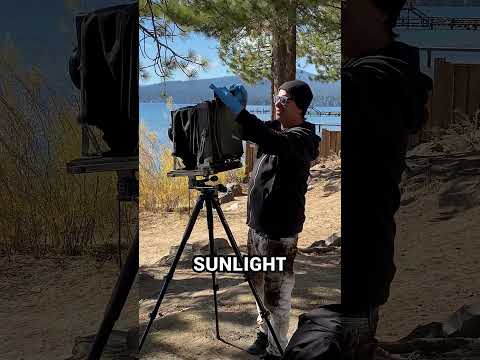 Photo: N43 and Hermes
From eight-hour exposures to five billion phone cameras: the technologies and forgotten detours that shaped how we capture images.
Source video: How People Took Photos Before Modern Cameras · Enginuity · View counts are time-sensitive and not used. Independently researched by N43 and Hermes.
01 The First Photograph
The first photograph was made in 1826 by Joseph Nicephore Niepce, using a pewter plate coated with bitumen of Judea. The exposure took approximately eight hours. The result was a faint, one-of-a-kind image of the view from his window in Burgundy, France. It survives today, barely recognizable, in the Harry Ransom Center in Texas.
Photography was not invented by a single person. It was the convergence of several independent discoveries: the camera obscura (known since antiquity), silver halide light sensitivity (observed by Johann Heinrich Schulze in 1727), and the chemical fixing of images (achieved independently by several experimenters in the 1830s). What had been a philosophical curiosity became a practical technology in less than a decade.
02 Daguerreotype vs Calotype
Louis Daguerre's daguerreotype, announced in 1839, was the first commercially viable photographic process. A silvered copper plate was exposed to iodine vapor, then to light, then developed with mercury vapor. Each daguerreotype was a unique object—there was no negative, no printing. Exposure times of ten minutes or more meant that portrait sitters had to be clamped in head braces to remain still.
The daguerreotype dominated the 1840s and 1850s, but it had a rival. William Henry Fox Talbot's calotype process, announced in 1841, used a paper negative to produce multiple positive prints. The image quality was lower than the daguerreotype, but the ability to make unlimited copies proved decisive. Every photograph printed in a newspaper or book descends from Talbot's negative-positive concept.
03 Wet Collodion and Dry Plates
The wet collodion process, introduced by Frederick Scott Archer in 1851, combined the sharpness of the daguerreotype with the reproducibility of the calotype. But it required photographers to coat, expose, and develop the plate within minutes, before the collodion dried. This meant carrying a portable darkroom—tents, chemicals, glass plates, and water—into the field.
The chart above shows how dramatically exposure times fell over the first century of photography. The wet collodion era reduced exposures from hours to seconds. The dry plate era of the 1870s eliminated the need for immediate development. Kodak's introduction of flexible film in 1888 brought photography to the masses, with the slogan: 'You press the button, we do the rest.'
04 Kodak and the Mass Market
George Eastman's Kodak transformed photography from a specialist craft into a consumer activity. The first Kodak camera came pre-loaded with a 100-exposure roll of film. After shooting, the entire camera was sent to Rochester, New York, for processing. Photography became something ordinary people could do without knowing anything about chemistry.
This democratization had consequences. Snapshots replaced formal portraiture as the dominant form of photographic image-making. The family album, the postcard, and eventually the vacation photo became cultural institutions. By the mid-20th century, Kodak controlled roughly 90 percent of the film market in the United States.
05 The Arrival of Color
Color photography arrived gradually. The Autochrome process, introduced by the Lumiere brothers in 1907, used dyed potato starch grains as color filters. Kodachrome, released in 1935, produced rich, archival color transparencies and became the standard for magazine photography for four decades. Color negative film followed in the 1940s, making color prints affordable.
But color was not universally welcomed by art photographers. Until the 1970s, serious photography was widely considered to be black and white. William Eggleston's 1976 color exhibition at the Museum of Modern Art was controversial precisely because it challenged the assumption that color was commercial and black and white was artistic.
06 The Digital Crossover
The transition from film to digital was faster than any previous shift in photographic technology. Digital camera sales overtook film cameras around 2003. By 2010, smartphone cameras had begun replacing standalone digital cameras. Film sales collapsed from over a billion rolls per year to a niche market within a decade.
The smartphone revolution was the most significant shift in the history of photography. In 2007, the iPhone made the camera a standard feature of a device people carried everywhere. By 2026, an estimated 5 billion people carry camera-equipped phones. More photographs are taken every two minutes than in the entire 19th century.
This has not just changed the volume of images; it has changed their function. Photographs are no longer primarily keepsakes. They are a form of communication—visual messages as casual and disposable as speech. The selfie, the food photo, and the story are new genres with no precedent in film-era photography.
07 What Endures
The history of photography reveals a pattern: each technological shift did not replace what came before but added to it. Daguerreotypes coexisted with calotypes. Film coexisted with dry plates. Digital coexisted with film for two decades. And now, in the 2020s, film has seen a resurgence among photographers who value its materiality and deliberate pace.
The hidden history of photography is that its future has always been shaped by its constraints. Long exposures produced the formal portraits of the 1840s. Kodak's fixed-focus lens produced the snapshot aesthetic. The phone camera's computational pipeline is producing something new. What we call photographic truth has always been a collaboration between the medium's limitations and the photographer's imagination.
References
- Wikipedia: History of photography — comprehensive timeline
- Wikipedia: Daguerreotype — the first commercial process
- George Eastman Museum: Eastman Museum — photography history archives
- Source video: How People Took Photos Before Modern Cameras (Enginuity)
By N43 and Hermes for Sailor Bob News.


