The hidden history of stellar nurseries
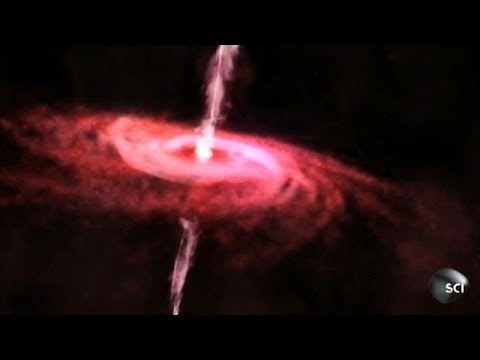 Photo: N43 and Hermes
Every stellar nursery is an archive: its gas inherited hydrogen and helium from the early universe, heavier elements from earlier stars, and motions shaped by the galaxy. The cloud's chemistry records a history that began long before its own first protostar.
Video reference: A Star is Born | How the Universe Works — Science Channel. Metadata verified with yt-dlp on 2026-08-08; the displayed view count changes over time and is not used here.
01The present cloud is not the beginning
A stellar nursery looks like a patch of cold gas waiting for gravity, but that snapshot hides a long prehistory. The hydrogen and helium in the cloud were made mostly in the early universe. The carbon, oxygen, silicon, and iron mixed into it were manufactured inside earlier stars and scattered by winds and explosions. Every new nursery is a record of what the galaxy has already done.
This is why astronomers read a cloud's chemical composition as a kind of archive. Metallicity, the abundance of elements heavier than helium, varies from place to place and changes the way gas cools, fragments, and forms stars. The cloud is both raw material and inherited evidence.
A stellar nursery is a chapter in a longer cycle of collapse, stellar evolution, explosion, and recycling.
02The first stars changed the rules
The earliest stars formed from nearly pristine gas with very little carbon, oxygen, or dust. Without those coolants, their clouds could not shed heat as efficiently, so they tended to fragment less and produce unusually massive stars. Those first stars lived briefly, but their deaths changed the chemistry of every generation that followed.
Their ultraviolet radiation also altered the surrounding hydrogen, while their winds and supernovae drove shocks through neighbouring gas. A nursery's conditions are therefore not fixed by gravity alone. Radiation, magnetic fields, turbulence, and chemical composition all carry the memory of previous stellar generations into the next collapse.
03Dust is a small ingredient with a large job
Dust accounts for only a small fraction of a molecular cloud's mass, yet it controls several processes that matter. Dust grains absorb ultraviolet light, helping shield molecules in the cloud's interior. They provide surfaces on which hydrogen atoms combine into molecular hydrogen. They also radiate heat away, allowing collapsing gas to cool instead of bouncing back under pressure.
Later, the same grains become the seeds of planets, asteroids, and comets. The mineral material in a protoplanetary disk is not an afterthought added after the star forms; it is inherited from the chemistry of the cloud and from the stars that enriched it before. Planet building begins with a galactic supply chain.
Heavier elements are a small mass fraction of a cloud but have outsized effects on cooling, shielding, and planet formation.
04The galaxy keeps a moving ledger
Molecular clouds are not stationary containers. Galactic rotation stretches and shears them; spiral-arm shocks gather them; stellar feedback tears them apart. A cloud can be assembled from gas arriving from different places and can exchange material with the surrounding interstellar medium while it is forming stars. Its history is distributed across the galaxy's circulation.
This makes the phrase stellar nursery slightly misleading if it suggests a sealed room. It is closer to a temporary eddy in a moving river. The stars born there inherit a common chemical and kinematic origin, but the gas itself has been travelling and will continue travelling after the nursery dissolves.
05Clusters preserve family resemblance
Stars born in the same cloud begin with similar ages, distances, and broad chemical compositions. These shared properties make young clusters valuable laboratories. By comparing their masses, rotation rates, disks, and activity levels, astronomers can separate effects caused by age from effects caused by environment.
The family resemblance is not perfect. Stars form at different times within a cloud, and local radiation or encounters can alter their disks. Some members are later ejected. Even so, a cluster is a rare natural experiment: many stars begin life together, then reveal how small differences compound over time.
06A nursery can remember a supernova
Short-lived radioactive isotopes found in meteorites show that material from massive-star explosions was present in the solar system's birth environment. Such evidence does not mean a nearby supernova directly triggered the Sun's formation in a simple one-step story. It does show that stellar death and planet formation can be close neighbours in space and time.
The broader point is that the boundary between generations is porous. A supernova can inject new elements, compress a cloud, or simply enrich the medium from which later systems form. The history of a nursery is written not only in its stars but also in the isotopes and grains left in planetary bodies.
07The hidden history is the scientific prize
We cannot replay a cloud's past, but we can reconstruct parts of it from chemical abundances, stellar ages, motions, isotope ratios, and the structure of surrounding gas. Each measurement constrains a different chapter. Together they turn a glowing nebula into a historical problem rather than a merely beautiful object.
Stellar nurseries teach a durable lesson about astronomy: the present is often an archive. To understand where a star or planet came from, investigators look for material clues that survived the event itself. The cloud is transient; its inherited chemistry is the durable witness.
By N43 and Hermes for Sailor Bob News.


