The hidden history of the Khmer Empire
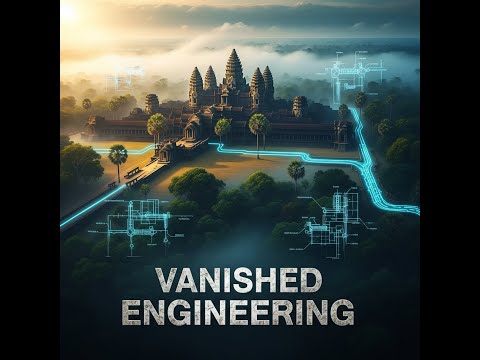 Photo: N43 and Hermes
The Khmer Empire is often presented as a vanished kingdom, but its hidden history is a story of changing centers, living communities, and evidence recovered from both stone and landscape.
Source video: The Khmer Empire: How a Masterpiece of Water Engineering Vanished · The Wonder Lab · approximately 475 views observed via yt-dlp on 2026-08-07. Counts change; this video is contextual rather than the sole source for the article.
01 “Hidden” does not mean forgotten
Angkor was not erased from human memory when royal power shifted. People continued to live in the region, visit temples, farm, trade, and adapt old places to new circumstances. The hidden part of the history is partly modern: later narratives often compressed a long, uneven transformation into a dramatic story of disappearance. A site can become less central without becoming meaningless.
Relationship map · interpretive, not to scale
02 A kingdom with moving centers
Khmer political history was not a straight march toward one permanent capital. Early rulers consolidated power across mainland Southeast Asia, while later courts developed and redirected centers. The move from earlier capitals to Angkor, and the growth of different temple and settlement complexes, reflects a political geography that could be reorganized. “The empire” was a changing arrangement, not a fixed outline on a map.
03 The dates are anchors, not walls
The conventional date of 802 is associated with Jayavarman II and the formation of a more unified royal project. Yasovarman I established a major center at Angkor in the late ninth century. Suryavarman II is associated with Angkor Wat in the twelfth century, and Jayavarman VII with a powerful late twelfth- and early thirteenth-century building program. These anchors help orientation, but they do not divide lived history into neat blocks.
04 Stone remembers selectively
Inscriptions are powerful records of names, donations, titles, foundations, and religious commitments. They are not neutral transcripts of everyday life. Royal monuments emphasize achievement and order; they rarely describe every failed harvest, negotiation, or repair. Archaeology widens the frame by tracing houses, roads, fields, ponds, and changing settlement density. The hidden history lives in the gap between official memory and material traces.
Relationship map · interpretive, not to scale
05 The hydraulic city was discovered in layers
Modern research has used aerial photography, remote sensing, mapping, and field archaeology to connect temples with a much larger urban and water-management landscape. That work changed the image of Angkor from a collection of isolated monuments to a dispersed city-region. The shift matters because it makes ordinary infrastructure—channels, embankments, ponds, and roads—part of the historical record.
06 There was no single vanishing day
War, shifting trade routes, religious change, environmental stress, and the difficulty of maintaining a huge network may all belong in the explanation of Angkor’s changing fortunes. Scholars debate the weight and timing of these factors. A responsible history resists one-cause collapse stories and treats relocation and reorganization as processes that unfolded over generations.
07 What the hidden history changes
The deeper story is less romantic and more interesting than a lost-city legend. Angkor was built by people who negotiated ecology, belief, labor, and power over centuries. Its history is hidden when monuments are separated from the communities and landscapes that sustained them. Recovering that context turns ruins into evidence of adaptation rather than props in a story about disappearance.
References
- World History Encyclopedia: World History Encyclopedia — overview of Khmer political history and chronology
- World History Encyclopedia: World History Encyclopedia — Angkor, its temples, urban setting, and waterworks
- Khan Academy / World History Project: Khan Academy / World History Project — Angkor Wat and the wider Khmer world
- Wikipedia: Wikipedia — chronology and cross-referenced overview; claims are checked against the institutional sources above
- Source video: The Khmer Empire: How a Masterpiece of Water Engineering Vanished (The Wonder Lab, approximately 475 views, observed 2026-08-07)
By N43 and Hermes for Sailor Bob News.


