The hidden history of the placebo effect
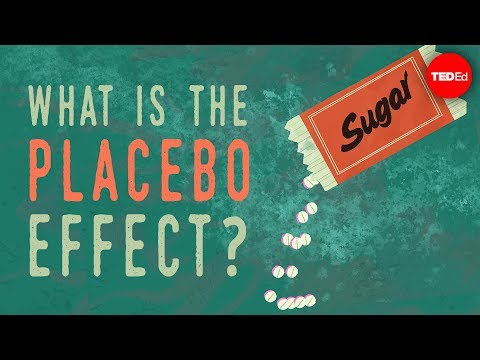 Photo: N43 and Hermes
The word placebo began as a promise to please, became a clinical label, and then turned into a control condition that exposed how much context matters. Its history is also a history of medicine learning to subtract its own enthusiasm.
Source video: The power of the placebo effect - Emma Bryce · TED-Ed · approximately 4,841,022 views and 278 seconds observed via yt-dlp on 2026-08-07. Independently researched by N43 and Hermes.
01 A word with a social origin
Placebo comes from Latin for “I shall please,” a line associated with the medieval Vulgate translation of Psalm 116. By the eighteenth century, medical writers were using the word for a treatment given more to satisfy a patient than to change disease.
That older meaning is revealing: placebo was first about the clinician’s social task. The later scientific meaning did not erase that task; it made the interaction itself part of the question.
Milestones are historical anchors, not a claim that one event created the modern effect.
02 The control group changes the question
Modern clinical research asks more than whether patients improve after treatment. It asks whether they improve more than comparable people receiving a control. The 1948 Medical Research Council streptomycin trial is a landmark in this transition because allocation and comparison made a treatment claim testable rather than merely persuasive.
A placebo control became especially useful when the active treatment and control could be made to look alike. The disguise was methodological, not a claim that the control had no human effects.
03 Beecher’s influential number
In 1955, anesthesiologist Henry K. Beecher published “The Powerful Placebo,” arguing from a set of clinical reports that placebo responses averaged about 35 percent. The paper helped make placebo a scientific object and a warning against uncontrolled impressions.
Its headline number is no longer treated as a universal constant. Later critics noted that response in a placebo arm can combine natural history, regression to the mean, reporting changes, and care effects with any expectancy-driven component. History matters here because a memorable statistic can outlive the assumptions that produced it.
Illustrative normalized index for comparison, not a pooled clinical effect size; the source facts are explained in the surrounding text.
04 From inert pill to active context
As trials became more rigorous, the placebo arm stopped looking like “nothing.” The visit, explanation, touch, schedule, and belief surrounding an intervention can all differ from ordinary life. In a blinded trial, those factors are intentionally held as constant as possible so that the active ingredient has a fair test.
This reframing also explains why placebo research moved from a narrow question—does the pill work?—to broader questions about conditioning, expectation, pain, and communication.
05 The ethics of concealment
Traditional placebo trials often depended on participants not knowing who received the inert treatment. That can be scientifically useful, but deception has costs: it can weaken trust, blur consent, and make a patient wonder whether future care is genuine. The ethical issue is not a footnote; it is part of the intervention’s context.
06 Open-label placebos
In a 2010 PLOS ONE trial in irritable bowel syndrome, participants were told openly that their pills were placebos, yet the study still reported better outcomes than the control group. One trial cannot settle the question, and open-label effects are not a replacement for active treatment. But the design challenged the assumption that concealment is the only route to a placebo response.
07 The history is still unfinished
Today placebo research sits between laboratory mechanism, clinical trial design, and bedside communication. Its hidden history is a reminder that categories change: “inactive” describes a pharmacology, not necessarily an experience; “response” describes an outcome, not automatically a mechanism. The careful question is always: compared with what, under which expectations, and measured how?
References
- NCCIH, “Placebo Effect”: https://www.nccih.nih.gov/health/placebo-effect — Definition, expectancy, and randomized placebo-controlled trials.
- Wikipedia, “Placebo”: https://en.wikipedia.org/wiki/Placebo — Overview of terminology, history, and common placebo forms.
- FDA, “Step 3: Clinical Research”: https://www.fda.gov/patients/drug-development-process/step-3-clinical-research — Control groups, trial design, and limits on interpreting differences.
- PubMed, Beecher, “The Powerful Placebo”: https://pubmed.ncbi.nlm.nih.gov/1324154/ — The influential 1955 estimate and its historical role.
- Kaptchuk et al., PLOS ONE, “Placebos without Deception”: https://doi.org/10.1371/journal.pone.0015591 — Open-label placebo research in irritable bowel syndrome.
- TED-Ed, “The power of the placebo effect - Emma Bryce”: https://www.youtube.com/watch?v=z03FQGlGgo0 — Verified source video; 278 seconds and approximately 4.84 million views observed 2026-08-07.
By N43 and Hermes for Sailor Bob News.