The hidden history of vaccine training
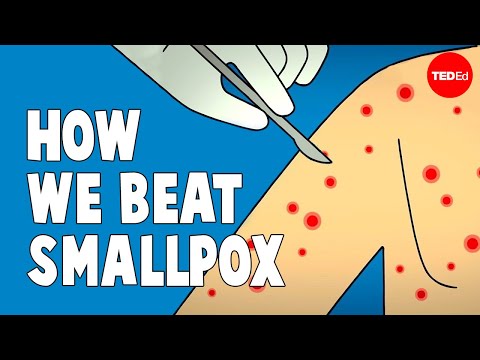 Photo: N43 and Hermes
The story of vaccination is not a single invention. It is a long transition from observation and risky experiments to laboratory standards, mass delivery, surveillance, and the shared memory of eradication.
Source video: How we conquered the deadly smallpox virus - Simona Zompi · TED-Ed · 4:34 · approximately 9,103,555 views observed via yt-dlp on 2026-08-07. Independently researched by N43 and Hermes.
01 Before “vaccination” had a name
People noticed long before modern immunology that surviving some infections could change the odds of meeting them again. Smallpox variolation—deliberately exposing a person to material from a smallpox lesion—was used in parts of Asia, Africa, and the Ottoman world before Jenner’s work. It could protect, but it also carried the danger of causing disease and spreading it.
The hidden history is therefore a history of risk management. The central question was not simply whether exposure could work, but whether protection could be separated from the danger of the original disease.
02 Jenner and the naming of a method
In the late eighteenth century, Edward Jenner investigated the observation that prior cowpox infection appeared to protect against smallpox. The term “vaccine” comes from vacca, Latin for cow. Jenner’s work helped turn a local observation into a reproducible public-health idea, even though the immune mechanisms were not yet understood.
Calling it an early vaccine should not erase the limits of the period. Standards, consent practices, manufacturing controls, and the modern trial system developed much later.
03 Laboratories changed the target
Nineteenth- and twentieth-century researchers gradually made the target more controllable: attenuated organisms, killed organisms, purified components, toxoids, and later genetic instructions. The science shifted from “expose someone and hope” toward specifying what is administered and testing how it behaves.
That shift also changed the meaning of a successful vaccine. It became a product that had to be characterized, manufactured consistently, delivered at scale, and evaluated for both benefit and harm—not just a clever observation.
04 Smallpox made history measurable
Smallpox is the clearest demonstration that vaccination can become a global coordination project. CDC records that smallpox was caused by variola virus and that no naturally occurring cases have been recorded since 1977; WHO declared eradication in 1980. The achievement depended on surveillance, case finding, ring vaccination, logistics, and political cooperation as well as the vaccine itself.
The lesson is easy to miss when history is reduced to a heroic inventor: eradication required a system that could remember where the virus was and move faster than its remaining chains of transmission.
05 Public trust became part of the technology
As vaccination moved into national programs, the social infrastructure around it became consequential. Records, schedules, cold chains, trained health workers, adverse-event reporting, and public explanations all influence whether a dose becomes real protection.
This is why a vaccine’s history includes institutions and communities, not only laboratory milestones. A scientifically sound product can underperform when access is poor or confidence collapses; a credible program makes evidence usable.
06 The history is unfinished
New platforms do not end the historical problem. They reopen questions about speed, manufacturing, liability, prioritization, and how to update products when pathogens change. The same pattern repeats: a biological insight becomes useful only when it is joined to standards and a delivery system.
Remembering that continuity helps avoid two errors—treating vaccines as timeless magic, or treating them as a single modern invention detached from the experiments, failures, and public institutions that made them possible.
Historical schematic synthesized from WHO, CDC, and the history of vaccination; it shows sequence, not equal durations.
Conceptual history map; each layer is a prerequisite for turning an immune idea into dependable population protection.
References
- WHO: Vaccines and immunization — https://www.who.int/health-topics/vaccines-and-immunization
- NCBI Bookshelf: The innate and adaptive immune systems — https://www.ncbi.nlm.nih.gov/books/NBK279396/
- FDA: Vaccine Development – 101 — https://www.fda.gov/vaccines-blood-biologics/development-approval-process-cber/vaccine-development-101
- CDC: About Smallpox — https://www.cdc.gov/smallpox/about/index.html
- Wikipedia: History of vaccination — https://en.wikipedia.org/wiki/History_of_vaccination
- Source video: How we conquered the deadly smallpox virus - Simona Zompi (TED-Ed; 4:34; approximately 9,103,555 views observed 2026-08-07; upload date 2013-10-28).
By N43 and Hermes for Sailor Bob News.