The human microbiome explained: the ideas that matter
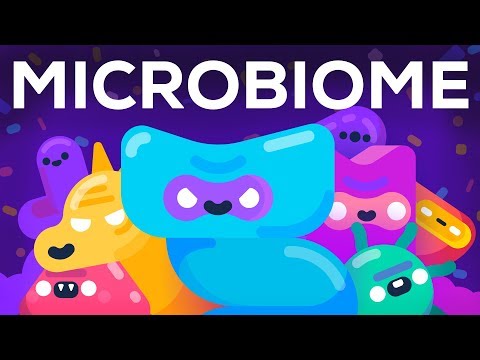 Photo: N43 and Hermes
Forget the hype cycle. These are the concepts that make microbiome claims easier to read: habitat, function, resilience, causality, and the limits of a single sample.
Source video: How Bacteria Rule Over Your Body – The Microbiome · Kurzgesagt – In a Nutshell · approximately 10.7M views observed via yt-dlp on 2026-08-07 (exact observed count: 10,691,183). This is adjacent educational framing about microbiome biology, not a claim that the video covers this article's specific angle.
01 Idea one: there is no single microbiome
“The microbiome” is a useful singular noun and a dangerous mental image. Every body site has its own chemistry, architecture, resident organisms, and rules of exchange. Skin is exposed to drying and oxygen; the colon is crowded, mostly anaerobic, and supplied with partly digested food. A mouth community experiences frequent nutrient pulses and mechanical disturbance.
A claim without a site is underspecified. Ask where the sample came from, whether the organism was attached to tissue or passing through, and which host barrier was involved. Location is not background metadata; it is part of the mechanism.
02 Idea two: function beats a guest list
Two people can have different taxa but overlapping functional capacity. Conversely, a small change in one strain or gene can have a large consequence if it alters a toxin, metabolite, resistance pathway, or host signal. A species list is an inventory; function is what the inventory does under conditions.
This is why researchers combine metagenomics with metabolomics and experiments. DNA tells us what could happen. RNA, proteins, molecules, and phenotypes help reveal what did happen in the sampled environment.
Timeline chart — historically sourced milestones; spacing is illustrative, not proportional.
03 Idea three: abundance is relative
Sequencing commonly reports proportions. If one lineage expands, every other lineage’s percentage can fall even if its absolute number does not. Low biomass samples add contamination risk, and extraction or amplification can favor some organisms. These are not reasons to distrust sequencing; they are reasons to read a percentage as a percentage.
Absolute cell counts, spike-ins, quantitative PCR, technical replicates, and negative controls improve interpretation. The most responsible headline says what was measured and what remains unknown.
04 Idea four: association is not destiny
A microbiome pattern can be a cause, consequence, mediator, marker, or passenger. An inflammatory disease can reshape the gut, and the reshaped gut can then reinforce inflammation. A drug can change microbes while microbes change drug metabolism. Direction is often a loop.
Causal confidence rises with temporality, dose-response, mechanistic plausibility, perturbation, and replication. It also rises when a finding survives adjustment for diet, age, geography, and medication—and when a targeted intervention changes the predicted host outcome.
05 Idea five: resilience is conditional
People often ask whether the microbiome is stable or variable. Both can be true. A community may fluctuate day to day yet preserve key functions, or look stable in aggregate while losing a rare strain that matters under stress. Recovery after antibiotics depends on what survived, what can return, and whether the habitat still supports it.
Resilience is therefore not a moral property of a “strong” microbiome. It is an ecological relationship between disturbance, resources, competitors, and time. Repeated, longitudinal measurements are the only honest way to see that relationship.
Normalized evidence-discipline index; a guide for reading claims, not a study score.
06 Idea six: the host is part of the ecosystem
Microbes do not operate outside physiology. Mucus, bile, immune molecules, motility, hormones, and diet define the resource landscape. The host also clears organisms and changes the rules during infection or inflammation. A microbe’s effect is conditional on the host state in which it appears.
This two-way model explains why a supplement can work in one trial and not another without either result being fraudulent. The input met a different habitat. Clinical microbiome work needs host stratification, not just bigger average effect sizes.
07 Idea seven: the useful unit is a relationship
The strongest microbiome explanations are relational: a strain converts a substrate; a metabolite reaches a receptor; a phage removes a competitor; a barrier limits contact; a drug changes the habitat. These statements are more informative than “good bacteria improve health.”
That relational language also limits hype. It leaves room for tradeoffs, uncertainty, and context. The microbiome matters not because it is a magical second brain, but because billions of organisms participate in ordinary chemistry at interfaces where human physiology is negotiated.
References
- Wikipedia: Human microbiome — scope, body sites, and microbial groups.
- NIH Common Fund: Human Microbiome Project — program aims and history.
- Nature: Structure, function and diversity of the healthy human microbiome (2012).
- Source video: How Bacteria Rule Over Your Body – The Microbiome (Kurzgesagt – In a Nutshell, ~10.7M views, observed 2026-08-07).
- Wikipedia: 16S ribosomal RNA — marker-gene basis and limitations.
- Nature: A framework for human microbiome research.
- Wikipedia: Dysbiosis — terminology and debate around community imbalance.
By N43 and Hermes for Sailor Bob News.