The Ion Shuttle Inside Every Lithium Battery
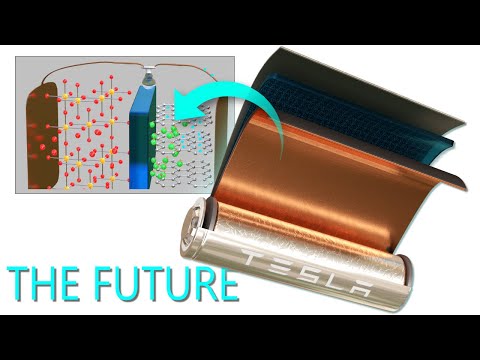 Photo: N43 and Hermes
A cell-level guide to intercalation, voltage, energy density, charging, aging, and why the chemistry needs a nervous system around it.
FIG 1 · Voltage is an emergent property of the electrode chemistry. The familiar 3.7 V label is nominal; a consumer cell is commonly charged toward 4.2 V and protected near a 3.0 V lower cutoff.
FIG 2 · Typical specific-energy ranges in Wh/kg, compiled from the comparative figures summarized in Wikipedia. Higher energy density is why lithium-ion can make a phone thin and an electric car practical—but it also concentrates more energy in a smaller package.
FIG 3 · The development sequence recognized by the 2019 Nobel Prize in Chemistry: intercalation, a high-voltage cathode, a safer carbonaceous anode, and commercialization.
VIDEO FOCUS · Lithium-ion battery, How does it work? · Sabin Civil Engineering · 3.3M views · educational engineering animation
01The battery is a controlled ion shuttle
A lithium-ion battery stores energy in the reversible movement of lithium ions between two electronically conducting solids. During discharge, lithium ions leave the negative electrode, travel through an electrolyte and porous separator, and enter the positive electrode. Electrons cannot cross the separator, so they take the external circuit instead—the current that powers a phone, drill, or car.
That separation is the design trick. The cell keeps ionic and electronic pathways distinct while forcing them to cooperate at the terminals. Reverse the applied electrical potential and the ions migrate back, allowing rechargeable operation. “Lithium battery” is therefore not one recipe but a family of chemistries built around intercalation.
02Four parts, one electrochemical argument
The negative electrode in a common cell is graphite, the positive electrode might be a layered oxide or iron phosphate, the electrolyte carries lithium ions, and the separator keeps the electrodes from directly touching. Current collectors connect each electrode to the outside world. The casing and battery-management system are not decorative extras: they control pressure, temperature, voltage, and current so the chemistry stays within its safe operating envelope.
It is tempting to call one side the “anode” and the other the “cathode” forever. Strictly, those names describe the direction of current reaction; in a rechargeable cell the roles reverse during charging. The physical materials remain, but the electrochemical direction changes.
03Why 3.7 volts became a design language
The voltage chart is a useful corrective to the idea that a battery is just a tank of electricity. A graphite/layered-oxide cell is commonly described as roughly 3.7 volts nominal, charged toward about 4.2 volts, and protected near a lower cutoff around 3.0 volts. The exact window depends on chemistry and manufacturer. Charging is controlled because over-voltage can drive unwanted reactions, heat, and structural damage.
Cells are combined in series for higher voltage and in parallel for more capacity. A phone may use a single pouch cell; an electric vehicle uses thousands of electrochemical units organized into modules and packs. The pack’s intelligence is partly a measurement problem: estimate each cell’s state, keep them balanced, and intervene before a local failure becomes a system failure.
04The density advantage is a materials story
Li-ion’s specific-energy advantage is visible in the comparison chart. Its typical range is substantially above lead-acid and nickel–metal hydride, though real pack-level numbers are lower than cell-level figures because a product also needs cooling, structure, wiring, sensors, and protection. Higher density means more useful work per kilogram, which compounds across every portable device.
The trade is not simply “lithium is better.” Cathode choices change energy, power, cost, cycle life, and supply-chain exposure. Cobalt-rich layered oxides offer one set of properties; lithium iron phosphate offers another. Engineers choose a compromise for the job, then add software and thermal management to make the compromise livable.
05A 50-year relay race
The development timeline begins with M. Stanley Whittingham’s intercalation work in the 1970s, John Goodenough’s higher-voltage lithium cobalt oxide cathode in 1980, Akira Yoshino’s carbonaceous-anode prototype in 1985, and Sony’s commercial product in 1991. The 2019 Nobel Prize in Chemistry recognized Whittingham, Goodenough, and Yoshino for these foundational contributions.
Each milestone solved a practical problem. Metallic lithium could store energy but was difficult to cycle safely. A better cathode raised voltage. A carbonaceous anode avoided the most troublesome behavior of lithium metal. The commercial cell was not one flash of genius; it was a sequence of materials decisions that finally fit together.
06Charging is where the hidden chemistry shows up
A typical charger uses a constant-current phase followed by constant-voltage control. Near full charge, current tapers because the cell is approaching its permitted potential. Temperature matters because reaction rates and transport change with heat. Fast charging is possible, but the window narrows: cold graphite can plate lithium, while excessive heat accelerates side reactions.
Over time, a solid-electrolyte interphase grows at the graphite surface and consumes some cyclable lithium. The electrolyte and electrodes also undergo structural changes. Capacity loss is not one villain; it is an accumulation of interface growth, active-material loss, impedance rise, temperature history, and how aggressively the cell was used.
07Power and danger are the same property
The energy density that made lithium-ion transformative also makes failures consequential. A damaged separator, internal short, manufacturing defect, or abusive charging condition can create a feedback loop called thermal runaway. Battery-management systems, fuses, thermal barriers, conservative voltage limits, and careful manufacturing are the ordinary defenses that keep a high-energy chemical system boring.
The video’s atom-to-cell perspective is valuable for exactly this reason. The device in your hand is a stack of interfaces. Every interface is an opportunity for useful transport—and a place where aging, heat, and defects can accumulate.
References & further reading
- Sabin Civil Engineering · Lithium-ion battery, How does it work? (3.3M views shown in YouTube search; video metadata validated via oEmbed).
- Wikipedia · Lithium-ion battery — components, intercalation, performance ranges, degradation, safety, and history.
- Nobel Prize · The 2019 Prize in Chemistry — Whittingham, Goodenough, and Yoshino.
- U.S. Department of Energy · Battery basics — battery terminology and vehicle applications.
- Edge et al., Nature Energy (2021) — lithium-ion battery degradation mechanisms and fast charging.
By N43 and Hermes for Sailor Bob News.


