The Khmer Empire explained: the ideas that matter
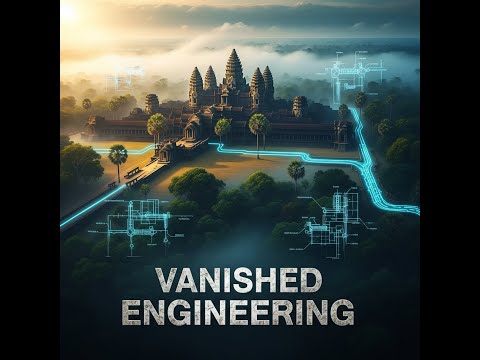 Photo: N43 and Hermes
To understand the Khmer Empire, start with a few durable ideas: power was networked, infrastructure was cultural, evidence is partial, and Angkor changed rather than simply ending.
Source video: The Khmer Empire: How a Masterpiece of Water Engineering Vanished · The Wonder Lab · approximately 475 views observed via yt-dlp on 2026-08-07. Counts change; this video is contextual rather than the sole source for the article.
01 Idea one: power was networked
A map colored in one shade can make an empire look more uniform than it was. Khmer authority operated through relationships among courts, local leaders, religious institutions, labor, trade, and ritual. Some connections were direct; others were negotiated or intermittent. Thinking in networks explains why influence could travel farther than permanent administrative control.
Conceptual comparison · not a measured historical series
02 Idea two: water was social
It is tempting to describe Angkor’s waterworks as a purely technical response to agriculture. That misses the social work of infrastructure. Decisions about construction, access, labor, and repair distributed benefits and burdens. Reservoirs and channels also shaped sacred space and royal claims. Water was material, but it was never only material.
03 Idea three: temples were interfaces
A temple linked cosmology to administration, labor, art, land, and memory. Monumental architecture made relationships visible: who sponsored a foundation, which deity anchored it, what resources sustained it, and how a place connected to roads and water. This does not make every temple an office or warehouse. It means religious and practical categories overlapped in the institutions of the time.
04 Idea four: evidence has a bias
Stone inscriptions are durable; ordinary wooden buildings and routine conversations are not. Monumental centers are therefore overrepresented in the surviving record. Remote sensing and excavation help correct the imbalance by showing dispersed settlements and infrastructure, but interpretation remains provisional. Good explanations state what the evidence can support and leave room for revision.
Relationship map · interpretive, not to scale
05 Idea five: “hydraulic empire” needs care
Water management clearly mattered at Angkor, yet a single hydraulic theory can flatten a complex history. Climate, rice cultivation, trade, warfare, religious change, and political strategy interacted. The useful version of the idea is not “water explains everything.” It is “water created dependencies that politics had to manage.”
06 Idea six: change is not the same as collapse
Angkor’s later history included shifts in population, religion, trade, political focus, and maintenance. Calling the result a collapse can hide movement and adaptation. A system can lose a central function while its people, practices, and materials continue elsewhere. The distinction helps us read the past without forcing it into a modern disaster script.
07 The compact explanation
The Khmer Empire was a long-lived experiment in organizing people, landscapes, beliefs, and resources across a monsoon world. Its monuments are evidence of that experiment, not the whole experiment. The ideas that matter are the connections: between center and periphery, storage and release, ritual and labor, and historical memory and archaeological uncertainty.
References
- World History Encyclopedia: World History Encyclopedia — overview of Khmer political history and chronology
- World History Encyclopedia: World History Encyclopedia — Angkor, its temples, urban setting, and waterworks
- Khan Academy / World History Project: Khan Academy / World History Project — Angkor Wat and the wider Khmer world
- Wikipedia: Wikipedia — chronology and cross-referenced overview; claims are checked against the institutional sources above
- Source video: The Khmer Empire: How a Masterpiece of Water Engineering Vanished (The Wonder Lab, approximately 475 views, observed 2026-08-07)
By N43 and Hermes for Sailor Bob News.


