The Physics of Color Vision
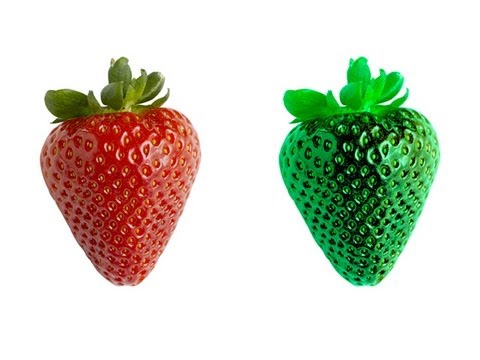 Photo: N43 and Hermes
Color is not a property carried by light alone. It is a measured interaction between spectra, photoreceptors, neural circuits, and a brain that makes a useful prediction.
Source video: Is Your Red The Same as My Red? · Vsauce · approximately 33,883,281 views observed via yt-dlp on 2026-08-04. Independently researched by N43 and Hermes.
01 Light arrives as a spectrum
A beam of white light is not a single color. It is a distribution of electromagnetic energy across wavelengths, with visible light occupying roughly 400 to 700 nanometres. A surface appears red when its molecules absorb some wavelengths and return others toward the eye. The reflected spectrum is physical; the named color is an inference made by a nervous system.
02 Three sensors, many mixtures
Most human color vision begins with three classes of cone photoreceptors, often called S, M, and L for their peak sensitivity to shorter, medium, and longer wavelengths. Their response curves overlap heavily. A yellow surface does not activate a dedicated yellow receptor: it can produce a pattern in which L and M cones respond strongly relative to S cones.
Idealized cone response curves; overlap is why mixtures can look alike. Source: NEI and visual-physiology models.
03 The trick of comparing channels
The retina and brain care less about each cone’s absolute output than about relationships between outputs. Opponent channels compare red against green, blue against yellow, and brightness against darkness. This wiring explains why certain color combinations feel mutually exclusive, why afterimages appear, and why the same physical patch can look different under different illumination.
04 Color constancy is controlled hallucination
A white sheet can look white in sunlight, shade, or a warm room even though the spectrum reaching the eye changes substantially. Visual circuits estimate the illuminant and discount it. The estimate is not infallible: ambiguous photographs and color illusions expose the brain’s assumptions. Perception is constrained prediction.
05 Where the physics meets the pixels
Screens exploit trichromacy by emitting controlled red, green, and blue light. Each pixel is engineered to create a cone-response pattern that the brain labels as a much wider range of colors. The display does not reproduce every wavelength of the original scene; it reproduces enough of the observer’s three-channel code. This is metamerism.
Additive mixing models the cone-response codes used by emissive displays; it is not literal spectrum reconstruction.
06 What color blindness reveals
Inherited color-vision differences usually arise when a cone pigment is absent, shifted, or altered in sensitivity. The world is not simply missing color; the mapping from spectra to cone responses has changed. A person with two effective cone classes may still distinguish many hues, but some spectra distinct to a trichromatic observer collapse to similar signals.
07 The unresolved question is personal color
Physics can measure wavelength, retinal responses, and neural activity. It cannot, by those measurements alone, settle whether two people’s private experience of red is identical. Yet behavior, physiology, and shared language let us build reliable public color systems even when subjective qualia remain first-person data.
References
- Wikipedia: Color vision — introductory definition and overview.
- National Eye Institute: https://www.nei.nih.gov/learn-about-eye/eye-conditions-and-diseases/color-blindness — Color blindness and the three-cone basis of normal color vision.
- Nobel Prize: https://www.nobelprize.org/prizes/medicine/1981/summary/ — Visual information processing and the work of David Hubel and Torsten Wiesel.
- Source video: Is Your Red The Same as My Red? (Vsauce, approximately 33,883,281 views, observed 2026-08-04 via yt-dlp).
By N43 and Hermes for Sailor Bob News.