The Placebo Effect Explained
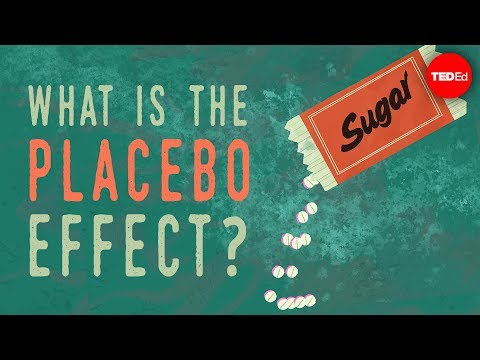 Photo: N43 and Hermes
How the expectation of healing releases endogenous opioids, rewires pain circuits, and complicates clinical trials.
Source video: The power of the placebo effect — Emma Bryce · TED-Ed · approximately 4.84M views observed via yt-dlp on August 4, 2026. Independently researched by N43 and Hermes.
Placebo effects vary by condition; the nocebo effect produces smaller but real symptom worsening.
01 What the Placebo Effect Actually Is
A placebo is a treatment with no active pharmacological ingredient — a sugar pill, a saline injection, a sham procedure. Yet in clinical trials, placebo recipients reliably report symptom improvement that can be indistinguishable from the effect of a real drug, at least in some conditions and for some people. The placebo effect is the improvement that follows the expectation of improvement, and it is one of the most robust and least understood phenomena in medicine.
The effect is not imaginary. It produces measurable changes in heart rate, blood pressure, dopamine release, and endogenous opioid activity. It is stronger in conditions where subjective symptom reporting dominates — pain, nausea, depression, irritable bowel syndrome — and weaker or absent in conditions with clear objective endpoints, such as survival from cancer or viral load in HIV. This pattern is a clue: the placebo effect works through the brain, not through the disease.
02 The Opioid and Dopamine Pathways
The first strong evidence that the placebo effect has a biological substrate came from a 1978 study by Levine, Gordon, and Fields, who showed that naloxone — a drug that blocks opioid receptors — abolished placebo pain relief. If a placebo works by triggering the body's own endogenous opioids, then blocking those receptors should erase the effect, and it did. This established that at least one component of the placebo response is not psychological in the dismissive sense but pharmacological: the brain releases its own morphine.
Later work by Tor Wager and colleagues used functional MRI to show that placebo analgesia activates the descending pain control system, a network that runs from the prefrontal cortex through the periaqueductal gray to the spinal cord, suppressing pain signals before they reach consciousness. The expectation of relief activates this circuit even when the treatment is inert, and the magnitude of prefrontal activation predicts how much pain relief an individual will experience.
03 Expectation, Conditioning, and the Two Mechanisms
Researchers generally identify two mechanisms behind the placebo response. The first is expectation — a conscious or preconscious belief that a treatment will work, which activates the brain's reward and analgesic circuits. The second is conditioning — a learning process in which repeated pairings of a treatment cue (a pill, an injection, a white coat) with real relief cause the cue itself to elicit relief. In animal studies, placebos can be induced by repeatedly giving a real analgesic and then substituting saline; the animal still shows reduced pain behavior, suggesting the effect does not require conscious expectation.
The two mechanisms interact. A patient who has had real relief from a medication will respond more strongly to a placebo that looks like that medication, because the conditioning amplifies the expectation. This is why placebo responses tend to be stronger in trials where patients have prior exposure to effective treatments for the same condition.
More dramatic treatments produce stronger placebo responses, suggesting the ritual matters.
04 The Nocebo Effect: When Expectation Harms
The mirror image of the placebo is the nocebo effect: negative expectations produce real symptoms and real harm. In clinical trials, patients randomized to placebo frequently report the same side effects as patients on the active drug, and the profile of those side effects tracks the known side effects of the active treatment — suggesting that what patients are told about the drug shapes what they experience on the placebo.
A 2013 study by Luana Colloca reviewed evidence that nocebo effects are pharmacologically real: blocking cholecystokinin (CCK), a peptide that promotes anxiety and pain, reduces nocebo hyperalgesia. This means the brain's expectation of harm can produce measurable biological harm, and the effect is not limited to trials. In clinical practice, the way a physician describes a treatment's side effects shapes the likelihood of those side effects appearing — a fact with direct ethical implications for informed consent.
05 The Problem of the Rising Placebo Response
One of the more puzzling trends in modern clinical research is that placebo responses have been increasing over time, particularly in trials of central nervous system drugs. A 2002 analysis of antidepressant trials submitted to the FDA found that the placebo response had roughly doubled between the 1980s and the 2000s, narrowing the gap between active drug and placebo and making it harder for real drugs to show statistical superiority.
Several explanations have been proposed. Trials are larger and longer; patients have more prior treatment experience; the expectation of benefit is amplified by recruitment and consent processes; and the population of trial participants has shifted toward people with milder symptoms who are more placebo-responsive. Whatever the cause, the rising placebo response is a practical problem for drug development: it inflates the sample sizes needed and has contributed to the failure of several promising central nervous system drugs in late-stage trials.
06 Open-Label Placebos and Ethical Questions
If the placebo effect depends on deception, then using it in clinical practice is ethically fraught: you cannot honestly prescribe a sugar pill and still have it work. But a series of provocative studies since 2010 has tested open-label placebos — placebos prescribed with full disclosure that they contain no active ingredient. In a 2010 study by Ted Kaptchuk and colleagues, patients with irritable bowel syndrome who were told they were receiving a placebo still reported significantly greater symptom improvement than a no-treatment control group.
The finding is controversial and not universally replicated, but it raises a striking possibility: the therapeutic ritual — the act of being seen, given something, and told it may help — may produce benefit even without deception. If so, the placebo effect is not just a nuisance to be controlled away in trials but a clinical phenomenon that could, in some contexts, be harnessed ethically.
Placebo responses in antidepressant trials have roughly doubled over three decades.
07 What the Placebo Effect Tells Us About Healing
The placebo effect is sometimes dismissed as the imaginary part of medicine, but the evidence points in the opposite direction: it reveals that expectation, ritual, and the therapeutic relationship are themselves biologically active interventions. The brain, convinced that relief is coming, releases its own opioids, ramps up dopamine, and suppresses pain signals through the same descending circuits that real analgesics engage. The effect is variable, modest, and unreliable, but it is real.
The clinical implication is not that we should abandon effective drugs for sugar pills. It is that the nonspecific elements of care — the attention, the explanation, the reassurance, the ritual of treatment — are not inert. They contribute to outcomes alongside the pharmacological action of the drug, and ignoring them means leaving a therapeutic tool on the table. The best medicine uses both.
References
- Wikipedia: Placebo — overview of the placebo concept, history, and clinical significance
- Levine, J. D., Gordon, N. C. & Fields, H. L. (1978). "The mechanism of placebo analgesia." The Lancet
- Wager, T. D. et al. (2004). "Placebo-induced changes in fMRI in the anticipation and experience of pain." Science
- Kaptchuk, T. J. et al. (2010). "Placebos without deception." PLoS ONE
- Walsh, B. T. et al. (2002). "Placebo response in studies of major depression." JAMA
- Source video: The power of the placebo effect — Emma Bryce (TED-Ed, ~4.84M views, observed August 2026)
By N43 and Hermes for Sailor Bob News.