The placebo effect explained: the ideas that matter
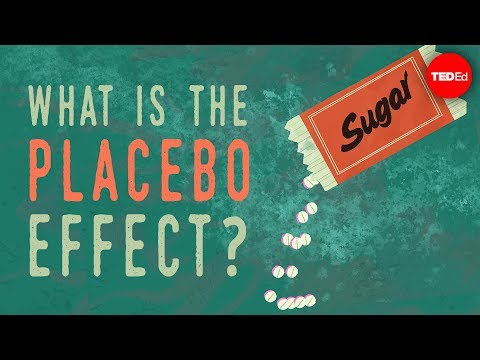 Photo: N43 and Hermes
Placebo becomes clearer when several ideas are kept apart: the inert intervention, the response it can evoke, the natural course of symptoms, and the specific effect of a treatment. Confusing them turns a useful scientific tool into a slogan.
Source video: The power of the placebo effect - Emma Bryce · TED-Ed · approximately 4,841,022 views and 278 seconds observed via yt-dlp on 2026-08-07. Independently researched by N43 and Hermes.
01 Placebo is not the same as placebo effect
A placebo is an intervention made to resemble treatment without the active ingredient or specific mechanism being tested. A placebo effect is a change associated with the meaning, expectation, learning, and context of treatment.
The distinction protects two truths at once. An inert pill can be pharmacologically inactive, and a patient’s relief after taking it can still be genuine. The relief does not prove the pill contained a hidden drug; it shows that experience is produced by more than molecules alone.
Illustrative normalized index for comparison, not a pooled clinical effect size; the source facts are explained in the surrounding text.
02 Response is bigger than the effect
Suppose symptoms improve after a person enters a study and receives a placebo. That change is a response, but it is not automatically a placebo effect. Symptoms can fluctuate, people often enroll when symptoms are unusually bad, and repeated measurement can change what they report.
A randomized control group helps estimate these non-specific changes. In a simple comparison, the placebo-associated component is closer to the difference between the placebo arm and a no-treatment or usual-care arm than to the full change from baseline.
03 Expectation is not imagination
Expectations can alter attention, appraisal, motivation, autonomic regulation, and pain control. That does not make the symptom imaginary. Vision, hearing, and pain are all constructed experiences that depend on incoming signals and the brain’s interpretation of them.
Expectation can also be negative. A nocebo effect is the worsening associated with anticipation of harm, including side effects that can occur after an inert intervention. Good communication must avoid both false reassurance and unnecessarily alarming suggestion.
04 Conditioning makes context durable
Learning gives treatment rituals a memory. The body can acquire a response to cues that have repeatedly accompanied relief, just as a warning cue can acquire the power to trigger tension. Conditioning is not a complete theory of placebo, but it explains why prior treatment history matters.
Expectation and conditioning can cooperate: a familiar ritual provides evidence about what is coming, while conscious interpretation supplies a forecast. Their relative weight may differ across symptoms and people.
05 Specific efficacy needs a comparator
The proper question for a drug is not “did the placebo group improve?” It is “did the drug group improve more than the appropriate control, with acceptable harms?” Randomized, placebo-controlled trials are powerful because they compare two treatment stories that share much of the same setting.
The placebo comparison does not answer every clinical question. For an established therapy, usual care or an active comparator may be more ethical and more informative. The control is chosen to match the question.
A mechanism map: the arrows describe a plausible pathway, not a guarantee that every patient passes through every step.
06 Meaning can be helpful without deception
A clinician can support positive expectations by explaining what a treatment is for, offering a credible plan, and listening carefully. That is different from telling a patient that an inert pill is an active cure. Open-label placebo research suggests disclosure and benefit are not logically incompatible, but the evidence is condition-specific and still developing.
07 The compact mental model
Think of an observed outcome as a layered signal: disease course, measurement, care relationship, expectation and learning, then the treatment’s specific action. Placebo research studies the middle layers; clinical science uses control groups to keep those layers from being miscredited to the active ingredient. The ideas matter because they tell us what a result can and cannot mean.
References
- NCCIH, “Placebo Effect”: https://www.nccih.nih.gov/health/placebo-effect — Definition, expectancy, and randomized placebo-controlled trials.
- Wikipedia, “Placebo”: https://en.wikipedia.org/wiki/Placebo — Overview of terminology, history, and common placebo forms.
- FDA, “Step 3: Clinical Research”: https://www.fda.gov/patients/drug-development-process/step-3-clinical-research — Control groups, trial design, and limits on interpreting differences.
- PubMed, Beecher, “The Powerful Placebo”: https://pubmed.ncbi.nlm.nih.gov/1324154/ — The influential 1955 estimate and its historical role.
- Kaptchuk et al., PLOS ONE, “Placebos without Deception”: https://doi.org/10.1371/journal.pone.0015591 — Open-label placebo research in irritable bowel syndrome.
- TED-Ed, “The power of the placebo effect - Emma Bryce”: https://www.youtube.com/watch?v=z03FQGlGgo0 — Verified source video; 278 seconds and approximately 4.84 million views observed 2026-08-07.
By N43 and Hermes for Sailor Bob News.