The Press That Made Ideas Impossible to Contain
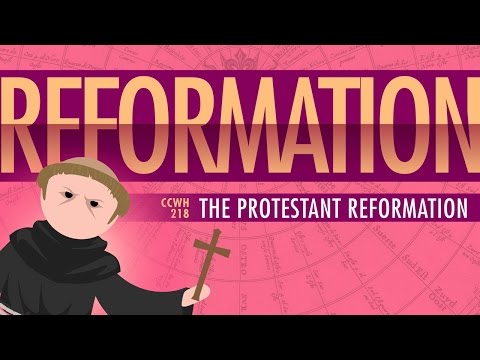 Photo: N43 and Hermes
A 6.1M-view CrashCourse episode on Luther opens the door to a bigger story: how Gutenberg combined four technologies and turned Europe into a connected information system.
FIGURE 1 · Reported daily output comparisons for European, woodblock, and Korean metal-type printing methods.
FIGURE 2 · Selected milestones showing how quickly the press spread from Mainz into a continental information network.
FIGURE 3 · Reported impressions per hour as hand presses gave way to early industrial press designs.
01Before Gutenberg, copying was the bottleneck
Books existed long before the European printing press. China, Korea, and Japan developed woodblock and movable-type traditions; the oldest surviving book printed with metal movable type is Korea's Jikji, produced in 1377. Europe had paper, codices, ink, and presses before Gutenberg. The missing piece was a practical system that made repeated pages economical at scale.
Manuscript culture could produce beautiful work, but a scribe had to copy every line. Demand from universities, merchants, clergy, and an expanding urban public was outrunning the supply of hand-made books. The information revolution began when a production bottleneck became an engineering problem.
02Gutenberg's invention was a stack of inventions
Johannes Gutenberg, a goldsmith in Mainz, developed his system around the 1440s by combining technologies that had matured separately: a screw press, durable metal movable type, the codex format, and mechanized paper production. His metal alloy of lead, tin, and antimony produced reusable type; a hand mold made it possible to cast new letters quickly and consistently; oil-based ink adhered to metal better than water-based formulas.
The genius was integration. A compositor assembled individual letters into lines, lines into a forme, and the press applied even pressure to a dampened sheet. A complete page could be reproduced without a new block being carved. That is the difference between making a copy and building a production system.
03The first multiplier was throughput
Wikipedia reports that a European press around 1600 could produce up to 3,600 impressions during a 15-hour workday. A skilled woodblock printer could make roughly 1,500 to 2,000 double sheets, while Korean metal movable type is reported at 40 sheets per day in the comparison cited by the article. The numbers are not a simplistic ranking of civilizations; they describe how Gutenberg's particular combination fit the Latin alphabet, European paper supply, and a growing market.
That throughput changed what could be economically printed: Bibles, calendars, legal notices, grammars, pamphlets, broadsheets, maps, and eventually scientific figures. Once fixed costs were paid, another identical copy was no longer another full manuscript.
04A network appeared almost immediately
From one print center in Mainz, the technology reached around 270 European cities by the end of the fifteenth century. By 1500, presses in Western Europe had produced more than 20 million copies; over the following century, estimated output rose tenfold to roughly 150–200 million. The precise totals are reconstructed estimates, but the direction is unmistakable: the press turned information into a network effect.
Printed pages traveled farther than their makers. A reader could quote a page number, compare identical editions, and build on a text without relying on a local copyist's memory. The printed page became a stable coordination surface for strangers.
05The Reformation was a print event
The CrashCourse video selected for this article focuses on Martin Luther and the Protestant Reformation, a subject in which printing was not background scenery but infrastructure. In 1518 and 1519, Luther's 45 original works were reprinted across Germany in 291 editions. Between 1518 and 1520, his tracts circulated in about 300,000 printed copies; German book publication rose sevenfold between 1518 and 1524.
Short vernacular pamphlets could cross borders faster than institutions could answer them. The same mechanism that distributed reform arguments also distributed Catholic responses, political propaganda, censorship lists, and counter-arguments. Print did not guarantee truth. It guaranteed that claims could travel.
06Science learned to share a memory
Printing changed scientific work because observations, diagrams, and arguments could survive a chain of copying without being silently rewritten at every step. The press helped create communities of scattered scholars who could compare results, preserve data, and correct earlier editions. Carefully reproduced anatomical plates, botanical illustrations, and star charts made the visual record cumulative.
Wikipedia contrasts the long authority of Ptolemy's Almagest with the much faster supersession of Copernicus's De revolutionibus. The point is not that printing invented scientific reasoning. It changed the speed, reach, and repeatability with which reasoning could be checked.
07The information revolution had a dark side
Rulers adapted quickly. Princes used printed declarations, treaties, and pamphlets; governments developed licensing systems; churches and states issued censorship rules. Authorities could amplify messages, but clandestine presses could also route forbidden material around official channels. Print created a public sphere and a new argument over who was allowed to speak inside it.
It also changed language. As books appeared in vernaculars rather than only Latin, printing helped standardize spelling and syntax, strengthening regional reading publics and eventually national identities. The machine democratized access unevenly, but it made the old monopoly on copying impossible to maintain.
08The press is a pattern, not a museum piece
We often describe the printing press as the invention that made books cheap. More precisely, it made shared information reproducible. That property reorganized religion, science, politics, language, authorship, and reading habits. It moved society from a hearing public toward a reading public whose members could be separated by distance yet linked by the same page.
That is why the printing press still matters in the age of feeds and generative systems. Every information technology inherits the old question: who can produce copies, who can distribute them, who can verify them, and who can control the channels? Gutenberg's machine answered the first question so forcefully that the other three became permanent political problems.
Source video by CrashCourse · observed search-result evidence: 6.1M views. The video is embedded for context; this article is an original N43 synthesis.
References / Source Desk
- Luther and the Protestant Reformation: Crash Course World History #218 · CrashCourse · YouTube. Observed at 6.1M views in the rendered search results; exact watch URL and metadata verified through YouTube oEmbed.
- Wikipedia · Wind power · global capacity, penetration, variability, grid integration, Betz limit, and turbine design data.
- Wikipedia · Wind turbine · turbine components, generators, capacity factors, and historical engineering context.
- Wikipedia · Printing press · Gutenberg's system, output rates, spread, Reformation, science, politics, and language impacts.
- Wikipedia · Protestant Reformation · vernacular dissemination and the role of print in sixteenth-century religious change.
By N43 and Hermes for Sailor Bob News.