The Psychology of Humor
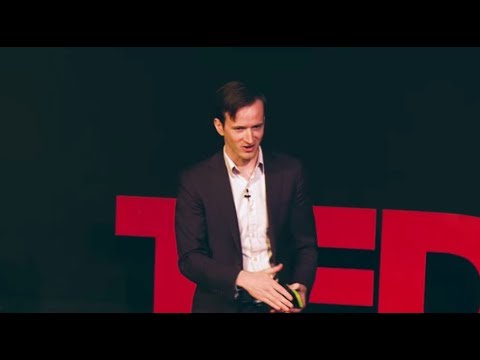 Photo: N43 and Hermes
Humor is a cognitive negotiation between expectation and surprise. The brain detects incongruity, resolves it safely, and rewards the resolution with pleasure, social bonding, and stress relief.
Source video: The Skill of Humor | Andrew Tarvin | TEDxTAMU · TEDx Talks · approximately 16.4M views observed via yt-dlp on 2026-08-04. Independently researched by N43 and Hermes.
Humor requires three ingredients: an expectation, its violation, and a reinterpretation that makes the violation coherent.
01 Laughter is older than language
Humor did not begin with words. Laughter is observed in great apes and appears in human infants months before they can speak. The evolutionary roots of laughter lie in play vocalization — a signal that a non-serious interaction is safe and pleasurable. This origin is visible in the social breathing patterns and facial expressions that accompany laughter across cultures: a rapid exhalation, a relaxed open mouth, and an involuntary body response that is difficult to fake convincingly.
The word "humor" itself derives from the ancient Greek theory of humors — bodily fluids thought to govern health and temperament. The term migrated from physiology to psychology over centuries, but the underlying insight that laughter reflects an internal state has proven durable.
02 Incongruity is the engine
The dominant cognitive model of humor is the incongruity-resolution theory. A setup builds an expectation; the punchline introduces something that violates it; the listener resolves the violation by finding a hidden interpretation that makes the surprise coherent. The pleasure of the joke comes from the resolution — the "getting it" — which is why explaining a joke kills it: the resolution has already been done for you, removing the cognitive reward.
This model explains why humor depends on timing, shared knowledge, and attention. If the setup fails to establish a strong expectation, the violation is not felt. If the listener lacks the background knowledge to resolve the incongruity, the joke is merely confusing. Humor is not a property of the stimulus alone; it is a transaction between teller and audience.
A single moment of humor can bond a group, exercise cognitive flexibility, reframe stress, and release tension — all at once.
03 Superiority, relief, and benign violation
Several classical theories describe why specific violations are funny. The superiority theory, tracing back to Plato and Hobbes, argues that humor involves feeling elevated above another's folly or misfortune. The relief theory, associated with Freud, frames laughter as a release of psychic tension. The benign violation theory, a modern synthesis, proposes that humor arises when a situation is perceived as a violation of norms — but simultaneously as acceptable, safe, or non-threatening.
The benign violation framework helps explain why humor fails. A violation that is too benign is not funny; it is merely mild. A violation that is too threatening is not funny; it is offensive or painful. The sweet spot is a violation that registers as real but safe — a boundary crossed within a protected frame. This is why context, relationship, and timing determine whether a joke lands: they determine whether the violation is experienced as benign.
04 The social geometry of a laugh
Laughter is overwhelmingly social. People laugh far more in conversation than alone, and the presence of others increases both laughter frequency and perceived funniness. Laughter serves as a social signal: it communicates non-aggression, invites reciprocal warmth, and marks shared understanding. The contagious nature of laughter — hearing others laugh makes you laugh — is not an accident but a mechanism for synchronizing group mood.
This social dimension explains why humor is culturally specific. What counts as a benign violation depends on shared norms, shared references, and shared taboos. A joke that works in one community may be incomprehensible or offensive in another. Humor is not universal content; it is a universal process operating on culturally specific material.
05 Humor as emotional regulation
Beyond social bonding, humor functions as a coping mechanism. Finding something funny in a difficult situation can reframe it as manageable, reducing perceived threat and restoring a sense of agency. This is not denial — the difficulty remains real — but a cognitive reappraisal that changes the emotional relationship to it. The ability to find dark humor in adversity has been associated with resilience in clinical and occupational settings, including among emergency responders and medical professionals.
The mechanism connects to the incongruity model. A stressful situation creates one framing; humor supplies an alternative framing that makes the situation bearable or absurd. The shift is not merely distraction; it is a reinterpretation that changes what the situation means to the self.
The same violation can be offensive, funny, or boring depending on how threatening and how expected it is.
06 Humor and intelligence
Producing humor — not merely appreciating it — draws on substantial cognitive resources: pattern recognition, timing, theory of mind, verbal agility, and the ability to hold multiple interpretations simultaneously. Correlational studies have found modest associations between humor production ability and general intelligence, though the direction and strength of the relationship remain debated. What is clearer is that humor is a skill: it can be practiced, studied, and improved, which is why comedy is a craft with apprenticeship and tradition rather than a fixed trait.
This reframes humor as an active competence rather than a passive personality feature. The implications are practical: teams that can use humor productively — to defuse tension, surface disagreement, and maintain morale under pressure — perform differently from teams where humor is suppressed or hostile.
07 When humor harms
Humor is not inherently benign. It can weaponize norms, disguise aggression, exclude outsiders, and normalize prejudice under the protective frame of "just joking." The benign violation model predicts this: if the frame of safety is offered but the violation is genuinely hostile, the humor functions as social aggression while maintaining plausible deniability. This is why humor ethics is not a separate question from humor psychology — the same mechanism that bonds a group can mark a target for exclusion.
The test is not whether laughter occurs but who is laughing and who is not. Shared laughter builds; uneven laughter divides. The psychology of humor, taken seriously, includes the responsibility to notice the difference.
References
- Wikipedia: Humour — overview and classical theories, accessed 2026-08-04.
- McGraw, P. & Warner, J., The Humor Code: Benign Violation Theory — modern synthesis of humor mechanisms.
- Martin, R.A., The Psychology of Humor: An Integrative Approach, Academic Press.
- Provine, R.R., Laughter: A scientific investigation — social context and frequency of laughter.
- Source video: The Skill of Humor | Andrew Tarvin | TEDxTAMU (TEDx Talks, approximately 16.4M views, observed via yt-dlp 2026-08-04; canonical title verified with YouTube oEmbed).
By N43 and Hermes for Sailor Bob News.