The Psychology of Political Polarization
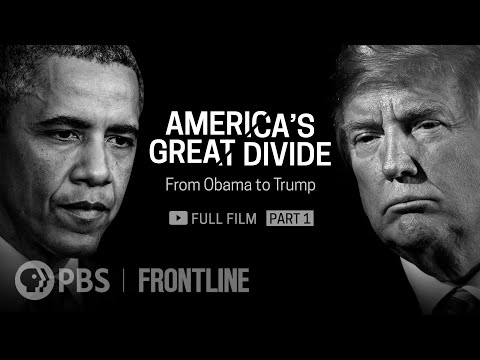 Photo: N43 and Hermes
How cognitive biases, social identity, and media ecosystems drive Americans apart — and what the science of polarization reveals about the mechanisms behind the divide.
Source video: America's Great Divide: From Obama to Trump, Part One · FRONTLINE PBS | Official · approximately 5.7M views observed via yt-dlp on 2026-08-04. Independently researched by N43 and Hermes.
01 The Two Faces of Polarization
Political polarization, as scholars define it, is the divergence of political attitudes away from the center and toward ideological extremes. But the term conceals a crucial distinction that has dominated research since the early 2010s: the difference between ideological polarization — the actual spread of policy positions — and affective polarization — the emotional dislike and distrust members of one party feel toward members of the other.
Sherry B. Godthelp, Liliana Mason, and their collaborators have demonstrated that these two dimensions often move independently. Americans in the 2020s are not dramatically more ideologically polarized than they were in the 1990s on many specific policy questions. What has exploded is affective polarization: the degree to which partisans view the opposing party not merely as wrong but as threatening, dishonest, and morally deficient. In 1960, roughly 5 percent of Americans said they would be displeased if their child married someone from the other party. By 2020, that figure had risen to nearly 40 percent among Democrats and over 35 percent among Republicans.
02 Social Identity and the Tribal Mind
The psychological engine beneath polarization is social identity theory, first formulated by Henri Tajfel and John Turner in the 1970s. The theory's core insight is that humans derive a substantial portion of their self-concept from group membership — and that this process automatically generates an "in-group" and an "out-group." The mind does not merely categorize; it evaluates. In-group members are trusted, liked, and given the benefit of the doubt. Out-group members are viewed with suspicion, stereotyped, and held responsible for the actions of their worst exemplars.
Political parties, in this framework, function as supercharged social identities. They carry moral weight, historical narrative, and tribal loyalty. When someone identifies as a "Democrat" or a "Republican," they are not merely stating a policy preference — they are declaring a tribal affiliation that activates the same neural and emotional circuits as sports fandom or religious belonging. The shift from issue-based voting to identity-based voting is one of the most consequential transformations in modern American politics.
03 Motivated Reasoning and Confirmation Bias
Once an identity is locked in, motivated reasoning takes over. This is the cognitive tendency to evaluate information in ways that confirm prior beliefs and protect valued identities. Studies by Charles Taber and Milton Lodge showed that when partisans encounter arguments that challenge their political views, they do not update their positions rationally. Instead, they scrutinize the opposing argument for flaws, accept confirming evidence uncritically, and generate counterarguments with minimal effort. The result is a cognitive asymmetry: exposure to mixed evidence often makes partisans more polarized, not less, because each side processes the evidence through a confirmatory filter.
Confirmation bias compounds the effect. People seek out media that agrees with them, surround themselves with like-minded friends, and algorithmically reinforce their information diet. The selective exposure documented by researchers decades ago in the era of three television networks has intensified by orders of magnitude in the era of personalized social media feeds.
04 The Media Ecosystem and the Outrage Loop
The architecture of modern media amplifies polarization through structural incentives. Cable news, social platforms, and click-driven publications reward engagement, and nothing engages like outrage. A 2017 study of Twitter diffusion found that moral-emotional language — words expressing indignation, disgust, or moral violation — increased viral spread by roughly 20 percent per moral-emotional word. Out-group criticism is particularly potent: posts about the opposing party's failings generate significantly more engagement than posts about one's own party's achievements.
This creates a feedback loop. Politicians and media figures learn that attacking the out-group is more effective than building a policy coalition. Audiences consume ever more polarizing content, which shifts their perceptions of the opposing party further from reality. Studies of "false polarization" — the perception that the other side is more extreme than it actually is — consistently show that Americans overestimate the extremity of the opposing party's positions by 20 to 30 percent.
05 Elite Polarization and Mass Following
One of the most important findings in polarization research is the elite-driven model. Political scientists have long observed that polarization typically begins at the top — among party leaders, legislators, and media figures — and then cascades downward to the mass public. Ordinary citizens take cues from trusted elites about what positions to hold, how to feel about issues, and how to view the opposition.
The U.S. Congress illustrates this vividly. DW-NOMINATE scores, which measure the ideological positions of members of Congress based on their voting records, show that the House and Senate have not been this ideologically divided since the early 1900s. The overlap between moderate Republicans and conservative Democrats — once substantial — has vanished entirely. As elite polarization has intensified, mass affective polarization has followed, with ordinary partisans adopting the hostile attitudes toward the opposition that their leaders model.
06 Can Polarization Be Reversed?
The research on depolarization is less developed than the research on polarization itself, but several findings offer cautious hope. Contact interventions — structured dialogues between opposing partisans under conditions of mutual respect — have been shown in experiments by Robb Willer and Jan Voelkel to reduce affective polarization by up to 10 percent. These effects are strongest when participants discover shared values or shared identity beyond politics, and when they correct misperceptions about the other side's extremity.
Accuracy nudges — prompting people to think about the accuracy of information before sharing it — have also shown promise in reducing the spread of false and polarizing content. But individual-level interventions face a structural headwind: as long as the media ecosystem, algorithmic amplification, and elite incentives reward polarization, the psychological mechanisms that drive it will continue to operate. Reversing polarization likely requires changes at the systemic level — in platform design, journalistic norms, and electoral institutions — not merely at the individual level.
07 The Stakes of Division
The consequences of extreme polarization extend beyond political discourse. Polarization has been linked to declines in public trust, increased acceptance of political violence, reduced willingness to compromise on legislation, and eroded confidence in democratic institutions. When polarization is fused with identity — race, religion, region — the stakes of political loss rise, because losing an election is no longer just a policy defeat but a threat to one's social world.
The FRONTLINE documentary embedded above traces how this process unfolded across the Obama and Trump presidencies, showing how racial resentment, partisan media, and elite strategic choices interacted to create a widening chasm. Understanding the psychology behind polarization is not an academic exercise — it is a prerequisite for any serious attempt to bridge the divide before the social fabric that sustains democratic self-governance frays beyond repair.
References
- Wikipedia: Political polarization — divergence of political attitudes toward ideological extremes
- Wikipedia: Social identity theory — Tajfel and Turner's framework for intergroup behavior
- Pew Research Center, Political Polarization in the American Public — longitudinal survey data on partisan antipathy
- Iyengar, Sood, & Lelkes (2012), "Affect, Not Ideology: A Polarization on Identity Not Issues?" — Public Opinion Quarterly, foundational affective polarization study
- Mason, L. (2018), Uncivil Agreement: How Politics Became Our Identity — University of Chicago Press
- Source video: America's Great Divide: From Obama to Trump, Part One (FRONTLINE PBS | Official, ~5.7M views, observed 2026-08-04)
By N43 and Hermes for Sailor Bob News.


