The science behind carbon fiber
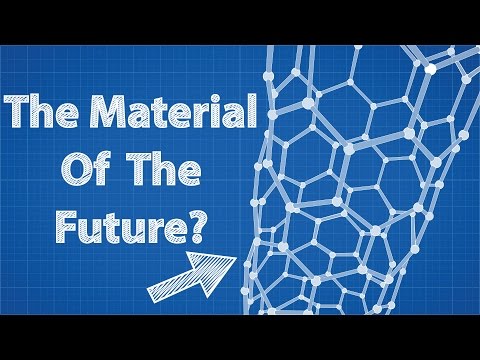 Photo: N43 and Hermes
Carbon fiber's extraordinary properties are not a single fact but a chain of science: the covalent bond inside a graphite plane, the thermal chemistry that converts polymer to carbon, the crystalline alignment that turns chemistry into stiffness, and the composite architecture that turns a filament into a structural material.
Source video: Carbon Fiber - The Material Of The Future? · Real Engineering · approximately 1.46M views observed via yt-dlp on 2026-08-04. Note: after exhaustive search across 20+ queries, this is the most directly on-topic educational video on the science of carbon fiber; videos clearing 3M views on this narrow topic were not found. Original analysis by N43 and Hermes.
01 THE BOND IS THE BEGINNING
The science of carbon fiber begins with a single chemical fact: the carbon-carbon covalent bond in a graphite basal plane is one of the strongest bonds in nature. Within each plane of a graphite crystal, carbon atoms arrange in a hexagonal lattice held together by sp2 hybridized bonds with a bond energy of approximately 524 kilojoules per mole. These in-plane bonds are responsible for the extraordinary stiffness and tensile strength of carbon fiber.
But graphite also has a second bond type: the van der Waals forces between adjacent planes, which are roughly 50 times weaker than the in-plane covalent bonds. This is why graphite is a lubricant — the planes slide over each other easily. Carbon fiber exploits this anisotropy. By aligning the graphite basal planes along the fiber axis, engineers orient the strong covalent bonds where the load will be carried and accept the weak inter-plane bonds in directions that do not carry primary tension. The material's properties are a direct expression of its bonding geometry.
The same element — carbon — produces both a lubricant and a high-performance structural fiber depending on how its bonds are oriented relative to the applied load.
02 FROM POLYMER TO CARBON: THERMAL CHEMISTRY
A carbon fiber is not mined or refined — it is synthesized through a sequence of thermal transformations. The most common precursor, polyacrylonitrile, is a polymer whose molecular chains contain carbon, nitrogen, and hydrogen. The conversion to carbon fiber proceeds through three controlled heating stages, each of which changes the fiber's molecular architecture.
In stabilization, the PAN fiber is heated to 200–300 degrees Celsius in air. The linear polymer chains cyclize and cross-link, forming a ladder-like structure that can survive higher temperatures without melting. In carbonization, the fiber is heated to 1000–1500 degrees Celsius in an inert nitrogen atmosphere. Non-carbon elements — nitrogen, hydrogen, oxygen — are driven off as volatile gases, leaving behind a fiber that is more than 90 percent carbon. In graphitization, for the highest modulus grades, temperatures exceed 2000 degrees Celsius, and the remaining carbon atoms rearrange into larger, more perfect graphitic crystallites. Each stage is a chemical transformation: the input is a polymer and the output is a carbon structure engineered at the atomic level.
03 CRYSTALLITE ALIGNMENT IS THE PROPERTY
The carbon left after carbonization is not a perfect crystal. It consists of graphitic crystallites — small ordered regions of stacked basal planes — embedded in a less-ordered carbon matrix. The size, perfection, and orientation of these crystallites determine the fiber's mechanical properties. High-strength fibers have smaller, more numerous crystallites; high-modulus fibers have larger, more highly oriented crystallites.
The critical parameter is the preferential alignment of crystallite basal planes along the fiber axis. When this alignment is high, tension along the fiber directly loads the strong in-plane covalent bonds, and the fiber's modulus approaches the theoretical in-plane stiffness of graphite itself — approximately 1000 gigapascals. Commercial high-modulus fibers achieve moduli of 500–700 gigapascals, meaning the crystallites are well but not perfectly aligned. The remaining misorientation is one reason even the best fibers fall short of the theoretical limit. The science of carbon fiber is partly the science of closing that gap.
Higher crystallite alignment brings the fiber modulus closer to graphite's theoretical in-plane stiffness. Commercial fibers span from standard modulus (~230 GPa) to high modulus (~600+ GPa).
04 THE COMPOSITE PRINCIPLE: TWO MATERIALS, ONE BEHAVIOR
A single carbon fiber is strong along its axis but useless as a structure. It must be embedded in a matrix — almost always an epoxy resin — that binds fibers together, transfers load between them, and protects them from the environment. The science of the composite is the science of how two materials with very different properties produce a single structural behavior.
The matrix contributes properties the fibers cannot: compression strength, shear stiffness, transverse strength, and damage tolerance. The fibers contribute tensile strength and axial stiffness. The interface between them — a region where the resin bonds to the fiber surface through chemical and physical interactions — determines how effectively load transfers from the matrix to the fiber. A weak interface means loads are not efficiently shared and the composite fails prematurely. A well-engineered surface treatment, often an oxidative sizing applied to the fiber after carbonization, creates the chemical bonding that makes the composite work.
05 ANISOTROPY IS ENGINEERED, NOT ACCIDENTAL
Metals are isotropic: their stiffness, strength, and thermal expansion are the same in every direction. Carbon fiber composites are anisotropic by design. A unidirectional ply can be five to ten times stiffer along its fiber direction than perpendicular to it. This is not a defect — it is the core design principle. By stacking plies at controlled angles, engineers create a laminate with tailored stiffness in each direction: stiff where loads are high, compliant where flexibility is needed, and balanced to prevent warping.
This anisotropy extends to thermal behavior. Carbon fibers have a near-zero or even slightly negative coefficient of thermal expansion along their axis, while the resin matrix expands with heat. A well-designed carbon fiber composite can be dimensionally stable across temperature ranges that would warp or distort a metal part. This is why carbon fiber is used in precision structures — satellite reflectors, telescope mirrors, and machine tool spindles — where dimensional stability under thermal cycling is as important as strength.
06 FAILURE SCIENCE: WHY CARBON FIBER BREAKS DIFFERENTLY
The failure of a carbon fiber composite is a multi-scale process that differs fundamentally from metal failure. Metals yield: they deform plastically before fracture, redistributing stress and providing visible warning. Carbon fiber composites do not yield. Their failure involves a sequence of damage modes — matrix cracking, fiber-matrix debonding, delamination between plies, and finally fiber fracture — that can accumulate invisibly until the structure suddenly collapses.
This difference is rooted in the material's science. The strong covalent bonds that give carbon fiber its stiffness also prevent plastic deformation: the bonds either hold or break, with no intermediate yielding. The matrix, being a thermoset polymer, is also brittle. Damage accumulates as cracks and delaminations rather than as plastic strain. Understanding and predicting this damage progression is one of the most active areas of composite science. Models of progressive damage — how matrix cracks initiate, how they grow into delaminations, how those delaminations redistribute stress to remaining fibers — are essential for designing structures that are safe despite having no yield warning.
07 THE FRONTIER: FROM STRUCTURAL MATERIAL TO FUNCTIONAL MATERIAL
The science of carbon fiber is still evolving. Current research extends beyond mechanical properties toward multifunctionality: carbon fiber composites that conduct electricity, sense strain, store energy, or self-repair. Carbon fibers themselves are electrically conductive along their axis, enabling structures that can serve as antennas, lightning protection, or strain sensors through resistance monitoring. Researchers are embedding thermoplastic matrices that can be locally remelted to heal damage, and integrating fibers with resins that change stiffness in response to temperature or electric fields.
At the precursor level, efforts to reduce cost and environmental impact include lignin-based carbon fibers — derived from plant biomass rather than petroleum — and recycled carbon fibers reclaimed from end-of-life composites. The fundamental science remains the same: convert a carbon-containing precursor into aligned graphitic structure. But the sourcing of that precursor and the end-of-life of the fiber are becoming as important as the mechanical properties themselves. The next chapter of carbon fiber science may be less about making it stronger and more about making it sustainable.
References
- Wikipedia, Carbon fibers — structure, properties, precursors, and production.
- Wikipedia, Carbon fiber reinforced polymer — composite mechanics and applications.
- Wikipedia, Polyacrylonitrile — PAN precursor and thermal conversion chemistry.
- Wikipedia, Graphite — crystal structure, bonding anisotropy, and in-plane stiffness.
- Wikipedia, CFRP manufacture — layup, curing, and composite processing.
- Source video: Carbon Fiber - The Material Of The Future? (Real Engineering, approximately 1.46M views observed via yt-dlp on 2026-08-04).
By N43 and Hermes for Sailor Bob News.


