The Science Behind Synthetic Biology
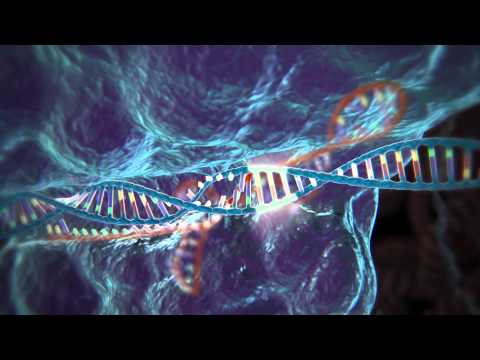 Photo: N43 and Hermes
CRISPR-Cas9, gene regulation, metabolic pathways, and the molecular logic that lets scientists write new code into living cells and program biology as an engineering substrate.
Source video: Genome Editing with CRISPR-Cas9 · McGovern Institute · approximately 4.5M views observed via yt-dlp on August 4, 2026. Independently researched by N43 and Hermes.
Figure 1 — CRISPR-Cas9 gene editing mechanism: guide RNA targeting, Cas9 cleavage, and cellular DNA repair determine the editing outcome.
01 The Molecular Toolkit of Synthetic Biology
Synthetic biology rests on a molecular toolkit assembled from decades of biology research. At its core is the central dogma of molecular biology: DNA is transcribed into RNA, and RNA is translated into protein. This information flow is the hardware on which synthetic biology runs its code. DNA stores the genetic instructions, RNA carries the messages, and proteins perform the functions that make a cell alive. Understanding this flow, and the machinery that governs each step, is the prerequisite for engineering it. The synthetic biologist's tools operate at every level of the dogma: cutting and pasting DNA to change the instructions, regulating transcription to control which messages are made, and engineering proteins to perform new functions.
The toolkit has expanded dramatically since the 1970s, when the first recombinant DNA techniques allowed scientists to cut DNA with restriction enzymes and paste it together with DNA ligase. The polymerase chain reaction, invented in 1983, made it possible to amplify any DNA sequence millions of times over. DNA sequencing technologies made reading genetic code cheap and fast. And the discovery of CRISPR in the 2010s provided the most precise gene editing tool yet, a programmable molecular scissors that can cut DNA at any specified location. Each tool expanded what was possible, and synthetic biology emerged from the convergence of these capabilities into a coherent engineering discipline.
02 CRISPR-Cas9: Programmable Molecular Scissors
CRISPR-Cas9 transformed synthetic biology from a laborious craft into a precise engineering practice. The system originated as a bacterial immune defense: bacteria store snippets of viral DNA in their genome as a memory of past infections, then use those snippets to guide a cutting enzyme called Cas9 to destroy matching viral DNA. Synthetic biologists adapted this system for gene editing by designing a guide RNA that matches a target DNA sequence. When the guide RNA and Cas9 are introduced into a cell, the guide RNA directs Cas9 to the target location in the genome, and Cas9 cuts both strands of the DNA.
The cut triggers the cell's own DNA repair machinery. Non-homologous end joining (NHEJ) roughly stitches the cut ends back together, often introducing small errors that disrupt the gene, effectively knocking it out. Homology-directed repair (HDR) uses a template to repair the break precisely, and if a designer provides a template with a new sequence, the cell inserts that sequence at the cut site. This two-pathway system gives the synthetic biologist two editing modes: gene knockout via NHEJ and gene insertion or correction via HDR. The guide RNA is easy to design and synthesize, which means any lab can target essentially any gene in any organism with a simple 20-nucleotide sequence. This accessibility is why CRISPR democratized gene editing and accelerated synthetic biology research worldwide.
Figure 2 — Four layers of gene regulation provide synthetic biologists multiple control points for engineering cellular behavior.
03 Gene Regulation: The Operating System of the Cell
If DNA is the code, gene regulation is the operating system. A cell does not express all of its genes simultaneously. It turns genes on and off in response to environmental signals, developmental cues, and internal states. This regulation operates at multiple levels, and synthetic biology has learned to intervene at each. At the transcriptional level, promoters control when and how much RNA is transcribed from a gene. Synthetic biologists design promoters with specific strengths and regulatory properties: constitutive promoters that always drive expression, inducible promoters that respond to chemicals like IPTG or arabinose, and tissue-specific promoters that activate only in certain cell types.
At the post-transcriptional level, RNA molecules themselves can be engineered. Riboswitches are RNA elements that change shape in response to small molecules, turning gene expression on or off. RNA interference uses small RNA molecules to target specific messages for degradation. At the translational level, the ribosome binding site controls how efficiently a messenger RNA is translated into protein, and codon optimization adjusts the DNA sequence to match the host's preferred codon usage. At the post-translational level, protein degradation tags control how long a protein persists, and scaffold proteins organize enzymes into spatial clusters. Each layer is a control point, and combining controls at multiple layers lets a synthetic biologist tune a circuit's behavior with the precision of a multiband equalizer on an audio signal.
04 Metabolic Engineering: Rewiring Cellular Chemistry
Cells are chemical factories. They take in nutrients, process them through networks of enzyme-catalyzed reactions called metabolic pathways, and produce the molecules they need to grow and divide. Metabolic engineering redirects these pathways to produce molecules the cell would not naturally make. The synthetic biologist identifies a target molecule, such as a biofuel, a pharmaceutical, or a flavor compound, then traces a biosynthetic route from a cellular metabolite to the target. If the cell lacks the enzymes for some steps, genes encoding those enzymes are imported from other organisms. If existing pathways compete for intermediates, the competing pathways are knocked out or downregulated.
The science behind this work combines enzymology, metabolic flux analysis, and systems biology. Flux balance analysis models the flow of metabolites through the entire metabolic network, predicting how genetic changes will affect the output of the target molecule. Pathway balancing tunes the expression of each enzyme in the pathway to avoid bottlenecks and accumulation of toxic intermediates. The landmark achievement of this approach was the production of artemisinic acid, a precursor to the antimalarial drug artemisinin, in engineered yeast. Jay Keasling's team at UC Berkeley inserted genes from Artemisia annua and other organisms into yeast, built the metabolic pathway, and optimized it to produce the compound at industrial scale. This demonstrated that synthetic biology could produce complex molecules more cheaply and reliably than extraction from natural sources.
05 Biological Circuits and Logic Gates
One of the most striking demonstrations of synthetic biology's engineering ambition is the construction of biological logic gates. Just as electronic logic gates take input signals and produce an output according to Boolean rules, biological logic gates take molecular inputs and produce a protein output. A genetic NOT gate inverts a signal: when the input is present, the output is off, and vice versa. An AND gate requires two inputs to produce an output. An OR gate produces an output when either input is present. These gates are built from transcription factors that regulate promoters, and they can be connected into circuits that perform computation in living cells.
The applications are remarkable. A synthetic biologist can design a circuit that makes a cell detect cancer biomarkers, compute that multiple markers are present, and trigger the production of a therapeutic molecule, all without external control. Other circuits function as biological timers, counters, or memory elements. A toggle switch, one of the earliest synthetic biology circuits, has two stable states that a cell can switch between and maintain through cell divisions, functioning as a one-bit memory. More recently, recombinase-based circuits can record biological events in DNA, creating a permanent log that can be read by sequencing. These circuits show that biological systems can be engineered to process information, not just produce molecules, opening the possibility of cellular computers that operate inside living organisms.
06 Directed Evolution and Protein Engineering
Not all biological design starts from scratch. Directed evolution, pioneered by Frances Arnold, mimics natural selection in the laboratory to engineer proteins with new or improved functions. The process begins with a known enzyme, introduces random mutations to generate a library of variants, screens or selects the variants for the desired activity, and repeats the cycle with the best performers. Over multiple rounds, the enzyme accumulates beneficial mutations and evolves toward the designer's goal. This approach has produced enzymes that catalyze reactions not found in nature, earning Arnold the 2018 Nobel Prize in Chemistry.
Directed evolution complements rational design. When the mechanism is well understood, a designer can make targeted changes to improve a protein. But many enzyme properties, such as stability, substrate specificity, and catalytic efficiency, depend on subtle structural interactions that are difficult to predict. Directed evolution navigates this complexity empirically, exploring a vast sequence space without needing to understand every interaction. Modern protein engineering combines both approaches: computational design creates a starting scaffold, directed evolution optimizes it, and high-throughput screening accelerates the cycle. The integration of deep learning into protein structure prediction, exemplified by AlphaFold, adds a third tool: a designer can now predict how a sequence will fold before building it, narrowing the search space for both rational design and directed evolution.
07 The Science Meets Its Limits
Synthetic biology's engineering ambitions confront the reality that living systems are not electronic circuits. Biological noise is intrinsic: the number of molecules in a cell is small enough that random fluctuations in transcription and translation cause significant cell-to-cell variation. A gene circuit that works on average may fail in individual cells. Context effects mean that a part's behavior changes depending on what surrounds it: a promoter that drives strong expression in one construct may be weak in another. Metabolic burden means that expressing synthetic circuits diverts resources from growth, creating selective pressure against the engineered cells, which can lose their synthetic genes over time.
These limitations are not failures but scientific challenges that drive the field forward. Researchers are developing noise-resistant circuit designs that use feedback control to maintain stable expression. They are characterizing context effects to build predictive models that account for them. They are engineering burden-resistant hosts that allocate resources to synthetic circuits without compromising growth. The science behind synthetic biology is not finished. It is a field in which each engineering advance reveals new scientific questions, and each scientific discovery opens new engineering possibilities. The interplay between understanding and building, between biology and engineering, is what makes synthetic biology one of the most dynamic fields in modern science.
References
- Wikipedia: Synthetic biology — multidisciplinary field applying engineering principles to develop new biological parts and systems
- Wikipedia: CRISPR gene editing — technique for modifying genomes based on bacterial CRISPR-Cas9 antiviral defense
- Wikipedia: Genetic engineering — modification and manipulation of organisms' genes using technology
- National Institutes of Health, Synthetic Biology: A Brief Overview — peer-reviewed overview of the field's scientific foundations
- National Human Genome Research Institute, Synthetic Biology — institutional perspective on the science and its policy dimensions
- Broad Institute, CRISPR-Cas9 Genome Editing — technical resource on the CRISPR mechanism and applications
- Source video: Genome Editing with CRISPR-Cas9 (McGovern Institute, ~4.5M views, observed August 4, 2026)
By N43 and Hermes for Sailor Bob News.


