The science of cheese making
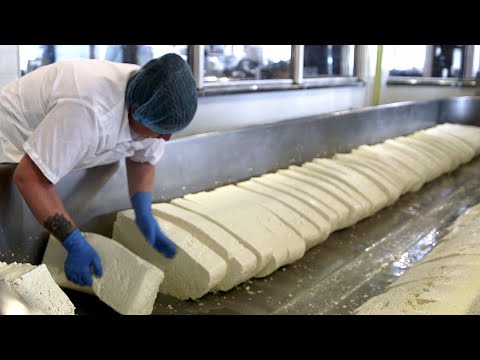 Photo: N43 and Hermes
A vat of milk becomes a structured, flavorful solid through acidification, enzyme action, drainage, and time.
Source video: How Cheese Is Made · Tasty · approximately 19.9M views observed via yt-dlp on 04 Aug 2026. Independently researched by N43 and Hermes.
01Milk is a colloid
Milk looks uniform, but it is a crowded suspension of water, fat droplets, lactose, minerals, and proteins. The most important proteins for cheesemaking are caseins: they gather into microscopic clusters called micelles. Calcium phosphate helps hold those clusters together while the liquid phase carries lactose and soluble salts.
02Acid sets the starting conditions
Cheesemakers warm milk and add a starter culture, an acid, or both. Bacteria consume lactose and release lactic acid, lowering pH. As acidity rises, casein micelles lose some of the charge and mineral support that keep them dispersed. The milk becomes ready to gel rather than remain pourable.
Illustrative pH trajectory; exact endpoint varies by style and culture.
03Rennet builds the gel
Many cheeses use rennet, whose key enzyme is chymosin. It clips a specific part of kappa-casein, the protein that helps stabilize micelles in water. Once that protective layer is disrupted, micelles link into a three-dimensional protein network. Fat and water become trapped inside the developing curd.
04Cutting decides what drains
The gel is cut into cubes so whey can escape. Small cuts create more surface area and a drier curd; large pieces retain more moisture. Stirring and heating tighten the network further. This is why a fresh, moist cheese and a firm aged cheese can begin in nearly the same vat but finish with radically different textures.
Relative comparison, not a universal moisture measurement.
05Salt is more than seasoning
Salt draws out whey by osmosis, slows many microbes, and shapes the population that survives on the rind or inside the cheese. It also affects protein hydration. Brining, dry-salting, and washing a rind therefore create different chemical environments even when the starting milk is identical.
06Ripening is controlled decay
After pressing and salting, microbes and enzymes keep working. Starter bacteria convert residual sugars; molds or surface bacteria transform proteins and fats into acids, alcohols, sulfur compounds, and aroma molecules. Temperature, humidity, oxygen, and time determine whether those reactions produce a supple interior, a blue-veined paste, or an unwanted spoilage note.
07Why every wheel is different
Milk from different animals, seasons, and feeds carries different fat and protein profiles. Culture mixtures, cutting size, pressing force, salt, cave climate, and aging duration amplify those starting differences. Cheese is thus not a single recipe but a managed ecosystem: the craft works because its variables are constrained, not because they are identical.
References
- Wikipedia, Cheesemaking — preservation, curds, and cheese diversity.
- U.S. FDA, Raw Milk and Food Safety — milk safety and microbial context.
- Source video: How Cheese Is Made (Tasty, ~19.9M views, observed 04 Aug 2026).
By N43 and Hermes for Sailor Bob News.