The science of coffee roasting
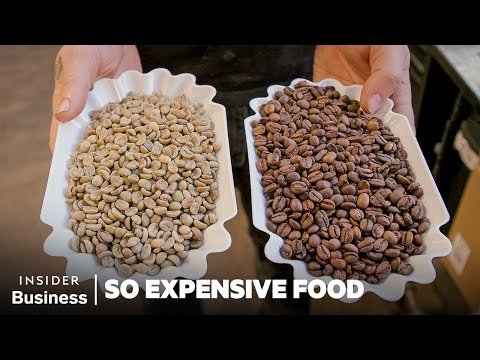 Photo: N43 and Hermes
Roasting is a controlled thermal transformation that turns a pale, dense seed into a brittle, aromatic source of flavor.
Source video: Why Single-Origin Coffee Is So Expensive | So Expensive · Business Insider · approximately 4.3M views observed via yt-dlp on 04 Aug 2026. The case study connects origin, processing, and roast chemistry. Independently researched by N43 and Hermes.
01Green beans are chemical reservoirs
Unroasted coffee beans contain carbohydrates, proteins, lipids, acids, minerals, and caffeine. Their flavor is muted because many aroma molecules have not yet formed. The bean's density and moisture determine how quickly heat can move inward and how much energy is available for reactions.
02Heat first drives water out
As beans warm, free water evaporates and internal pressure rises. The roast may pass through a drying phase in which the bean changes from green toward yellow and bread-like aromas appear. Airflow and drum temperature must remove steam without scorching the surface.
Conceptual roast profile; equipment and desired style change the curve.
03Maillard chemistry makes complexity
When reducing sugars react with amino compounds, the Maillard reaction produces intermediate molecules that become browned polymers and volatile aromas. These pathways create notes described as toasted, nutty, malty, or caramel-like. The chemistry is not one reaction but a network whose output depends on heat, time, moisture, and composition.
04Caramelization is a different route
Sugars also break down and rearrange under heat, producing caramel-like flavors and color. In coffee, caramelization and Maillard chemistry overlap with acid degradation and lipid reactions. A roast's flavor is therefore a balance: sweetness and body can rise, while delicate floral acids may fade if heat exposure continues.
A sensory map, not a universal scale of quality.
05First crack marks expansion
Steam and carbon dioxide pressure eventually fracture the bean's structure, producing the audible first crack. The bean expands, loses mass, and becomes more porous. Continued roasting can lead to a later, more aggressive cracking phase as internal structure breaks down further.
06Cooling stops the reaction runway
Roasted beans retain heat and can keep reacting after leaving the drum. Rapid cooling arrests the roast near the intended endpoint. The finished bean still contains trapped carbon dioxide, which gradually escapes during degassing. Brewing too soon can taste sharp; waiting too long can lose aromatic gases.
07Freshness is a diffusion problem
After roasting, oxygen enters through the porous structure while carbon dioxide leaves. Oxygen oxidizes lipids and aroma compounds; packaging valves let gas escape without admitting as much air. Grind size, storage temperature, and exposure surface then determine how quickly a cup loses its peak character.
References
- Wikipedia, Coffee roasting — roast transformations and Maillard chemistry.
- Specialty Coffee Association, Coffee Standards — coffee quality and processing context.
- Source video: Why Single-Origin Coffee Is So Expensive | So Expensive (Business Insider, ~4.3M views, observed 04 Aug 2026).
By N43 and Hermes for Sailor Bob News.