The Science of Exercise and Longevity
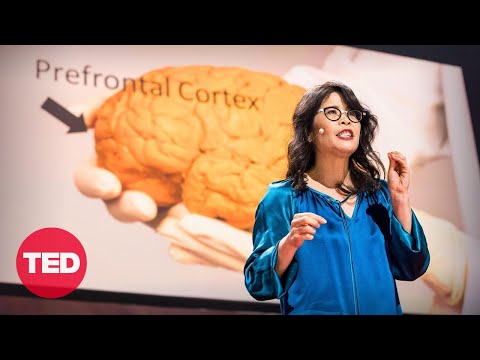 Photo: N43 and Hermes
How movement extends not just lifespan but healthspan — from VO2 max and telomeres to hippocampal growth and the minimum effective dose.
Source video: The Brain-Changing Benefits of Exercise — Wendy Suzuki · TED · approximately 12M views observed via yt-dlp on August 4, 2026. Independently researched by N43 and Hermes.
Even modest exercise produces significant mortality reduction; gains diminish at high volume.
01 The Longevity Signal in Large Cohorts
The first strong evidence that exercise extends life came from population studies that tracked hundreds of thousands of people for decades. The largest pooled analysis, published in 2015 by Hannah Arem and colleagues in JAMA Internal Medicine, pooled data from six cohorts totaling more than 660,000 adults. Compared with inactive individuals, those who met the World Health Organization minimum of 75 minutes per week of moderate-intensity activity had a 14 percent lower risk of all-cause mortality. At 150 minutes per week, risk fell 23 percent. At 300 minutes, 31 percent. The curve flattens — not inverts — at higher doses, so more activity keeps helping, though with diminishing returns.
A 2019 study in the British Journal of Sports Medicine examined fitness rather than self-reported activity, measuring treadmill performance in over 122,000 patients. The least-fit quartile had roughly four times the mortality risk of the top performers. The gradient was continuous, with no threshold below which higher fitness stopped helping.
02 VO2 Max: The Single Best Predictor
VO2 max — the maximum rate at which your body can consume oxygen during exercise — is among the strongest predictors of longevity that medicine can measure. A 2018 study in JAMA Network Open found that higher cardiorespiratory fitness was associated with lower mortality across a wide age range, with the effect larger than that of statins, blood pressure medication, or smoking cessation. The authors argued that low fitness should be treated as a modifiable risk factor on par with hypertension.
VO2 max declines about 10 percent per decade after age 30 in sedentary adults, but this decline slows to roughly 5 percent per decade in trained athletes. Some of this preservation is genetic, but most is a training effect: the heart's stroke volume and the muscles' capillary density and mitochondrial content all respond to sustained aerobic work.
03 Muscle Mass and the Compression of Morbidity
How long you live matters less than how long you live well. The compression of morbidity hypothesis, advanced by James Fries in 1980, argues that the goal is not to extend the period of decline but to shorten it — to stay vigorous until late in life and decline only briefly before death. Muscle mass is central to this: it predicts mobility, independence, and resilience to illness in old age.
Sarcopenia — age-related muscle loss — begins around age 40 and accelerates after 65, with sedentary adults losing roughly 1 to 2 percent of muscle mass per year. Resistance training can reverse much of this loss even in people in their 80s and 90s. A landmark 1990 study by Maria Fiatarone showed that frail nursing-home residents aged 87 to 96 gained an average of 11 percent in muscle strength after eight weeks of progressive resistance training.
Sustained training roughly halves the age-related decline in aerobic capacity.
04 Cellular Mechanisms: Telomeres and Autophagy
Exercise leaves molecular traces. A 2009 study in Circulation found that endurance athletes had longer telomeres — the protective caps on chromosomes that shorten with age — than age-matched sedentary controls. The difference was substantial enough to suggest that moderate activity slows the cellular clock, though whether telomere length is a cause or a marker of aging remains debated.
More compelling is the effect on autophagy, the process by which cells degrade and recycle damaged components. Exercise stimulates autophagy in skeletal muscle and liver, clearing the cellular debris that accumulates with age. In mice genetically unable to activate exercise-induced autophagy, the metabolic benefits of exercise largely vanish — the mice still burn calories but no longer improve glucose tolerance, suggesting that the cleanup, not just the burn, is what drives the health gains.
05 The Minimum Effective Dose
One of the most encouraging findings of the past decade is that the floor for benefit is low. A 2019 study in the British Medical Journal found that women who walked just 4,000 steps per day had significantly lower mortality than those who walked 2,000, and the benefit continued to climb through roughly 7,500 steps. The commonly repeated 10,000-step target originated in a 1965 Japanese pedometer marketing campaign, not from clinical evidence.
For intensity, the evidence is consistent: moderate is good, vigorous is better. A 2020 study analyzing data from the UK Biobank found that small amounts of vigorous activity — as little as 10 to 15 minutes per week of running, cycling, or brisk uphill walking — were associated with reduced mortality beyond what equivalent moderate activity alone would predict. The mechanism is likely a stronger stimulus to VO2 max and cardiovascular adaptation.
06 Exercise and the Brain
Exercise grows the brain. In a study published in PNAS in 2011, sedentary adults aged 55 to 80 who walked for 40 minutes three times a week for a year showed a roughly 2 percent increase in hippocampal volume, reversing the shrinkage typically seen at that age. The control group, which did only stretching, lost about 1.4 percent of hippocampal volume over the same period. The walkers also improved on spatial memory tests, with the magnitude of improvement correlated with the volume change.
The mechanism appears to be brain-derived neurotrophic factor (BDNF), a protein that supports the survival and growth of neurons. Exercise elevates BDNF in the hippocampus and prefrontal cortex, and BDNF levels correlate with exercise-induced memory gains. The effect is specific to aerobic exercise — resistance training produces other brain benefits, including improved executive function, but does not reliably raise BDNF.
The least-fit quartile faces roughly four times the mortality of the most-fit.
07 The Preservative Effect of Movement
Put together, the evidence supports a simple but powerful claim: exercise preserves function across nearly every organ system and appears to extend both lifespan and healthspan — the portion of life lived in good health. The gains are not magical. They arise from measurable adaptations in the heart, blood vessels, muscles, mitochondria, and brain, and they accumulate over years.
The message of the data is also reassuringly modest. You do not need to be an elite athlete. Walking, gardening, cycling to the store, and climbing stairs all count. The best exercise is the one you will do consistently, and the dose needed to see benefit is far smaller than most people assume — somewhere in the neighborhood of 30 minutes a day, most days of the week, is enough to move the needle substantially.
References
- Wikipedia: Physical exercise — overview of exercise and health
- Arem, H. et al. (2015). "Leisure time physical activity and mortality." JAMA Internal Medicine
- Mandic, S. et al. (2018). "Cardiorespiratory fitness and mortality." JAMA Network Open
- Erickson, K. I. et al. (2011). "Exercise training increases size of hippocampus and improves memory." PNAS
- Fries, J. F. (1980). "Aging, natural death, and the compression of morbidity." NEJM
- Source video: The Brain-Changing Benefits of Exercise — Wendy Suzuki (TED, ~12M views, observed August 2026)
By N43 and Hermes for Sailor Bob News.