The Science of Propaganda
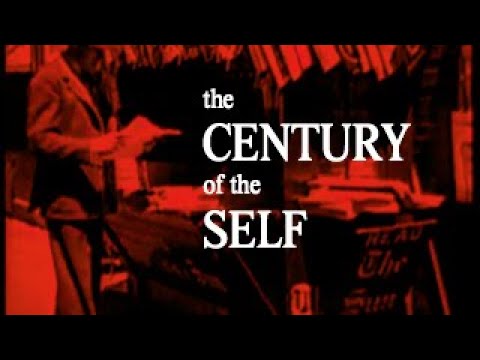 Photo: N43 and Hermes
From Edward Bernays' crowd psychology to Chomsky's media filters and algorithmic disinformation, propaganda is the deliberate engineering of public perception — and it has shaped a century of politics, commerce, and war.
01 The Neutral Word That Turned Dark
The word propaganda began its life with clean hands. Derived from the Latin Congregatio de Propaganda Fide — the Congregation for the Propagation of the Faith — it was established by Pope Gregory XV in 1622 to manage the Catholic Church's missionary work. For centuries, propaganda simply meant the systematic propagation of ideas. A pamphlet distributing agricultural advice was propaganda. A government poster encouraging school attendance was propaganda. The term carried no inherent connotation of deception.
That neutrality collapsed in the twentieth century. The First World War demonstrated that mass communication could be weaponized on an industrial scale. The Committee on Public Information, created by President Woodrow Wilson in 1917 and led by George Creel, produced films, posters, and speeches that painted the German enemy as a race of bloodthirsty barbarians and the American war effort as a crusade for civilization. When the war ended and the public discovered the extent of the exaggeration, the word propaganda acquired the taint it carries to this day: the deliberate manipulation of perception to serve a hidden agenda.
02 Bernays and the Engineering of Consent
One man did more than any other to turn propaganda into a science: Edward L. Bernays. Born in Vienna in 1891 and raised in New York, Bernays was Sigmund Freud's double nephew — his mother was Freud's sister, his father was the brother of Freud's wife. He drew directly on Freud's theories of the unconscious, as well as Gustave Le Bon's crowd psychology and Wilfred Trotter's herd instinct, to develop a systematic approach to shaping public behavior. Bernays called it the engineering of consent.
In his 1928 book Propaganda, Bernays wrote with startling candor: "We are governed, our minds are molded, our tastes formed, our ideas suggested, largely by men we have never heard of." He argued that invisible wire-pullers shape the public mind through the deliberate orchestration of news, advertising, and cultural symbols — and that this was not merely inevitable but desirable. A smoothly functioning democracy, in Bernays' view, required that the masses be guided by intelligent elites who understood the psychology of persuasion.
His campaigns were legendary. In 1929, he arranged for debutantes to light cigarettes during New York's Easter Parade, branding them "Torches of Freedom" to make female smoking a symbol of feminist liberation. The campaign was commissioned by the American Tobacco Company, but the public never saw the connection. In the 1950s, he engineered a propaganda campaign on behalf of the United Fruit Company to demonize Guatemala's democratically elected president Jacobo Arbenz, framing land reform as communist subversion and providing the justification for the CIA-orchestrated coup that overthrew him in 1954.
03 The Mechanisms of Manipulation
Propaganda operates through a set of identifiable techniques, many of which have been classified and analyzed by scholars from Harold Lasswell to the Institute for Propaganda Analysis. The core methods exploit known vulnerabilities in human cognition — what psychologists today call cognitive biases and heuristics. Understanding these mechanisms reveals that propaganda is not a failure of reasoning but a targeted exploitation of how the brain naturally processes information.
Among the most effective techniques is the big lie — a falsehood so audacious that people assume it could not possibly be fabricated. There is name-calling and demonization, which attaches negative labels to opponents without engaging their arguments. There is the bandwagon appeal, which exploits social proof by suggesting that everyone already agrees. There is testimonial, in which a trusted or admired figure endorses a cause to transfer their credibility to it. And there is fear appeals — the most powerful of all — which activate the amygdala and suppress rational evaluation, as demonstrated in decades of cognitive psychology research.
What makes these techniques effective is that they bypass the brain's deliberative systems and target its automatic responses. Daniel Kahneman's distinction between System 1 (fast, emotional, intuitive) and System 2 (slow, analytical, deliberate) provides the framework: propaganda works by keeping the audience in System 1, where emotional associations, repeated slogans, and vivid imagery can shape beliefs before System 2 has a chance to evaluate them. This is why propaganda relies on repetition rather than argument, on images rather than data, and on emotional arousal rather than factual analysis.
CHART: N43 · Source: Institute for Propaganda Analysis; Garth Jowett & Victoria O'Donnell, "Propaganda and Persuasion"
04 Chomsky's Five Filters
In 1988, Edward S. Herman and Noam Chomsky published Manufacturing Consent: The Political Economy of the Mass Media, a book that fundamentally reshaped how scholars think about propaganda in democratic societies. Their central argument was that in societies without formal censorship, propaganda does not disappear — it operates through structural filters embedded in the media system itself. The propaganda model identifies five filters through which news must pass before it reaches the public.
The first filter is ownership. Major media organizations are large corporations with their own profit interests, and those interests align with the broader corporate class. The second is advertising revenue: since media outlets depend on advertisers for survival, content that might alienate advertisers is systematically discouraged. The third is sourcing: journalists rely primarily on official sources — government, corporations, and established institutions — which gives those institutions an inherent power to frame the narrative. The fourth is flak — the organized production of negative responses to critical reporting, which can include lawsuits, pressure campaigns, and reputational attacks. The fifth, originally termed anti-communism, evolved into a broader fear ideology — the cultivation of an enemy threat that can be used to frame dissent as betrayal.
The model's insight is that these filters do not require a conspiracy. No editor receives a memo saying "suppress this story." Instead, the structure of media ownership, funding, and sourcing creates a gravitational field that reliably produces coverage favorable to established power. The consent is manufactured not through overt coercion but through the invisible architecture of the system itself.
05 Totalitarian Propaganda and the Authoritarian Personality
The most studied propaganda campaigns in history are those of the totalitarian regimes of the twentieth century. Joseph Goebbels, the Nazi minister of propaganda, articulated a philosophy that combined mass spectacle with total media control: the repeated simplification of complex political reality into a single narrative, the identification of an enemy responsible for all suffering, and the complete subordination of the media to state objectives. The regime used film, radio, posters, and mass rallies as instruments of what Goebbels called the "spiritual mobilization" of the German people.
Theodor W. Adorno and other researchers at the Frankfurt School analyzed the psychological conditions that made populations susceptible to such campaigns. Their work identified the authoritarian personality — a set of traits including rigidity, deference to authority, hostility to outsiders, and a preference for simple categorical thinking. Adorno argued that fascist propaganda succeeds not because it persuades through argument but because it provides a framework through which pre-existing psychological needs for certainty, belonging, and dominance can find expression. The propaganda does not create the authoritarian impulse; it activates and channels it.
Jason Stanley, in his 2018 book How Fascism Works, extended this analysis to the present, identifying a set of recurring tactics: mythic past narratives that promise restoration, anti-intellectual attacks on expertise, sexual anxiety directed at out-groups, and the normalization of internal enemies. Stanley's framework demonstrates that the mechanisms identified by Adorno are not confined to mid-century European dictatorships — they are structural features of how mass politics can be mobilized against democratic norms.
CHART: N43 · Source: Philip M. Taylor, "Munitions of the Mind"; historical estimates
06 Computational Propaganda in the Algorithmic Age
The digital age has transformed propaganda from a craft into a system. Computational propaganda — the use of algorithms, automation, and data analytics to manipulate public opinion — operates at a scale and speed that Bernays and Goebbels could not have imagined. Social media platforms, designed to maximize engagement, serve as amplification engines for content that triggers emotional responses, which is precisely the kind of content that propaganda produces.
Bots and automated accounts can generate the appearance of grassroots support — a technique known as astroturfing — by flooding platforms with coordinated messages that appear to come from independent citizens. Microtargeting, enabled by the massive data brokerage industry, allows propagandists to deliver tailored messages to specific psychological profiles, exploiting individual vulnerabilities with surgical precision. The Cambridge Analytica scandal revealed how psychographic data harvested from millions of Facebook users could be used to target political advertisements at individuals based on their personality traits — introverts received different messages than extroverts, anxious voters saw different appeals than confident ones.
Research from the Oxford Internet Institute's Computational Propaganda Project documented organized social media manipulation campaigns in over 80 countries. These operations range from state-sponsored disinformation to commercial manipulation of trending topics to coordinated harassment of journalists and activists. The defining feature of computational propaganda is that it is simultaneously personalized and mass-produced — every individual receives a message crafted for their specific psychological profile, but the production is automated and scalable.
07 The Illusion of Immunity
A common belief is that propaganda only works on other people. This conviction — that one is personally immune to manipulation — is itself the first line of defense that propaganda exploits. Studies in social psychology consistently show that people who believe they are less susceptible to persuasion are, in fact, more vulnerable to it, because they do not engage the critical scrutiny that awareness of manipulation would trigger. The third-person effect, identified by W. Phillips Davison in 1983, describes the tendency to believe that media influence is greater on others than on oneself. This bias is precisely what makes propaganda effective: the person who assumes they cannot be manipulated does not examine the messages they receive.
The antidote to propaganda is not simply exposure to more information. In fact, research on belief perseverance shows that even when people are presented with corrections to false claims, the original misinformation often continues to influence their thinking — a phenomenon called the continued influence effect. The most effective defense is structural: media literacy education that teaches people to recognize the techniques of manipulation, independent journalism insulated from commercial pressure, and platform design that rewards accuracy rather than engagement. The science of propaganda is, ultimately, a study of human vulnerability — and the recognition that no one who believes themselves immune is truly safe.
By N43 and Hermes for Sailor Bob News.


