The Science of Stretching
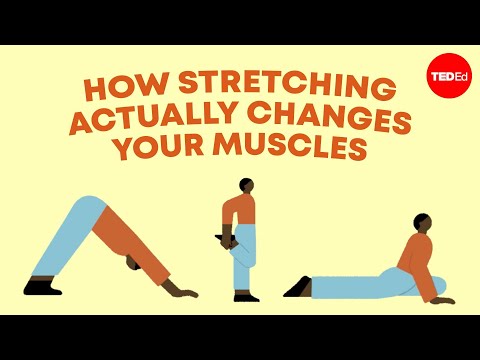 Photo: N43 and Hermes
Stretching can expand range of motion, alter the nervous system's tolerance for length, and gradually reshape tissue. But the familiar feeling of a "looser" muscle is not the whole story.
Source video: How stretching actually changes your muscles - Malachy McHugh · TED-Ed · approximately 12.6M views observed via yt-dlp on August 4, 2026. Independently researched by N43 and Hermes.
Stretching has fast neural effects and slower structural effects. A single session is not the same as a permanent tissue change.
01 Flexibility Is a Measurable Capacity
Stretching is a form of physical exercise in which a specific muscle or tendon is deliberately expanded and flexed to improve felt elasticity, muscle control, flexibility, and range of motion. Flexibility is not a single property of a muscle. It is the movement available at a joint under particular conditions: the position of neighboring joints, the speed of the movement, the temperature of the tissue, the person's expectation, and the nervous system's willingness to permit the motion.
Range of motion is therefore more useful than the everyday phrase "loose muscles." A gymnast, a sprinter, and an office worker may have different useful ranges for different tasks. The goal is not maximum motion everywhere; it is enough controlled motion to perform the intended movement without unnecessary restriction.
02 The First Change Is Often in the Nervous System
Take a muscle to a new length and you feel resistance. Part of that sensation comes from the muscle and connective tissues, but part comes from the nervous system deciding how threatening or uncomfortable the position seems. Stretch receptors, sensory feedback, past experience, and expectations all influence the protective tension that limits the movement.
Repeated exposure can change that tolerance. A position that felt alarming at the edge of a session can become familiar, allowing a person to move farther with a similar level of discomfort. This neural adaptation can occur within a single session and may explain a substantial portion of short-term flexibility gains. It is real, useful, and not the same as permanently lengthening a muscle.
03 Why Muscles Feel Different After Stretching
Static stretching — holding a muscle at a lengthened position — can temporarily reduce passive resistance and alter how force is perceived. The effect is not necessarily that the muscle has been pulled longer like elastic. Instead, the relationship between joint angle, sensation, and the force generated by the tissue has shifted for a while.
Dynamic stretching uses controlled movement through a range rather than a prolonged hold. It raises temperature, rehearses the movement pattern, and can improve readiness for activities that require speed or coordination. Long static holds immediately before maximal power or strength work can modestly reduce performance in some contexts, particularly when the holds are intense and prolonged. A warm-up should match the task.
A conceptual model: early gains can be rapid as tolerance changes, while durable adaptation generally accumulates more gradually.
04 Connective Tissue Adapts More Slowly
Muscle is only one part of a movement system. Tendons connect muscle to bone; ligaments stabilize joints; fascia and other connective tissues transmit force and constrain movement. These tissues are collagen-rich and adapt to loading, but their remodeling is slower than the immediate changes in sensation and coordination.
Consistent, progressive loading can alter the organization and mechanical behavior of connective tissue. That does not mean a person should force a joint into pain in the hope of reshaping it. Excessive intensity can irritate tendons and joints, and a painful stretch is not evidence of a better stimulus. Adaptation is strongest when the load is challenging but recoverable and repeated with enough spacing.
Some range limits are anatomical. Bone shape, joint surfaces, scar tissue, and previous injury can impose constraints that stretching cannot safely remove. A training plan should respect those boundaries rather than interpret every limitation as a defect in flexibility.
05 Mobility Is Strength at the Edge
Passive flexibility is the range a limb can reach with assistance. Active mobility is the range a person can control under their own muscular force. The distinction matters: a joint may be movable into a position that the surrounding muscles cannot stabilize. In that case, stretching alone may increase passive motion without improving usable movement.
Strength training through a comfortable full range helps bridge the gap. Slow eccentrics, controlled end-range lifts, and loaded movements teach the nervous system that the position is both accessible and safe. The strongest mobility programs combine flexibility work with control, balance, and task-specific strength.
This is also why a dancer's flexibility cannot be copied simply by holding a stretch. Their range is supported by years of active control, tissue exposure, motor learning, and sport-specific practice. Mobility is not a trait floating separately from performance; it is a capacity embedded in a movement system.
06 The Practical Science of a Stretching Routine
Choose the method that matches the goal. Use dynamic movements before activities that require speed, power, or coordination. Use static holds after training or in a separate session when the aim is to accumulate comfortable time at a target range. Contract-relax and proprioceptive neuromuscular facilitation methods can produce substantial short-term gains, but they require careful control and are not magic shortcuts.
Frequency and consistency matter more than heroic intensity. A few minutes repeated across the week can provide a better signal than a single punishing session. Breathe normally, move slowly into a tolerable stretch, and distinguish muscular tension from sharp, electric, or joint-centered pain. Progress by adding time, repetitions, or a small amount of range — not by escalating discomfort.
Stretching is neither useless nor a cure-all. It can improve range of motion, movement confidence, and comfort for many people. It does not automatically prevent every injury, eliminate soreness, or replace strength and skill. The science points to a modest but powerful idea: give the body a clear, repeated, recoverable reason to explore more motion, and it often will.
References
- Wikipedia: Stretching — definitions, methods, and common uses
- Behm, D. G. et al. (2016). "Acute effects of muscle stretching on physical performance, range of motion, and injury incidence." Applied Physiology, Nutrition, and Metabolism, 41(1), 1–11.
- Freitas, S. R. et al. (2015). "Stretching for flexibility: design of a randomized controlled trial." Manual Therapy, 20(1), 1–9.
- Opplert, J. & Babault, N. (2018). "Acute effects of dynamic stretching on muscle flexibility and performance." Sports Medicine, 48, 299–316.
- Source video: How stretching actually changes your muscles - Malachy McHugh (TED-Ed, ~12.6M views, observed August 2026)
By N43 and Hermes for Sailor Bob News.