The Science of Supercapacitors
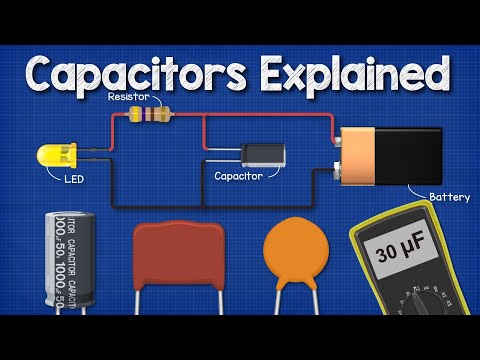 Photo: N43 and Hermes
Supercapacitors store energy not in chemical bonds like batteries but in the electrostatic field at the interface between a conductor and an electrolyte — a mechanism that enables charge times of seconds, cycle lives of millions, and power densities that batteries cannot approach.
Source video: Capacitors Explained — The basics how capacitors work working principle · The Engineering Mindset · approximately 10.8M views observed via yt-dlp on August 4, 2026. Independently researched by N43 and Hermes.
Supercapacitors occupy the middle ground between conventional capacitors and batteries: high power density like a capacitor, moderate energy density approaching battery territory.
01 The Electric Double Layer
The fundamental mechanism of a supercapacitor was first described by Hermann von Helmholtz in 1853. When a conducting electrode is immersed in an electrolyte and charged, ions of opposite sign migrate to the electrode surface, forming an accumulation of charge that mirrors the electrode's charge in a layer roughly one nanometer thick. This is the electric double layer — a region of intense electric field separated by a distance of molecular dimensions. The capacitance of this interface is enormous because capacitance is inversely proportional to the distance between charges: C = εA/d, where ε is the electrolyte's permittivity, A is the electrode surface area, and d is the separation distance. With d on the order of 1 nanometer, even modest electrode areas yield capacitances measured in farads rather than the microfarads of conventional capacitors.
The key insight that separates supercapacitors from ordinary capacitors is the electrode. Conventional capacitors use smooth metal plates with surface areas of perhaps a few square centimeters. Supercapacitor electrodes are typically made from activated carbon — a material whose internal pore structure creates a specific surface area of 1,000 to 2,000 square meters per gram. A single teaspoon of activated carbon has the internal surface area of a football field. When this material is used as both electrodes in a cell, the total capacitance can reach thousands of farads in a device the size of a D-cell battery. The charge is stored physically, electrostatically, with no chemical reaction involved — a distinction with profound consequences for performance and longevity.
02 Pseudocapacitance: The Chemical Bridge
Not all supercapacitors rely purely on electrostatic charge storage. A second mechanism, called pseudocapacitance, involves fast, reversible faradaic reactions at the electrode surface — chemical reactions that transfer charge across the electrode-electrolyte interface without the phase changes that characterize battery chemistry. Metal oxides such as ruthenium dioxide (RuO2) and manganese dioxide (MnO2), as well as conducting polymers like polyaniline and polypyrrole, exhibit pseudocapacitive behavior. These materials can achieve capacitances several times higher than pure electric double-layer capacitors because the charge transfer reaction adds to the electrostatic storage.
The trade-off is durability and rate capability. Pseudocapacitive reactions, while faster than battery reactions, involve physical changes to the electrode material — swelling, contraction, and structural rearrangement — that degrade the electrode over cycles. A pure EDLC with activated carbon electrodes can achieve well over one million charge-discharge cycles with minimal degradation; pseudocapacitors typically deliver tens of thousands of cycles, still far exceeding batteries but no longer in the million-cycle regime. The engineering challenge is balancing the energy density gain from pseudocapacitance against the cycle life penalty, and commercial supercapacitor products are frequently hybrid designs that combine both mechanisms in a single cell.
Supercapacitors deliver roughly 500x the cycle life of lithium-ion batteries and charge in seconds rather than hours — at the cost of far lower energy density.
03 The Cell Architecture
A commercial supercapacitor cell consists of two porous carbon electrodes immersed in an electrolyte, separated by an ion-permeable membrane, and packaged in a cylindrical or prismatic cell. The electrolyte determines the cell's voltage window. Aqueous electrolytes — typically potassium hydroxide or sulfuric acid — limit cell voltage to about 1.2 volts due to the electrolysis threshold of water. Organic electrolytes, typically based on acetonitrile or propylene carbonate with dissolved salts, extend the voltage window to 2.7-3.0 volts per cell. Ionic liquid electrolytes can push the operating voltage to 3.5 volts or higher but at the cost of higher internal resistance and lower ionic conductivity.
The voltage limitation is fundamental and has cascading consequences. Since energy stored scales with the square of voltage (E = ½CV²), doubling the cell voltage quadruples the energy stored in the same package. This is why most supercapacitor research is directed at extending the voltage window rather than increasing capacitance. A 3.0V organic electrolyte cell stores roughly six times more energy per unit volume than a 1.2V aqueous cell with identical capacitance. To reach useful system voltages — 12V, 48V, 125V — cells are connected in series, but series connection introduces cell balancing problems: any mismatch in capacitance causes voltage to distribute unevenly across the stack, potentially overvolting individual cells and causing degradation or failure.
04 Energy vs Power: The Fundamental Trade-off
The Ragone plot is the standard framework for comparing energy storage technologies. It maps power density (watts per kilogram) against energy density (watt-hours per kilogram), and reveals the fundamental design space of storage devices. Conventional capacitors sit at the extreme high-power corner: enormous power density but negligible energy — typically below 0.1 Wh/kg. Lithium-ion batteries occupy the high-energy corner: 100-265 Wh/kg but limited power output of roughly 50-2,000 W/kg. Supercapacitors bridge the gap: 5-10 Wh/kg of energy density with power density of 1,000-100,000 W/kg.
This positioning means supercapacitors are not competitors to batteries but complements. A battery excels at providing sustained energy over hours; a supercapacitor excels at delivering bursts of power over seconds. In an electric vehicle, for example, a battery provides the range while a supercapacitor could absorb the massive current spikes of regenerative braking and deliver the surge needed for acceleration — functions that stress battery chemistry and reduce cycle life. The supercapacitor's ability to accept charge at very high rates without degradation is precisely what batteries struggle with, and vice versa.
05 Real-World Applications
The most successful commercial application of supercapacitors is regenerative braking energy recovery. Shanghai's bus fleet has operated hundreds of supercapacitor-powered electric buses since 2006. These buses charge for 30-60 seconds at each stop from overhead charging stations, storing enough energy in their supercapacitor banks to travel to the next stop — typically one to three kilometers. The cycle life of supercapacitors makes this model viable: a bus making 200 stops per day would exhaust a lithium-ion battery's cycle life in months, but a supercapacitor bank handles this duty for years without significant degradation.
In consumer electronics, supercapacitors serve as backup power sources for memory retention in devices ranging from dashboard cameras to industrial controllers. The automotive industry uses them for start-stop systems, where the ability to deliver a burst of cranking current at low temperatures is critical. Grid applications include voltage sag compensation, where a supercapacitor bank can inject or absorb megawatts of power for the few seconds needed to stabilize voltage during transient events. Maxwell Technologies, now part of Tesla, supplied the ultracapacitor modules for the regenerative braking systems in hybrid trucks and trains, demonstrating that the technology's niche is power quality and bridging, not bulk energy storage.
06 The Graphene Frontier
The pursuit of higher energy density has driven research into nanostructured carbon materials that exceed the surface area of conventional activated carbon. Graphene — single-layer carbon sheets with theoretical surface areas of 2,630 m²/g — has been the most studied candidate. Graphene's advantage over activated carbon is not just total surface area but accessibility: activated carbon's internal pores include many micropores below 2 nanometers that ions cannot fully access, reducing the effective capacitance. Graphene's open planar structure, in principle, makes all of its surface electrochemically accessible. In practice, graphene sheets tend to restack during electrode fabrication, reducing the effective area. Chemical functionalization and the incorporation of graphene oxide have partially addressed this, but the gap between theoretical promise and manufactured performance remains substantial.
Beyond graphene, the research frontier includes metal-organic frameworks (MOFs) with tunable pore sizes, MXenes (two-dimensional transition metal carbides and nitrides) with high electrical conductivity and pseudocapacitive charge storage, and asymmetric cell designs that pair a battery-type electrode with a capacitor-type electrode to combine the best characteristics of both. These hybrid designs — sometimes called lithium-ion capacitors — achieve energy densities of 20-40 Wh/kg, approaching the lower end of lithium-ion battery territory while retaining the cycle life advantage of supercapacitors. They represent the most commercially promising direction for a technology that has long been described as "the battery of the future" but has consistently found its place as the battery's partner rather than its replacement.
References
- Wikipedia: Supercapacitor — overview of EDLC and pseudocapacitor principles, history, and applications
- Wikipedia: Electric double-layer capacitor — detailed treatment of the Helmholtz double layer and EDLC cell architecture
- Maxwell Technologies (now Tesla), Ultracapacitor Technical Datasheets — commercial supercapacitor specifications and cycle life data
- IEA (International Energy Agency), Energy Storage Report 2023 — grid-scale storage technology comparison
- Conway, B.E., Electrochemical Supercapacitors: Scientific Fundamentals and Technological Applications — foundational academic reference on supercapacitor science
- Wikipedia: Graphene — properties and applications in energy storage electrode materials
- Source video: Capacitors Explained — The basics how capacitors work working principle (The Engineering Mindset, ~10.8M views, observed August 4, 2026)
By N43 and Hermes for Sailor Bob News.


