The Science of Taste Buds
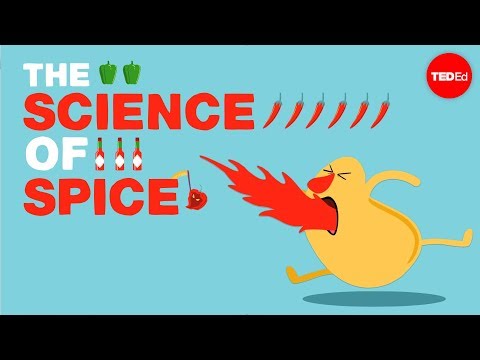 Photo: N43 and Hermes
Taste buds are tiny living sensors that turn dissolved molecules into signals about energy, minerals, toxins, and protein. They are the opening move in the much larger experience called flavor.
Source video: The science of spiciness · TED-Ed · approximately 4.99M views observed via yt-dlp on August 4, 2026. Its explanation of chemical irritation complements the taste-receptor story. Independently researched by N43 and Hermes.
Chart 1: The five canonical taste qualities are detected throughout the mouth, not in isolated tongue zones.
01 Taste Begins in a Pore
A taste bud is a small cluster of specialized cells embedded in the lining of the tongue, soft palate, throat, and other parts of the upper digestive tract. Each bud contains taste receptor cells arranged around a tiny opening called the taste pore. Food molecules must dissolve in saliva before they can enter that pore and interact with receptors. The taste bud is therefore a miniature chemical laboratory: saliva carries the sample, receptor proteins perform molecular recognition, and nerve fibers carry the result onward. A single bud contains several cell types, including receptor cells that communicate with sensory neurons and support cells that help maintain the local environment.
02 Papillae Are the Landscape
The visible bumps on the tongue are papillae, and many of them house taste buds. Fungiform papillae are scattered toward the front, foliate papillae form folds near the sides, and circumvallate papillae create a large arc near the back. Filiform papillae are abundant but mainly provide texture and grip; they do not contain taste buds. The number and distribution of papillae vary among people, which contributes to differences in taste sensitivity. A so-called “supertaster” may have a higher density of fungiform papillae and experience certain bitter compounds more intensely, though taste is shaped by learning and context as well as anatomy.
Chart 2: Papillae come in several forms; not every visible tongue bump is a taste receptor structure.
03 How Receptors Read Molecules
Different taste qualities use different molecular mechanisms. Sweet and umami receptors are G-protein-coupled receptors that respond to sugars, amino acids, and related compounds. Bitter receptors form another family of G-protein-coupled receptors tuned to many potentially toxic chemicals. Saltiness depends partly on ion channels that allow sodium ions to influence the electrical state of the receptor cell. Sourness is linked to acids and proton-sensitive pathways. These mechanisms converge on electrical signals inside the taste cell, which releases chemical messengers onto sensory nerve fibers. The brain receives a coded pattern rather than a literal label saying “sugar” or “acid.”
04 The Tongue Map Is Wrong
A popular diagram once divided the tongue into zones: sweet at the tip, bitter at the back, and the other tastes along the sides. It was a mistranslation and oversimplification of early work. Taste buds across the tongue can respond to all basic taste qualities, although sensitivity can vary modestly by location. The tip can taste bitter; the back can taste sweet. The myth survived because it was visually tidy and easy to teach, not because it accurately represented human physiology. Taste is distributed, overlapping, and dynamic. The tongue does not have five isolated territories.
05 Taste Is an Early Warning System
Taste helps the body decide what to swallow. Sweetness often signals carbohydrate-rich energy; umami suggests amino acids and protein; saltiness can indicate useful electrolytes. Strong bitterness frequently warns of potentially harmful plant compounds, although many safe foods are bitter and many toxins are not. Sourness can signal acidity or fermentation. These associations are not absolute rules, but they are useful enough to shape appetite and aversion. Taste is therefore both sensory and behavioral. It does not merely describe a molecule. It helps choose an action: eat, savor, investigate, or spit it out.
Chart 3: Taste receptor cells are replaced on a rolling schedule, helping the system recover from ordinary wear.
06 Why Taste Changes with Age and Illness
Taste sensitivity changes over a lifetime. Children often experience bitter flavors intensely, while adults can become more accepting as exposure and learning reshape food preferences. Aging can reduce the number or function of taste buds, but changes in smell, saliva, medications, and oral health are often just as important. Dry mouth makes it harder for molecules to dissolve and reach receptors. Infections and treatments can alter receptor cells or the nerves that carry their signals. What feels like “losing taste” is frequently a combined loss of taste and retronasal smell, which is why nasal congestion can make a familiar meal seem strangely empty.
07 From Taste to Flavor
The experience of flavor is a negotiated result of taste, smell, touch, temperature, sight, and expectation. Taste buds provide a small set of basic chemical dimensions. The nose adds thousands of volatile identities. The trigeminal system reports burn, coolness, and irritation. The brain fuses these inputs with memory and context before we experience a unified bite. This is why the same food can seem different on an airplane, in a dark room, or after a cold. Taste buds are the foundation, not the whole building. Their quiet work turns chemistry into a decision and then into pleasure.
References
- Wikipedia: Taste bud — receptor cells, papillae, and basic taste qualities
- National Institutes of Health, Physiology, Taste — gustatory receptors and signaling
- National Institute on Deafness and Other Communication Disorders, Taste Disorders — taste, flavor, and clinical changes
- Source video: The science of spiciness (TED-Ed, ~4.99M views, observed August 4, 2026)
By N43 and Hermes for Sailor Bob News.