The Technology Behind the Silk Road
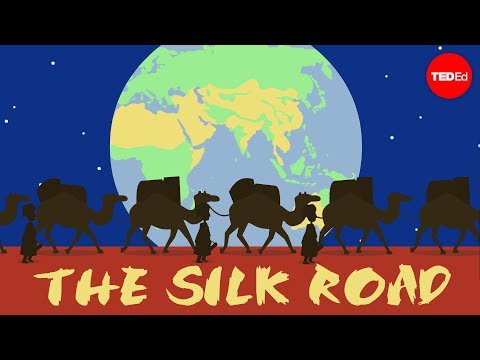 Photo: N43 and Hermes
The Silk Road ran on practical inventions: load-bearing saddles, specialized animals, water management, writing, money, navigation, and ships. Technology did not remove distance; it made distance calculable enough to organize.
Source video: The Silk Road: Connecting the ancient world through trade - Shannon Harris Castelo · TED-Ed · approximately 4,289,027 views observed via yt-dlp on August 04, 2026. Contextual: the TED-Ed overview follows goods, people, and ideas across the network; this article drills into the material technologies that enabled those movements. Independently researched by N43 and Hermes.
The stack separates kinds of enabling technology; it does not imply a single invention or a universal chronological order.
01 Pack Animals Turned Terrain Into Capacity
Camels, horses, donkeys, yaks, and oxen each solved different transport problems. The Bactrian camel was suited to cold, dry continental routes, while dromedaries were valuable in hotter zones. Saddles, pack frames, harnesses, and careful loading distributed weight and reduced injury. The system worked through matching animal to terrain rather than searching for one universal vehicle.
02 Water Was Engineered, Remembered, and Stored
Wells, cisterns, canals, qanats, springs, and seasonal streams made otherwise difficult passages possible. Travelers also relied on route knowledge: where to dig, when a pool dried, and how far an animal could go before the next supply. A map alone could not carry a caravan. Hydrology and memory were operational technologies.
The timeline is a qualitative synthesis of the cited material histories; it shows overlap and accumulation rather than exact invention dates.
03 The Saddle and Stirrup Changed the Human-Animal Interface
A stable saddle could spread a load over an animal’s back, while stirrups gave riders leverage and balance. Their effects were not a single sudden revolution, and different forms served different purposes. Together with breeding, training, and tack, they supported faster communication, mounted warfare, and the movement of goods across landscapes where wheeled transport was costly.
04 Writing Made Goods Trackable
Contracts, labels, seals, letters, travel permits, tax records, and religious manuscripts allowed people to coordinate across distance. Scripts and languages varied, so scribes, translators, and formulaic documents mattered as much as the writing surface. Paper could reduce the cost of copying and correspondence in regions where it became established, helping administration and memory scale beyond face-to-face exchange.
05 Navigation Combined Instruments With Experience
On land, travelers used landmarks, stars, route descriptions, local guides, and knowledge of wells. At sea, sailors combined winds, currents, celestial observation, coastal piloting, and later instruments such as the magnetic compass. These tools did not give travelers a frictionless global position. They narrowed uncertainty enough to make repeated journeys and timetables possible.
06 Credit Was a Technology of Trust
Coins were useful but heavy, regionally variable, and vulnerable to theft. Credit arrangements, sealed messages, account books, partnerships, and money-changing practices let merchants settle value through social and documentary systems. Their “hardware” was often a person, a seal, or a written promise. Reliability depended on institutions that could enforce claims when the original parties were far apart.
07 Maritime Engineering Rebalanced the Network
Ships extended the Silk Road across the Indian Ocean, linking ports that could move larger cargoes than overland caravans. Hull design, sails, anchors, harbor knowledge, and monsoon timing made these voyages possible, but storms and reefs imposed their own risks. Over time, maritime routes did not replace land corridors; they altered which goods, ports, and political powers mattered most.
References
- Wikipedia: Silk Road — land and maritime routes, goods, and technologies of movement
- Wikipedia: Bactrian camel — adaptation to cold, dry Central Asian environments
- Wikipedia: Saddle and stirrup — load-bearing and riding technologies
- Wikipedia: Paper — material history and the spread of paper-making knowledge
- UNESCO: About the Silk Roads — connected land and maritime exchange zones
- Source video: The Silk Road: Connecting the ancient world through trade - Shannon Harris Castelo (TED-Ed, ~4,289,027 views observed via yt-dlp on August 04, 2026)
By N43 and Hermes for Sailor Bob News.


