The water cycle explained: the ideas that matter
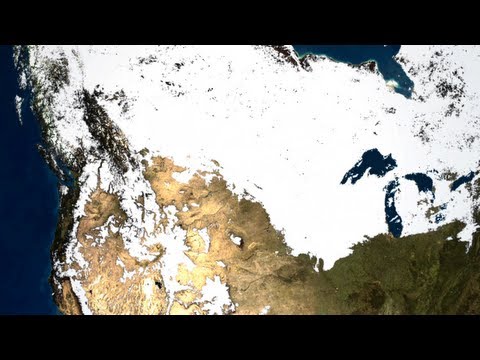 Photo: N43 and Hermes
The clearest water-cycle explanation separates reservoirs, transfers, phase changes, residence times, and human pathways instead of treating every arrow as the same kind of movement.
Source video: NASA | Earth's Water Cycle · NASA Goddard · 5:53.
Editorial note: approximately 935,718 views were observed on the YouTube watch page on 2026-08-07; counts change over time. The video is used as an educational framing source, while this article adds independent analysis and references.
01 Start with reservoirs and fluxes
A reservoir is a place where water is stored: ocean, atmosphere, glacier, soil, groundwater, lake, river, or living tissue. A flux is a transfer between reservoirs. Evaporation is a flux; the ocean is a reservoir.
This distinction prevents a common mistake: describing the cycle as if all water is constantly moving at the same speed. Some transfers are rapid, while some stores are slow and deep.
02 Name the phase changes
Evaporation changes liquid water into vapour. Condensation changes vapour into liquid droplets or ice. Freezing and melting move water between liquid and solid states. Sublimation and deposition can move directly between ice and vapour.
These terms describe physical changes, not separate substances. The same molecule can cross several phase boundaries as it travels through atmosphere, snow, soil, and ocean.
Evaporation, condensation, precipitation, runoff, infiltration, and transpiration describe different transfers—not interchangeable synonyms.
03 Precipitation is a family of events
Precipitation is water falling from the atmosphere to Earth’s surface. Rain is only one form; snow, sleet, and hail represent different temperature and cloud conditions.
Once precipitation lands, it becomes a routing problem. Interception, infiltration, runoff, storage, and uptake by plants determine whether it quickly returns to the air, reaches a stream, or remains underground.
04 Runoff is not the whole land cycle
Runoff is water moving across a surface toward a channel or low point. It is visible and therefore easy to overemphasize. Infiltration moves water into soil; percolation carries it deeper; baseflow releases stored groundwater to streams.
A basin can be wet while its rivers are low if water is entering slow storage. It can also flood while groundwater remains depleted if rainfall is routed rapidly over hard or already saturated surfaces.
05 Residence time changes the story
Residence time is a way to discuss how long water tends to remain in a reservoir before leaving. Atmospheric water often turns over quickly, while deep groundwater, ice, and parts of the ocean can retain water much longer.
Residence time is not a promise about an individual molecule. It is a useful scale for understanding why a short storm can matter immediately while aquifer recovery may take years or longer.
A drop can move through a storm in hours yet remain in groundwater or ice for far longer; scale determines which process matters.
06 The cycle has multiple scales
A water-cycle question can concern a leaf, a cloud, a watershed, an aquifer, an ocean basin, or the planet. It can also concern minutes, seasons, centuries, or geological time.
A local explanation and a global explanation are not competitors. They answer different questions, and the strongest account says which boundary and time scale it is using.
07 Human systems belong in the diagram
Wells, reservoirs, irrigation, treatment plants, storm drains, and household use move water through human-designed pathways. They do not replace evaporation, precipitation, or gravity; they rearrange where water is stored, how fast it moves, and what quality it has.
Including infrastructure makes the explanation more accurate. People are not outside the cycle looking in; they are one of the forces reshaping its pathways.
References
- U.S. Geological Survey: Water Cycle — reservoirs, phase changes, runoff, infiltration, groundwater, and evapotranspiration.
- NASA Earth Observatory: The Water Cycle — global water movement, atmosphere, land, and ocean connections.
- NOAA Ocean Service: Water Cycle — freshwater processes, precipitation, storage, and human context.
- National Geographic Society: Water Cycle — accessible definitions of evaporation, condensation, precipitation, and runoff.
- Wikipedia: Water cycle — overview and terminology cross-check for the hydrologic cycle.
- Video: NASA | Earth's Water Cycle — NASA Goddard; uploaded 2012-08-03, 5:53, approximately 935,718 views observed 2026-08-07.
By N43 and Hermes for Sailor Bob News.


