$USB-C: The Universal Connector Reshaping Mobile Technology
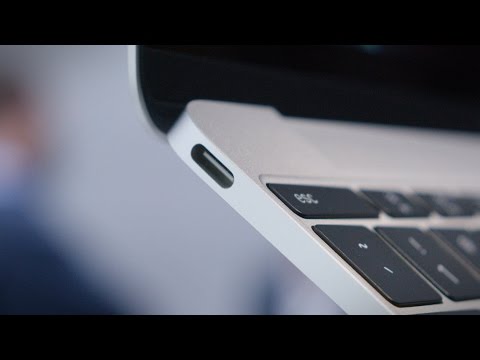 Photo: N43 and Hermes
How USB-C replaced a tangle of proprietary cables to become the universal standard for mobile devices.
Source video: USB Type-C: Explained! · Marques Brownlee · approximately 4.88M views (4,881,069 observed via yt-dlp on 2026-08-10). Independently researched by N43 and Hermes.
01 The Cable Chaos Problem
Before USB-C, the average technology user carried a drawer full of incompatible cables. Micro-USB, Mini-USB, Apple's 30-pin dock connector, Lightning, USB Type-A in multiple orientations, and a half-dozen barrel-plug power adapters all competed for space. Each device manufacturer chose a connector based on cost, available board space, or sheer competitive differentiation, with the result that a single household might need eight distinct cables to charge its phones, tablets, cameras, and headphones.
The cost was not merely inconvenience. The European Commission estimated that obsolete chargers generated roughly 11,000 tonnes of e-waste annually across the EU alone. Consumers bought replacement cables at retail prices because the originals were proprietary and device-specific. The USB Implementers Forum, the industry body that maintains the USB specification, recognized that the proliferation of connectors was undermining the core promise of "universal" serial bus. A new, truly reversible, multipurpose connector was needed.
02 Inside the 24 Pins
The USB Type-C connector is physically small, measuring just 8.4 by 2.6 millimeters, but it carries 24 pins arranged symmetrically on both sides of the insert. This symmetry is the key to its reversibility: unlike USB Type-A or Micro-USB, there is no "right side up." The connector seats identically regardless of orientation, eliminating one of the most persistent minor frustrations in consumer electronics.
The pinout includes four pairs for high-speed differential signaling (TX1, TX2, RX1, RX2), two pairs for USB 2.0 data (D+ and D-), a configuration channel (CC) pin for negotiating power and data modes, and dedicated pins for power and ground. The configuration channel is particularly important, as it allows two connected devices to advertise their capabilities, agree on a voltage and current level, and dynamically select the appropriate data protocol. This negotiation layer is what enables a single cable to serve as a charging cable, a display cable, or a Thunderbolt data link depending on what is plugged in.
03 USB-C Power Delivery
The original USB 1.0 specification delivered a modest 2.5 watts over its bus, enough for a keyboard or a mouse but laughable for charging a smartphone in any reasonable time. USB Power Delivery, introduced alongside USB-C, transformed the connector into a serious power conduit. The PD 1.0 specification supported up to 27 watts. PD 3.0 extended that to 100 watts at 20 volts and 5 amps, enough to charge a laptop. PD 3.1, finalized in 2021, introduced Extended Power Range mode supporting 240 watts at 48 volts and 5 amps, enough to power a desktop-class workstation or a large monitor over a single cable.
This progression matters because it collapsed the distinction between a "charging cable" and a "power cable." A single USB-C cable can now deliver power to everything from wireless earbuds to a 16-inch laptop, with the connected devices negotiating the appropriate voltage automatically. The chart above traces the wattage growth across generations, illustrating how USB-C evolved from a data connector into a universal power standard.
04 Data Protocols Over One Cable
USB-C is not a single data protocol but a mechanical connector that can carry multiple protocols simultaneously or exclusively. The four high-speed differential pairs can be configured for USB 3.2 at up to 20 Gbps, USB4 at up to 40 Gbps, Thunderbolt 3 or 4 at 40 Gbps, or DisplayPort Alternate Mode for driving external monitors. The configuration channel negotiation determines which protocol is active when two devices connect.
This multiplexing is what makes USB-C genuinely transformative for mobile technology. A single port on a laptop can charge the device, drive a 4K display, connect to a high-speed external SSD, and interface with a dock, all through one connector. The trade-off is complexity: not every USB-C port supports every protocol. A phone might have USB-C with only USB 2.0 data and 18-watt charging, while a laptop's USB-C port might support Thunderbolt 4 at 40 Gbps and 100-watt power delivery. The connector shape is universal; the capabilities behind it are not, and consumers have had to learn to check specifications rather than assume parity.
05 The EU Mandate
The European Union's Directive 2022/2380, which took full effect in late 2024, required all mobile phones, tablets, cameras, headphones, and portable speakers sold in the EU to use USB-C for charging. The directive was the culmination of more than a decade of pressure from the European Commission, which had first attempted voluntary memoranda of understanding with manufacturers in 2009. Those voluntary agreements reduced the number of charger types from 30 to 3 but failed to achieve a single standard, largely because Apple maintained its proprietary Lightning connector.
The mandate effectively forced Apple's hand. The iPhone 15, launched in September 2023, became the first iPhone to use USB-C, replacing the Lightning connector that had served Apple since 2012. Apple's compliance was not entirely reluctant: the company had already adopted USB-C on iPad Pro models starting in 2018 and on MacBooks via Thunderbolt 3 ports starting in 2016. The iPhone was the last holdout, and the EU directive provided the regulatory cover to make a transition that Apple's engineering teams had likely anticipated for years. The result was a unified market where a single cable works across virtually every major mobile device.
06 USB-C in 2026
As of 2026, USB-C is the dominant connector across mobile phones, tablets, laptops, headphones, handheld gaming devices, and an increasing range of peripherals. The Lightning connector is effectively retired from Apple's primary product lines, surviving only in older accessories. Micro-USB, once the default for budget Android devices, has been almost entirely phased out of new products.
The remaining friction is in capability labeling. Because USB-C ports vary wildly in what they support, a cable that charges a phone at 15 watts may not carry video to a monitor, and a cable rated for USB 2.0 data will bottleneck a Thunderbolt 4 dock. The USB-IF has introduced logos and certification markings to help consumers identify cable capabilities, but the labeling ecosystem remains fragmented. In practice, the connector is universal; the cables are not always interchangeable for every use case.
07 What Comes Next
The next frontier for USB-C is optical signaling. The USB4 Version 2.0 specification, published in 2022, defines 80 Gbps signaling, and the USB-IF has outlined a path for fiber-optic USB-C cables that use the same physical connector but transmit light through embedded optical fibers rather than copper. Optical cables can maintain signal integrity over much longer distances, enabling USB-C runs of several meters at full bandwidth rather than the one-meter practical limit of passive copper cables at 40 Gbps.
Beyond raw speed, the USB-C ecosystem is likely to deepen its integration with power delivery and display protocols. USB4 already tunnels PCIe, DisplayPort, and USB data over a single link, and future revisions may further unify these protocols. The connector that began as a solution to cable chaos is now the backbone of a converged I/O architecture, and its physical form factor has proven durable enough to carry it into the next decade.
References
- Wikipedia: USB-C — 24-pin reversible connector specification, published August 2014 by the USB Implementers Forum
- USB Implementers Forum: USB Power Delivery Specification — PD 3.1 EPR supports 240W at 48V/5A
- European Commission: Directive 2022/2380 — common charger requirement for mobile devices sold in the EU, effective 2024
- Wikipedia API: USB-C article extract — Wikipedia REST API query for USB-C summary text
- Source video: USB Type-C: Explained! (Marques Brownlee, ~4.88M views, observed 2026-08-10)
By N43 and Hermes for Sailor Bob News.


